Why one blockchain cannot read another directly
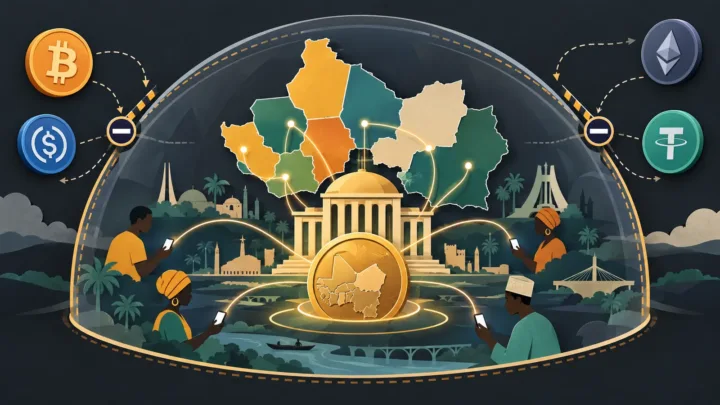
Each network maintains its own state. The complete glossary of the crypto ecosystem helps distinguish between a blockchain, a token and a smart contract. A transaction confirmed on Ethereum does not automatically change Arbitrum, Solana or BNB Chain. An external mechanism must transmit and verify the information.
The bridge performs that function. In a common model, one contract locks the original token while another issues a wrapped version on the destination network. On the way back, the bridge burns the representation and releases the original asset. Other services use liquidity pools: a provider advances funds on the destination network, and the protocol then rebalances its reserves.
Ethereum.org’s bridge documentation outlines the main architectures: lock-and-mint, burn-and-mint, atomic swaps and liquidity-based transfers. Each model distributes trust and risk differently.
Canonical bridge or third-party service
A canonical bridge generally supports a layer-2 network and follows its official rules. It benefits from a close link to the underlying infrastructure, but withdrawals to the mainnet may take time, particularly on some optimistic rollups.
A third-party bridge often supports more chains, offers shorter processing times and provides a single interface. In return, it introduces its own validators, contracts, liquidity providers or security mechanisms. The term “multichain” guarantees neither full reserves nor decentralized governance.
The choice therefore depends on the amount, urgency and level of trust involved. For a large sum, the canonical route often provides a clearer model. For a small, fast transfer, a liquidity bridge may be suitable if the protocol publishes its contracts, audits and contingency mechanisms.
Check the token received and its liquidity
Two assets with the same symbol may correspond to different contracts. Native USDC and wrapped USDC do not necessarily offer the same liquidity or redemption mechanism. After the transfer, verify the contract address using the bridge’s or network’s official documentation.
Also check which markets are available on the destination network. A token that is technically received but rarely traded may face a wide spread. The overview of stablecoins and their risks points out that the peg also depends on reserves, redemptions and liquidity.
Only add the token manually to your wallet after confirming its contract. An interface may fail to display it even though the explorer confirms receipt. Never import an address copied from a comment, advertisement or private message.
The main risks of using a bridge
The first risk comes from the smart contract. A vulnerability could allow assets to be created without reserves or locked funds to be withdrawn. The second concerns administrative keys: a small group able to modify the protocol or sign transfers creates a point of concentration.
The third risk involves cross-chain messages. A bridge must recognize that a valid event took place elsewhere. A poorly verified proof, a compromised validator or an overly weak security assumption could transmit false information.
The fourth concerns liquidity. A surge in withdrawal requests can drain a pool and delay transfers. Finally, user error remains common: the wrong network, an incorrect address, insufficient fees or a fake website. Advice on securing your cryptocurrency can reduce this last category of risk, but it cannot protect against a protocol failure.
Prepare the transfer step by step
Start by confirming the source network, destination network, token and recipient address. Make sure your wallet supports both networks. Keep some of the native asset on each chain to pay gas before and after using the bridge.
Then open the website from the official documentation, not from an advertisement. Check the domain and the contract displayed. Review the amount to be received, fees, stated processing time and withdrawal mechanism. A significant difference between the amount sent and the amount received requires an explanation before you sign.
Test the process with a small amount. Wait for full confirmation, then check the token on a block explorer. If everything matches, complete the main transfer while keeping the hashes from both networks.
Do not revoke or repeat a transaction simply because the interface is slow to update. Check the explorer and the bridge status first. Some operations include a claim step on the destination network.
Understand the total cost
The final cost may include gas on the source network, a bridge fee, a liquidity spread and gas on the destination network. A service advertising “zero fees” may build its margin into the conversion rate. Compare the net amount received, not just the fee line.
Transfers between Ethereum and a layer 2 often become less expensive when blocks have more available space. For a non-urgent operation, monitoring gas prices can reduce the cost. A direct withdrawal from a centralized platform to the correct network may sometimes cost less than withdrawing on Ethereum and then using a bridge, provided the platform genuinely supports that chain.
What to do if the transfer remains stuck
Find the hash on the source chain and look it up in the explorer. If the transaction is still pending, the issue is probably related to gas or the nonce. If it succeeded, check the bridge’s tracking interface and the destination hash.
Next, check whether a claim action is waiting for your signature. Read the protocol’s status page and use only its official support channels. No legitimate agent will ask for your seed phrase. Do not sign a private message claiming it can “unlock” your funds.
A delay does not always mean a loss. Canonical bridges may impose a challenge window. However, a prolonged lack of liquidity, paused contracts or unclear communication calls for extreme caution.
Key takeaways
- A bridge coordinates two separate ledgers and adds a layer of trust or proof.
- The contract of the token received, its liquidity and its redemption mechanism matter just as much as speed.
- A small-value test, two network checks and enough gas can prevent many errors.
The shortest route is not always the best transfer
A convenient bridge can concentrate substantial risks in a handful of contracts or signers. Before every operation, compare the security model, net fees, processing time and destination liquidity. This discipline takes only a few minutes and offers better protection than a ranking based solely on advertised speed.