African crypto: USDT joins conventional payments
Kora is not building another exchange. One Rail is designed to connect two infrastructures that have often operated separately: traditional payments and stablecoins. The move builds on a market where Nigeria already accounts for around 60% of sub-Saharan Africa’s stablecoin flows.
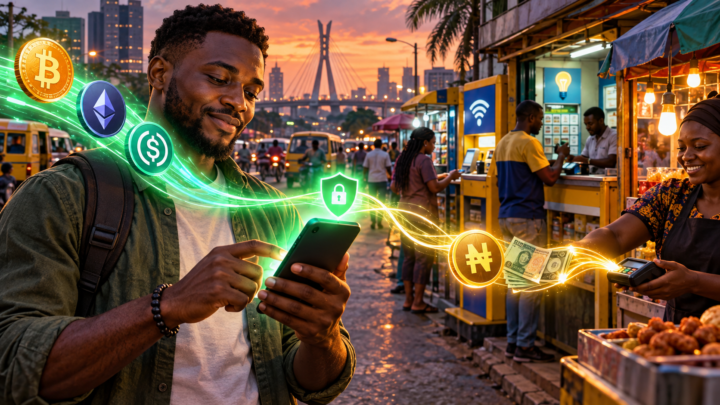
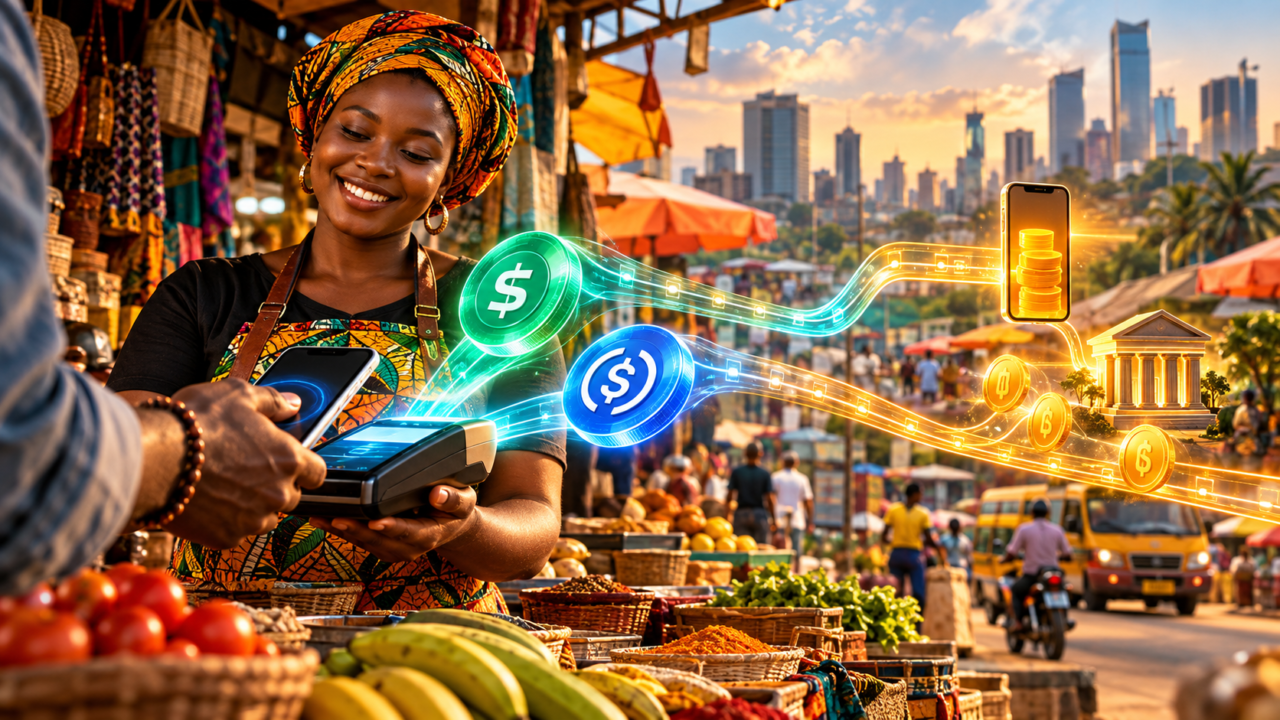
In practice, a merchant can generate a wallet for a specific customer, receive USDT or USDC, track the transaction in real time and automatically reconcile the payment in its dashboard. The stablecoins can then be held or converted into the local currencies supported by Kora.
The technical documentation currently confirms USDT and USDC on Ethereum, Solana and Tron. Businesses therefore do not need to build the entire blockchain layer themselves. They can use Kora’s existing APIs for cards, bank transfers and mobile money.
The model is particularly well suited to B2B transactions. A business can receive digital dollars from an overseas customer and then move the funds to a local bank account through existing payment rails.
Stablecoin in. Naira, cedi or shilling out.
The 78% figure needs some context
Kora is partly justifying its launch with a striking figure: 78% of African crypto holders are said to own stablecoins. CEO Dickson Nsofor repeated the figure when announcing One Rail.
The publicly available data is somewhat more specific.
The Stablecoin Utility Report, conducted by YouGov with BVNK, Coinbase and Artemis among 4,658 people across 15 countries, shows particularly high adoption in Africa. Reuters reported in February that nearly 80% of respondents surveyed in Nigeria and South Africa already held stablecoins. The study also found particularly strong interest in using them as a means of payment in Africa.
It is therefore better not to treat this survey as an estimate covering Africa’s entire population.
The economic signal remains strong, however. The IMF estimates that Nigeria alone represents around 60% of sub-Saharan Africa’s stablecoin inflows since 2019. It also notes that sending $200 to the region still costs about 9% through traditional channels.
That is why initiatives are multiplying. DCS Pay and Kotani Pay are already building bridges between USDT, USDC, local currencies and mobile money. Kora is now tackling the same problem from the merchant side.
Stablecoins are now making their way into merchant tills
One Rail is still in the pilot phase. Kora says that only USDT and USDC are currently enabled and that access is limited to a group of eligible merchants ahead of a broader public rollout. Joining the pilot is free, although standard transaction-processing fees still apply.
Kora’s geographic reach nevertheless gives it an interesting foundation. Its payments infrastructure covers Nigeria, Ghana, Kenya, South Africa, Cameroon, Côte d’Ivoire, Tanzania and Egypt, among other markets, depending on the services used. In several of these markets, payouts can already be made through bank accounts or mobile money.
This is where the stablecoin is gradually taking on a new role.
For a long time, USDT was used mainly for trading or for maintaining digital exposure to the dollar. The focus is now shifting to its connection with commerce: receiving a payment, paying a supplier, managing treasury funds and then converting back into local currency without switching between multiple platforms.
The regulatory challenge remains. Kenya is already tightening oversight of stablecoins offered by licensed intermediaries, while Nigeria is rapidly formalizing VASP activities.
Kora will therefore have to achieve two goals at once: preserve the speed of stablecoins while complying with the rules in each market.
If that equation works, One Rail will not necessarily make Africans more “crypto.” It could do something more important: make the blockchain almost invisible behind an ordinary payment.