Start with the country and the service you need
The options discussed in our guide to crypto in South Africa do not automatically apply in Nigeria, Kenya or the WAEMU region. First identify your country of residence, the currency you use and the transaction involved: a one-off purchase, trading, receiving stablecoins, withdrawing to Mobile Money or holding assets.
The same brand may serve several countries through different legal entities. Its terms of use generally identify the contracting entity, applicable law and complaints procedure. These details—not the app’s name—define the actual framework.
Local-currency deposit availability may also depend on a separate payment partner. The crypto platform and the Mobile Money provider do not necessarily bear the same responsibility.
Check the regulatory status
The first step is to search for the platform in the relevant regulator’s official register. A licence should identify the exact entity and the services it is authorised to provide. Being registered as a company, having an application pending or taking part in an incubation programme does not always amount to full authorisation.
In South Africa, the FSCA publishes a list of authorised crypto-asset service providers. In Nigeria, the SEC communicates about operators admitted to its programmes and registers. In Kenya, the framework for virtual-asset service providers sets out the allocation of regulatory responsibilities.
The Nigerian SEC maintains a page listing registered fintech operators. Users must still check the date, legal name and scope of the registration. A foreign regulator does not guarantee access to local recourse.
Compare the full cost
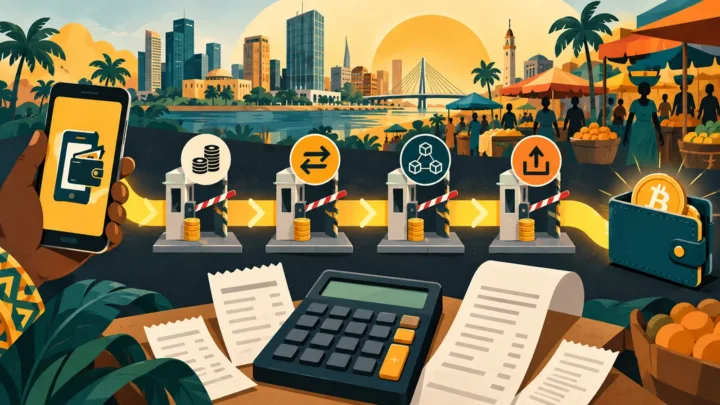
Trading fees account for only part of the cost. You also need to check the local-currency conversion rate, spread, deposit, withdrawal and network fees, as well as minimum amounts. A platform advertising 0% fees may make its margin on the quoted price.
The cost should be calculated for a specific scenario. For a purchase of 100,000 FCFA or 10,000 KES, how much USDT or BTC reaches a personal wallet after every step? That net amount makes offers comparable.
The BrefCrypto guide to crypto fees in Africa explains which figures to track. Rates should be checked on the day of the transaction, as they change with market conditions and network activity.
Liquidity and execution
A liquid platform executes orders without excessive slippage against the displayed price. Reported volume is not enough: order-book depth around the price and the amount actually available matter more.
For P2P trading, examine the number of active advertisers, their limits, rates and completion rates. An attractive offer for a small amount may disappear for a larger sum. Escrow protects against non-delivery, but not against every form of payment fraud.
Exit liquidity is just as important as entry liquidity. A token that is easy to buy but impossible to withdraw or resell locally can expose users to additional costs.
Custody and security
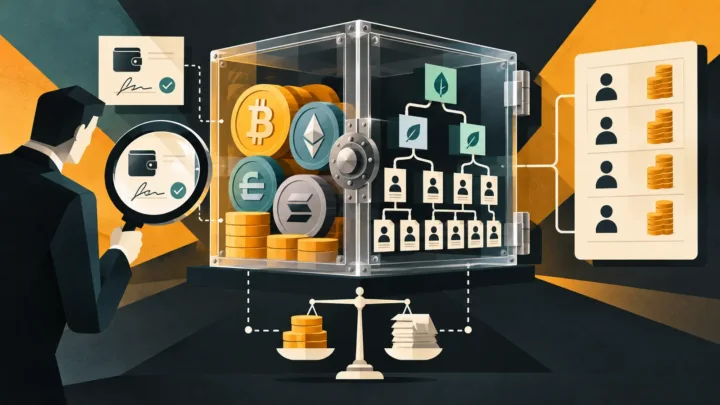
You need to know what share of assets is held offline, how withdrawals are authorised and whether the platform publishes a Proof of Reserves. This proof provides information about the assets held, but does not replace a full balance sheet or a licence.
Account protections include app- or hardware-key-based two-factor authentication, address whitelisting, a delay after security changes and login alerts. SMS alone remains vulnerable to SIM swapping.
For long-term storage, a personal crypto wallet reduces counterparty risk, but requires the seed phrase to be backed up properly. A reliable platform cannot compensate for an exposed recovery phrase.
Deposits, withdrawals and Mobile Money
Local payment methods often distinguish two services. Test a small deposit and withdrawal before increasing the amount. The name on the payment account should match the verified account holder’s name to avoid a compliance hold.
On P2P platforms, keep exchanges within the platform’s messaging and escrow system. A screenshot is not a substitute for checking the balance. Third-party transactions should be rejected when they conflict with the service’s rules.
Advertised processing times should be compared with actual experience. An “instant” withdrawal may still be subject to manual review, a daily limit or network maintenance.
Support and recourse
Before depositing a substantial amount, it is useful to ask support a question and assess the precision of the response. The platform should provide a company address, accessible terms, a complaints procedure and, where regulated, the contact details of the ombudsman or regulator.
Fake support accounts often appear in sponsored search results and messaging apps. Use the address saved in your bookmarks and never share your seed phrase, password or one-time code.
Our guides to crypto in Kenya and crypto in Nigeria provide additional local context for this framework.
A simple decision framework
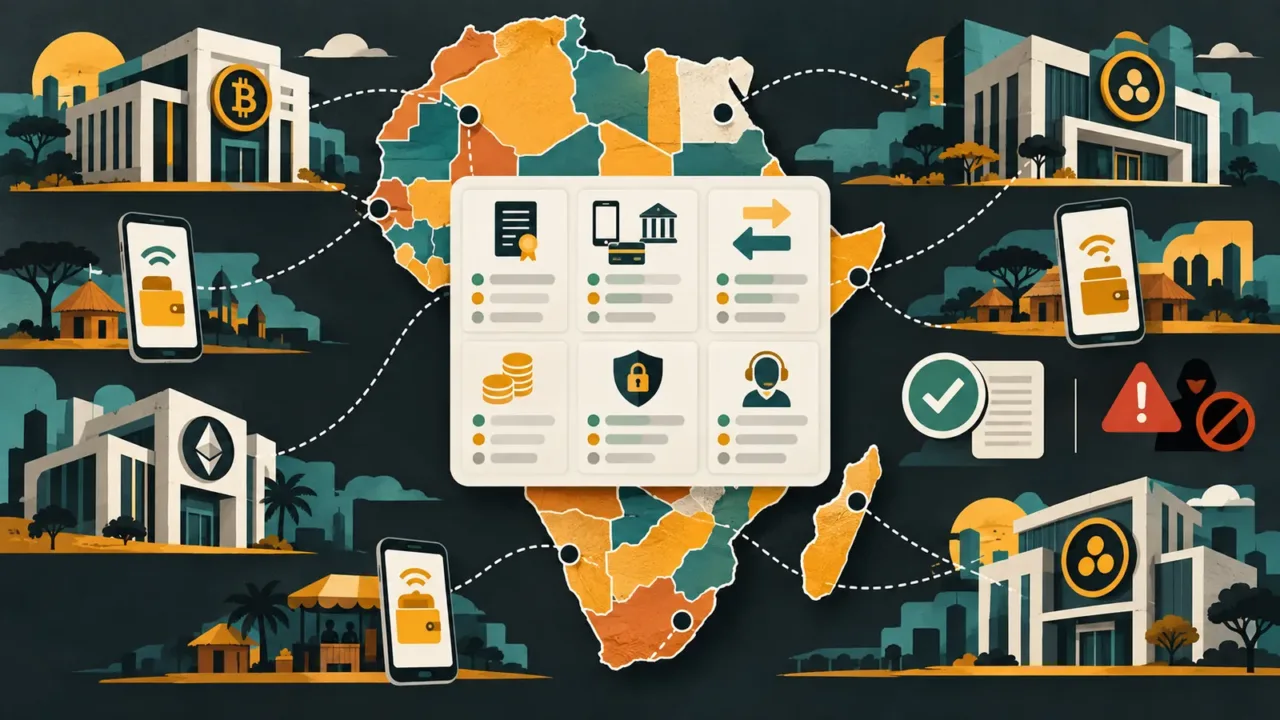
A professional comparison can assign a documented assessment to eight criteria: status, legal entity, net cost, liquidity, local withdrawals, security, reserve transparency and quality of recourse. A criterion that cannot be verified should remain “unknown”, rather than receiving an average score by default.
The weighting depends on the use case. For a monthly purchase followed by a withdrawal, exit costs and network compatibility are priorities. For a trader, order-book depth and API stability matter more. For a business, invoicing, statements and compliance become decisive.
Key takeaways
- Check the entity and the exact scope of its licence in an official register.
- Compare the net cost after deposits, spreads, withdrawals and network fees.
- Test withdrawals and support with a small amount before increasing your exposure.
There is no single best platform for all of Africa. The right choice is the one whose status, costs, payment methods and protections match the user’s country and specific use case.