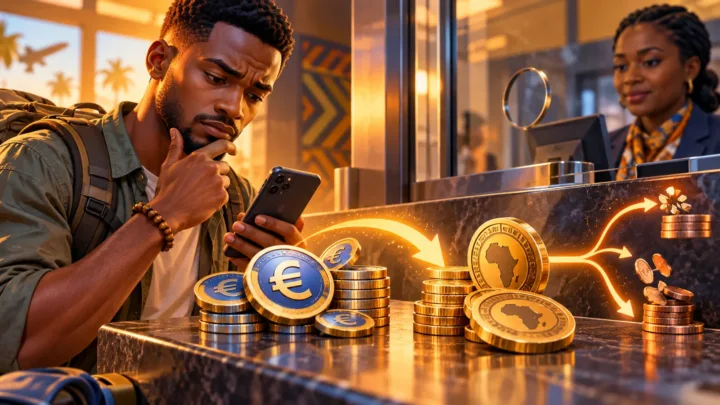
Bitcoin and mobile money in Africa: understanding the separation
Our guide to buying cryptocurrencies with mobile money distinguishes between the payment method and the asset received. A mobile wallet does not become a Bitcoin wallet simply because a seller accepts a phone transfer. The operator, marketplace and key holder may remain three separate actors.
The GSMA report on mobile money published in 2026 describes the development of this payment ecosystem. That growth does not mean every operator offers crypto or that every country permits the same uses. Sector data and a product’s legal status must be considered separately.
Bitcoin enables transactions on a shared ledger, while a mobile account depends on a provider’s contract. Recovery procedures, operating hours, limits and available remedies therefore follow different models. A shared interface can conceal that distinction without removing it.
Before seeking an integration, define the expected outcome: paying a merchant, helping a relative, holding savings or learning about the technology. These objectives do not necessarily require the same tool and may be achievable without an additional conversion.
Africa is not a single regulatory market
National rules can vary, as can operator conditions. A procedure available in one country is not a recommendation for the continent as a whole. Terms such as “Africa” or “Francophone” are too broad to establish that a service is permitted.
In some cases, a local restriction must be considered before prices are analyzed. For the DRC, the GABAC report from March 2026 describes a ban on virtual-asset activities introduced in July 2025. A mobile-money button does not override that context.
The WAEMU and CEMAC frameworks must also be distinguished, without inferring a general authorization for crypto activity. The country of residence, the exact service and the contracting entity are the first pieces of information in any assessment. Authorization covering electronic money does not automatically cover the exchange of virtual assets.
For a cross-border transfer, the rules of both the sending and receiving countries may apply. An operator’s authorization on only one side of the corridor is not enough to validate the entire route. Clarify responsibilities and conditions before treating a solution as universal.
The first and last mile often determine how a service is used
The first step converts an available amount into another form. It may involve a deposit, payment, verification and conversion. The final step returns the funds to a currency and channel the recipient can actually use. A fast blockchain transaction between those two points does not necessarily resolve these constraints.
A relative may receive a token without having access to a suitable cash-out service. A merchant may prefer a direct mobile payment because they pay suppliers in local currency. The value displayed in a wallet does not automatically describe day-to-day liquidity.
Ask the recipient about their receiving conditions: device, network access, registered account, need for cash and agent availability. These basic questions can prevent a technically sophisticated but impractical solution. The end user must be able to understand the form of money received.
For an urgent payment, the timeframe includes every step. A promise of instant delivery may be followed by a review or delayed withdrawal. Compare when the funds are actually available rather than relying on a single advertised speed.
Compare fees from start to finish
Our analysis of crypto fees in Africa recommends starting with the amount debited and ending with the net amount that can be used. Include exchange costs, the seller’s margin, network fees, cash-out costs and withdrawal fees. Charges may come from several parties.
A mobile transaction with a low commission may involve an unfavorable conversion. A low-cost blockchain may lead to a thin local market. The fact that one step is free says nothing about the total cost.
Use the same scenario for every comparison: amount, currencies, timeframe, payment channel and receiving method. A bank deposit and a cash withdrawal do not meet the same needs. Flat fees and percentage-based charges can also change the ranking depending on the transfer size.
Keep a dated quote showing how long it remains valid. A published reference rate does not guarantee the price applied to the customer. Commercial rates and fees should be clearly displayed, especially when an intermediate currency is involved.
Bitcoin and stablecoins: different value risks
Bitcoin can move sharply in price during a transfer. If the recipient must receive a specific amount, that volatility can create a gap between the initial budget and the amount received. Faster transfers may shorten the exposure period without eliminating the risk.
A stablecoin seeks a different form of stability, generally against a reference currency. It introduces risks linked to its issuer, reserves, contracts and liquidity. A dollar target does not guarantee a constant value in CFA francs or another local currency.
Our guide to stablecoin depegging in our crypto glossary helps distinguish movements in the reference currency from token risk. A comparison should explain that difference rather than simply contrasting “volatile” with “risk-free.”
Choosing an asset does not replace regulatory checks. A less volatile token does not automatically have a more favorable legal status. The product, service and transaction must still be identified.
Official integration or payment to a seller?
A documented integration defines the entities involved and their responsibilities. A peer-to-peer listing may simply ask for payment to a seller’s mobile account. These situations do not offer the same guarantees or remedies.
The M-Pesa terms and conditions in the DRC, for example, describe a specific national service. They do not guarantee every product a recipient sells after receiving a transfer. Contracts in other markets must be reviewed separately.
Check the account holder’s name, rules governing third-party payments and official contact details. A last-minute change of number requires independent confirmation. A previous relationship does not prevent someone from impersonating a conversation or account.
Do not leave the contractual process to obtain a discount. A marketplace may make support conditional on following specific steps. A private instruction can remove evidence needed in the event of a dispute.
Accounts and keys require different protections
A mobile account may depend on a phone number, code and recovery procedure. A self-custody wallet uses signing credentials and backups. Protecting one does not automatically protect the other, even when both are on the same device.
Taking control of a phone number can affect accounts that use it to verify logins. An exposed seed phrase can give control of a wallet without access to that number. Users must therefore keep secrets separate and understand the available recovery paths.
Never provide a recovery phrase to a payment operator or seller. Support may request a transaction reference and relevant documents, but it should not obtain the means to spend your assets. Screen sharing also calls for caution.
Confirmations should come from your own accounts and the appropriate tools. A receipt sent by the other party may be altered. Verify payment and delivery separately rather than treating a screenshot as proof of the entire transaction.
When a simpler solution better meets the need
For regular use, the ease of maintaining records also deserves attention. Receipts, statements and references should make it possible to reconcile payments without manually reconstructing every route. A solution that appears cheaper may create a significant administrative cost for a small business or association. Compare that burden with the actual need, without assuming that newer technology automatically simplifies accounting.
For a domestic payment, an authorized mobile service may avoid several conversions. For an international transfer, a licensed intermediary may provide an appropriate quote and recourse. The most visible technology is not always the most practical answer.
A solution must also account for the time involved. Installation, verification, backup and conversion can create a usage cost. A small commission difference may lose its value if it imposes an incomprehensible process on the recipient.
In the event of an incident, record the parties involved, dates and references. Contact services through their official channels, without automatically sending another payment to a supposed recovery agent. The presence of a blockchain does not guarantee a refund.
Bitcoin and mobile money in Africa should therefore be compared by country and use case. The right process respects the applicable framework, shows the full cost and delivers a form of money that can actually be used. Adding a digital step improves the outcome only if it solves a real need without concealing its risks.