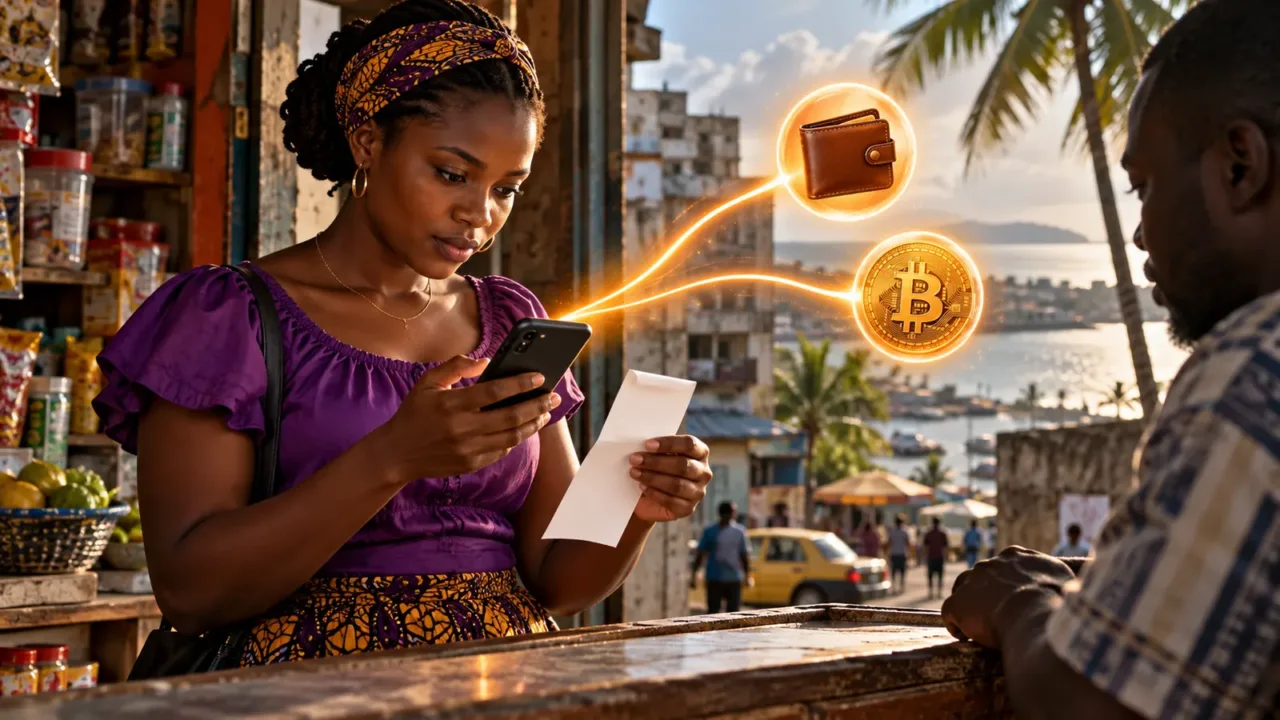
We have not confirmed an official integration enabling every resident to buy BTC directly with Orange Money Liberia. The process described here is therefore conditional: consider it only after verifying its availability, eligibility requirements and current terms. The purpose of this guide is to help you prepare that verification—not to invent a button or partnership.
In brief
- A successful Orange Money transfer proves neither that Bitcoin was purchased nor that the intended recipient received the BTC.
- The quote must specify USD or LRD, the net amount of BTC, the fees and the identity of the payment recipient.
- Mobile-wallet codes and Bitcoin-wallet secrets must never be shared with the seller.
Identify both services before making the first transfer
The crypto and Mobile Money guide distinguishes between direct payment, intermediaries and P2P exchanges. In Liberia, start by asking which of these models is being offered. A reference to Orange Money in an advertisement may refer only to the account used to pay an individual, without implying that the operator is involved in selling or holding the bitcoins.
The Orange Money terms published on the Liberian website, in a file bearing a 2021 reference, describe an electronic-money service and emphasize PIN protection. This documentary version does not certify all current terms. Ask for the rules currently in force before proceeding, particularly those governing account use and complaints.
Identify separately the company arranging the purchase and the person receiving the payment. If a platform is involved, consult its official process for your actual place of residence. If a seller is acting directly, ask for their status and written terms. A Liberian phone number does not replace this verification and does not constitute authorization to provide a financial service.
The commercial document should explain who is responsible for each step. An operator may be able to prove movement in the mobile wallet without verifying delivery on Bitcoin. A platform may handle a purchase dispute without controlling the payment system. Keeping these roles separate helps you prepare the right evidence and avoid promising a refund that no one has contractually confirmed.
Finally, verify that your situation complies with the terms of the services involved. Do not present regular activity on behalf of third parties as an occasional personal transfer simply to obtain access. If a partner asks you to conceal the nature of a transaction, stop the process. An instruction to hide information is a problem to investigate, not a shortcut for reducing delays.
Set the currency, amount and quote limits
The guide to total crypto costs recommends comparing offers on the basis of the same net result. Request a complete breakdown: total expenditure in USD or LRD, BTC delivered, destination and fees. The word “dollar” should always be accompanied by a currency code. Confusion between the two currencies can create a dispute before the first blockchain transaction even takes place.
In an educational example, you transfer 8,000 LRD to the seller and pay an additional 100 LRD fee. Your total expenditure therefore reaches 8,100 LRD. If your wallet receives 0.0005 BTC, the reference cost of the transaction is 16,200,000 LRD per BTC. This figure is for calculation purposes only; it does not represent any current price or fee.
Compare that net amount with another offer that can be executed at the same time. A seller may display more BTC in the order and then deduct the withdrawal. The final recipient will consequently receive less than the provisional balance. Also check the minimum purchase and fee tiers, without increasing your budget solely to qualify for a promotion or discount.
The quote’s validity period matters just as much as the rate. A mobile payment may be delayed while the BTC price continues to change. The terms should explain how this situation will be handled: price maintained, cancellation or a new quote explicitly accepted. Do not allow the seller to decide after receiving payment to deliver a different amount that was never agreed.
Plan the exit from the outset. If you may need to recover LRD quickly, ask for an exit offer and its terms rather than assuming the rate will work both ways. The amount of BTC does not guarantee liquidity from the same seller. An account, counterparty or payment method may be unavailable when you want to recover the currency.
Check account holders and keep secrets separate
The guide to KYC checks and data protection recommends verifying who is requesting what. An official identification procedure does not justify sending a document to a stranger through a personal messaging service. Ask which channel should be used and who controls the data. Collecting identity documents is no proof of reliability if the recipient cannot be identified.
Compare the beneficiary’s name with the one specified in the order. A last-minute payment to a third party may make it impossible to link the funds to the seller. Refuse improvised changes until the responsible service has clarified them through its official channel. An urgency claim or an alleged network problem does not make the substitution safer.
Your Orange Money PIN must remain under your control. Do not dictate it to the seller or enter it on a page they send you. Open the service through your usual access and check the details before confirming. A fake window can capture the secret while displaying a message that appears to be a simple purchase confirmation.
A Bitcoin wallet has other secrets, including information used to restore keys where that model relies on them. They have no role in proving an Orange Money transfer. Anyone asking for them is deliberately mixing two systems to gain control over your assets. Stop the exchange and seek assistance through channels you have verified yourself.
On a shared device, also protect notifications and open sessions. A screenshot containing a balance, number and reference can fuel targeted fraud. Send only the documents needed by the relevant service and conceal information unrelated to the dispute. Documentary caution complements code protection; it does not replace it.
Verify that the bitcoins arrive at the right destination
The crypto-wallet guide distinguishes between displaying a balance and controlling the assets. Before paying, decide whether the BTC will remain with a custodian or be sent to a personal wallet. The price should match that outcome. Delivery to an account does not prove that an external withdrawal works for the chosen product and network.
Verify the address in your application and the destination’s instructions. Do not reuse an address taken from a history without confirming that it is currently valid. Some services impose specific deposit rules. A BTC symbol displayed by the sender does not confirm that the destination accepts every representation of Bitcoin on every network.
A small test can check technical delivery, but it does not eliminate the risk of later fraud. Some sellers complete an initial small order before requesting a larger sum. Maintain the same level of control for subsequent transactions. Initial success should not justify an off-platform payment or a pressured increase in your budget.
The precautions outlined by Bitcoin.org emphasize that transactions and keys require particular care. Verify the amount received and the transfer status according to the recipient’s requirements. A transaction ID helps with tracking, but does not guarantee that an internal credit has already been made available by a custodial platform.
After receipt, reconcile the references: mobile payment, order and Bitcoin transfer. Also record the times and amounts in their respective units. This record makes it possible to verify the quote and identify discrepancies. Without reconciliation, it is easy to confuse withdrawal fees, an amount error and a simple change in the value displayed in the currency.
Respond to an incident without compounding losses
The guide to comparing platforms and avenues for recourse highlights the importance of an identifiable point of contact. If the payment does not appear for the beneficiary, contact the mobile-wallet service using its reference. A seller who received the money without delivering the BTC falls under the order’s contractual channel. If the blockchain shows receipt but the account does not, examine the custodial destination.
Do not promise that a payment can be reversed. The available options depend on the current rules, the stage reached and the facts. Obtain a response from the relevant service and keep it. A seller demanding a second payment to “activate the refund” must provide verifiable grounds; a screenshot of a supposed agent is not a substitute for an official procedure.
Arrange the evidence chronologically and keep the originals. A complaint is clearer when it describes the expected outcome, the payment made and the missing step. Avoid undocumented accusations and posts containing personal data. Sharing them may create further problems without improving the chances of recovery or clarifying the technical nature of the incident.
Also allow for temporary unavailability without fraud. Repeating an order because the first one is delayed can result in two actual payments. Wait for clarification of the status before trying again, and check the balance through your usual access. A third party’s messages are not enough to conclude that the transaction failed or must be repeated.
The right Bitcoin and Orange Money process in Liberia therefore relies on two documented flows and a clearly assigned responsibility for every step. Without a confirmed eligible offer, a clear currency, a consistent account holder and a destination under your control, transfer nothing. The convenience of a phone does not replace these checks; it merely makes their absence less visible when people rely on a button or a promise.