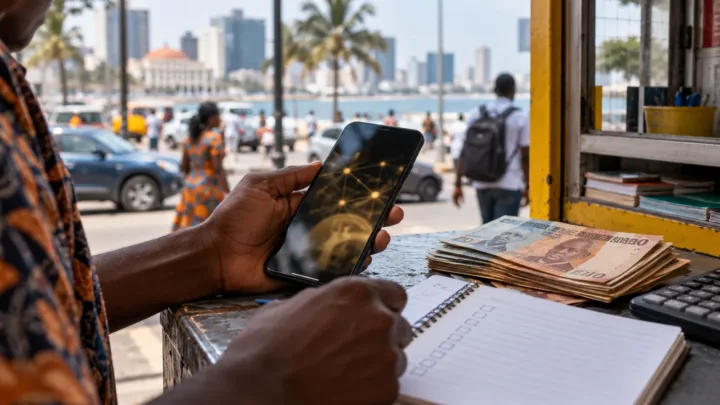
A balance displayed in BaridiMob and a bitcoin amount both appear on a screen. That visual similarity can create confusion: the presence of an app does not mean the two amounts rely on the same system, confer the same rights or support the same operations. A dinar-denominated postal account does not become a Bitcoin wallet simply because it is accessed through a phone.
In Algeria, this technical distinction comes with a crucial legal difference. Conventional payment services and activities involving virtual assets do not fall under the same framework. Understanding what each balance represents helps users assess advertising, verify payment requests and protect their data, without mistaking a transfer function for permission to buy cryptoassets.
In brief
- BaridiMob provides access to services linked to a CCP account and the EDAHABIA card; its interface is not a Bitcoin network.
- A dinar transfer, a QR code payment and a blockchain transaction are different types of operations.
- The availability of a payment tool does not remove Algeria’s restrictions on virtual assets.
Two balances on one screen, two different realities
The feature on cryptoassets in Algeria outlines the national framework to keep in mind. BaridiMob is part of Algérie Poste’s service environment. Its official presentation describes functions including account viewing and operations linked to postal financial services. It does not turn the app into a bitcoin exchange and, by itself, does not provide authorization for a crypto transaction.
The amount available in a CCP account reflects a relationship with the provider holding that account, under the applicable rules and terms. Its display depends on an account-management system. By contrast, a Bitcoin wallet allows users to view and, depending on the secrets they hold, control certain transfer options on a decentralized network. This difference concerns not only the underlying technology but also whom to contact when a problem arises.
Both interfaces may display an estimate, a history or a notification. Those similarities do not erase the difference in their architecture. A confirmation in a payment app does not prove that a Bitcoin transaction took place. Nor does a wallet screenshot show that a dinar credit reached a postal account. Each claim must be checked within the system to which it relates, without treating one as automatic proof of the other.
This separation matters especially when advertisements promise a “direct” or “integrated” conversion. Someone may exploit BaridiMob’s familiarity to make an offer appear more credible. Before inferring a partnership, look for an official announcement and verify its scope. Simply citing a well-known payment brand proves neither a commercial agreement, legal compliance nor any guarantee for the user.
A phone does not change the nature of money
A service accessible by mobile does not necessarily qualify as Mobile Money under every model used in Africa. Some systems rely on a bank or postal account, while others use electronic money distributed through an agent network. The guide to mobile payments and cryptocurrencies explains this diversity. Using the same label does not make the rules, limits or remedies identical.
A QR code payment provides another example. The code may transmit a reference, a web address or the information needed for a conventional payment. Its visual appearance does not automatically reveal which network is being used. Not every QR code should therefore be treated as a blockchain address. The provider, recipient and amount must be checked in the official app before confirming any permitted operation.
Temporary codes, notifications and confirmations are used to authorize specific actions. Their presence does not prove that the recipient is trustworthy. A fraudster may request approval under a pretext that differs from the operation actually displayed. Protection depends on reading the message and refusing to share secrets—not on the familiarity of the brand or the insistence of a hurried contact.
Finally, the technical ability to enter an amount does not establish the right to send it for any purpose. The service terms and applicable law still apply. This prevents a misleading line of reasoning: “the app allows it, so the use is authorized.” An interface may execute a function without assessing the entire commercial or legal relationship behind the transfer.
Why a dinar payment does not validate a crypto purchase
Law No. 25-10, published in the Official Gazette, notably introduced Article 6 bis covering several activities involving virtual assets. The text includes the purchase, sale, use and possession of the assets concerned, along with other activities linked to their distribution. Using a conventional payment service does not automatically remove the transaction from this framework.
The channel and the purpose must be distinguished. A channel carries a payment or instruction; the purpose describes what the parties are seeking to accomplish. An advertisement may foreground the channel to make the purpose less visible. That presentation is not a legal analysis. The brand of a postal service cannot serve as a shortcut for claiming that a crypto transaction has been approved by the competent authorities.
The comparison of platform statuses offers a complementary method: check each participant and each claimed authorization separately. An intermediary may hold a payment account without having approval covering the activity it is selling. Regularly receiving transfers also does not prove its honesty, solvency or the existence of a refund mechanism available to all its customers.
This guide therefore provides neither a purchase route nor a concealment technique. Individual questions must be assessed using specific facts and, where necessary, advice from a qualified legal professional. General information cannot declare that a particular transaction falls outside the prohibition. It can, however, identify the confusion and prevent users from interpreting the normal operation of a postal account as a guarantee for a separate product.
How to verify a debit without relying on a screenshot
An image showing a payment may have been edited, may be old or may relate to another transaction. To verify activity on your own account, the relevant reference should come from the official app or the appropriate official channel—not from a document supplied by the other party. Distinguish between a reported operation, a recorded instruction and a movement actually posted to the account. An isolated label does not always describe the entire process underway.
Costs can also make the figures harder to interpret. The guide to calculating total cost distinguishes the amount debited, explicit fees and the value actually received. For a conventional payment service, this method helps users check a statement or quote. It does not require carrying out a crypto transaction and does not turn a financial calculation into authorization to use a channel for a prohibited purpose.
Limits and fees should be checked against the service’s current official information. An older FAQ and a more recent announcement may show different figures because they cover different dates or functions. It is better to verify the exact operation than to copy a limit found in a tutorial. This guide therefore does not set a universal amount applicable to every use of BaridiMob.
When a transaction appears inconsistent, keeping its reference, amount, time and exact message makes it easier to describe the problem. These details can be sent to the appropriate official channel while limiting the personal information exposed. Posting a complete statement in a group does not necessarily make resolution easier. Instead, it may give a fraudster enough information to create a more convincing support request.
Account secrets are never proof of a commercial transaction
Card PINs, passwords and confirmation codes must not be shared with a seller to “confirm” a payment. The official information on the EDAHABIA card provides the context for the services offered. Use official channels and verify any unexpected request, especially one received through private messaging or accompanied by pressure to act urgently.
Identity checks and document protection raise a related issue. An identity document may be required for certain legitimate procedures, but the request itself does not validate the person making it. The recipient, purpose and channel must be checked. Someone who already knows some personal information is not thereby entitled to obtain the full file or access to the account.
In a crypto wallet, a recovery phrase represents another type of secret. The guide to wallets and their security explains its role. It must never be given to a supposed postal agent or to someone promising to synchronize the two systems. Such a request deliberately mixes separate domains and could result in the loss of control over assets.
Support that demands screen sharing or the installation of remote-control software deserves particular caution. The person on the other end may see notifications, intercept codes or influence confirmations. The appropriate response is to stop the exchange and independently find the service’s official contact details. No technical vocabulary, messaging badge or photo of a professional ID card replaces this basic verification of the support representative’s identity.
A simple framework before drawing conclusions
To understand a balance or a request, four questions are enough to structure the investigation: which system holds the amount, in what unit, in whose name and for what operation? The answers should come from consistent documentation. A dinar balance in a postal account and a bitcoin amount do not confer the same rights. Placing them side by side in an advertisement does not create an official bridge between them.
A second set of questions concerns proof. Who claims that the payment took place? What independent source can verify it? Does the reference actually correspond to the transaction in question? This method applies to a conventional purchase, a family transfer or a fraud case. It prevents a convincing screenshot from becoming certainty while also limiting the amount of personal information exposed.
Law and contract complete the framework. An available function is not a general permission; a promise of reimbursement is not a demonstrated guarantee. For virtual assets in Algeria, the national legislation requires particular care. A contact who refuses to address the issue and simply points to the “transfer” button has not answered the legal question raised by the purpose of the transaction.
BaridiMob should therefore be understood through the official services it provides, not through the uses sellers attribute to it. This approach protects against a common confusion: mistaking the trust placed in a familiar tool for validation of every product that uses its name. The right reflex is to verify the account, recipient, purpose and documents, each within its own framework.