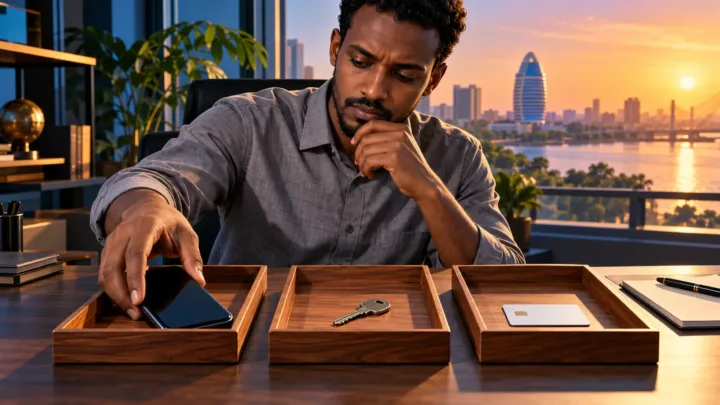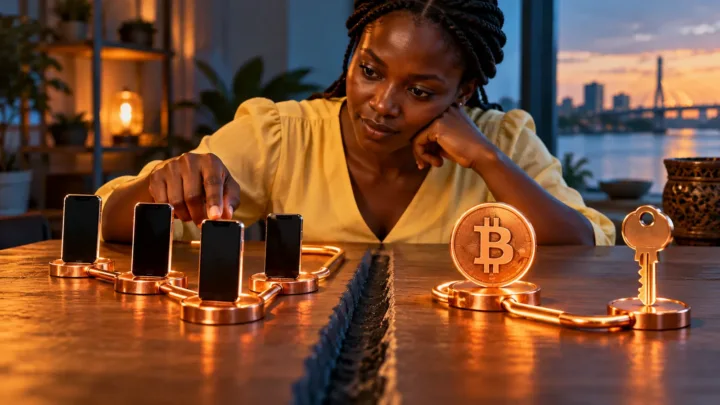
A button labeled “buy Bitcoin” can conceal several separate steps. A buyer in Zambia first pays in kwachas, then receives either a claim on a platform or actual BTC in a wallet, and may eventually need to withdraw those funds. Each stage has its own costs, timelines and risks. A transaction is not prudent simply because the app looks familiar.
Since September 2026, the intermediary’s status requires additional scrutiny. The Bank of Zambia has published licensing directives for companies providing virtual asset services. This development does not endorse any particular brand, but it gives buyers a verifiable question to ask: who is actually providing the service, and under what regulatory framework?
In brief
- Before paying, identify the contracting company, its status, the payment method and the total fees through to withdrawal.
- A P2P transaction requires keeping proof of payment and staying within the platform’s escrow process.
- Receiving a BTC balance in an account does not prove that you control the private keys; a small test withdrawal exposes the difference.
Buying Bitcoin in Zambia: define the desired outcome
The BrefCrypto feature on Bitcoin and mobile money gateways in Africa offers a starting point, but buying still requires an operational method. A reader who wants to hold BTC for several years will not necessarily choose the same route as someone looking to make a small Lightning transfer. Before choosing a seller, buyers should define their objective: the intended amount, payment method, destination wallet and the possibility of reselling in ZMW.
Anyone who simply wants to understand Bitcoin is under no obligation to buy. They can first install an empty test wallet, learn the difference between an address and a private key, and then observe prices and fees. This learning period reduces the risk of paying for an asset they are not equipped to receive or store properly.
For a first transaction, keeping the amount small is a verification tool. It does not guarantee a seller’s integrity for larger amounts, but it allows buyers to test the instructions, wallet compatibility and actual withdrawal process. Choose an amount whose loss would remain manageable. Videos showing a successful purchase never replace this personal verification.
The desired outcome must also specify the network. BTC on the Bitcoin blockchain and BTC on Lightning involve different processes. Some providers credit an internal account, while others send funds directly to an address. An offer for a synthetic token “linked to Bitcoin” on another blockchain should not, without explanation, be treated as BTC available on the Bitcoin network. The BrefCrypto feature on stablecoins notes that a token aiming to maintain dollar parity serves another purpose and does not offer the same properties as BTC.
Check the provider before choosing a payment method
The Bank of Zambia published its virtual asset directives in September 2026. They cover companies that exchange, transfer or hold virtual assets for others. Providers already operating when the directives entered into force have twelve months to apply for a licence. A previous administrative registration should not be presented as a definitive authorization.
Before making a payment, ask for the company’s legal name, the country governing the contract, the identity of the recipient of the fiat transfer and the status it claims. A marketing page may display one brand name while the terms of use identify another company. Recourse, withdrawal limits and complaint handling depend on the contracting entity, not the logo displayed prominently.
Access to a global app from Lusaka does not prove that the company holds a Zambian licence. The ability to create an account, view a ZMW trading pair or select “mobile money” from a list indicates technical availability at a given moment. That availability must be distinguished from local compliance. The directives provide for a public register of licensed providers; checking it or obtaining direct confirmation from the regulator is stronger evidence than a seller’s claim.
Choosing a provider should not depend solely on its legal status. Also consider account security, recovery methods, fees, incident history, customer support and the ability to withdraw funds. A licence does not guarantee Bitcoin returns or eliminate outages. It creates obligations for an identifiable company. A sound purchase requires both perspectives: compliance and practical operation.
Compare costs from start to finish
Three offers can advertise “zero commission” and deliver very different amounts of BTC. One may build its revenue into the exchange rate, another may charge for payment in kwachas, and a third may be expensive to withdraw from. The relevant calculation is straightforward: record all kwachas paid, every additional fee and the amount of BTC usable at the final destination. Then divide the total cost by that amount.
Consider a fictional example. One service debits 500 ZMW and credits 0.00006 BTC; another debits 510 ZMW and delivers 0.000062 BTC directly to your wallet. To compare them, calculate the effective price, but also check whether the first service will charge an additional withdrawal fee. The figures in this example are for illustration only; they do not represent a current quote.
Local market liquidity affects the price. A P2P seller may demand a premium when few counterparties offer immediate delivery against ZMW. The payment method also changes the risk: a bank transfer, mobile payment and cash do not provide the same evidence or dispute options. A slightly cheaper offer may not be worth losing a documented avenue of recourse.
Before pressing “confirm,” review any minimum limits, caps, processing times, network fees and refund terms if the order fails. This information should be clearly stated in the service’s rules. The Zambian directive requires providers to disclose costs and commissions before a transaction. A vague support response is not a fee schedule.
The ZMW/USD conversion can add an invisible cost. Comparing the rate with data from the Bank of Zambia can help identify a significant discrepancy, but the official midpoint is not necessarily a rate available to an individual executing a transaction. Comparisons should use offers that can actually be executed, are dated and involve the same amount.
P2P and mobile money: two forms of evidence, not one
The value of mobile money payments has grown sharply in Zambia, according to the Bank of Zambia’s 2025 annual report. This infrastructure makes using a mobile account to pay a BTC seller a natural option. It does not, however, make the mobile operator the guarantor of the BTC promised by that seller. The transfer of ZMW and delivery of the digital asset remain two separate events.
In a P2P purchase, the platform may temporarily hold the seller’s bitcoins in escrow. The BrefCrypto crypto glossary helps distinguish this mechanism from a simple promise based on trust. The buyer pays according to the instructions, after which the seller releases the BTC once payment is confirmed. This arrangement reduces a specific risk, but only if the user follows the procedure. Someone who suggests “finishing faster” through a private message is often removing the transaction’s most useful protection.
Check the payment recipient’s name and the order’s exact instructions. A changed number, a request to pay a third party or an additional charge demanded after the transaction has opened are reasons to stop. The other party’s receipt may be false; verify the movement in your own account and use the dispute tools provided. Never share an OTP code, password or recovery phrase with the seller.
Mobile payments can fail or remain pending. If that happens, keep the transaction ID, time, amount, recipient number and P2P order ID. Do not make multiple payments to “correct” the first one without documented instructions. Duplicates complicate claims and can tie up more funds. A legitimate support team should be able to link the fiat payment evidence to the crypto order.
Products designed to connect mobile money and Lightning also exist. The Human Rights Foundation describes BitZed as a bridge between Bitcoin and Zambian mobile accounts. This is a description of functionality, not a purchase recommendation or confirmation of licensing. Fees, availability and applicable rules must be checked with the provider and the central bank at the time of use.
Withdraw the BTC and plan the exit
A purchase is not complete when the dashboard displays a balance. If the goal is to hold your own keys, make a test withdrawal to a wallet you control. Copy the address from the receiving app, check its first and last characters, select the network specified by that wallet and confirm the amount after fees. An address replaced by malware or a network error can make the transfer irreversible.
The BrefCrypto guide to how crypto wallets work distinguishes self-custody from a hosted balance. Self-custody removes part of the platform-related risk, but creates a duty to back up the wallet. No one can magically reconstruct a lost recovery phrase. Anyone claiming to be an agent who asks for the recovery words to “validate” a withdrawal is attempting to take control of the funds.
Exiting into kwachas deserves as much attention as the purchase. If the user needs to sell, which buyers are available, what price do they offer and how long does settlement take? A platform may allow users to buy BTC without providing a satisfactory local conversion route. Check the fiat withdrawal process before concentrating a significant amount on the service.
Finally, keep the necessary records: entry price, fees, ZMW receipt, transfer history and the amount recovered in any eventual sale. These records support a complaint and personal tax documentation. They should be kept separately from the key backup. Rigorous management does not make Bitcoin risk-free; it makes errors and losses easier to understand and, in some cases, prevent.
Buying Bitcoin in Zambia can therefore be reduced to a consistency test: is the provider identifiable, is the payment traceable, does the BTC arrive at the chosen destination, and does an exit remain possible? If one answer is missing, the best order may be the one you do not place yet.
Sources and verification limits
- Bank of Zambia, Directives on Virtual Assets, 2026 (reproduction of the Gazette text by a third-party website), particularly directives 4, 18, 33 and 52.
- Bank of Zambia, 2025 annual report, chapter on payment systems.
- Human Rights Foundation, description of BitZed and the mobile money–Lightning connection.
No BTC/ZMW price, commercial fee or regulatory status for a named platform is asserted for the day the article is read. These details change and must be checked before each transaction.