Crypto Africa: From USDT Directly to Bills
The problem is familiar: receive crypto, send it to an exchange, convert it, withdraw naira and only then make a payment. SpaceTrade wants to shorten that chain as Nigeria is already formalizing a crypto market estimated at $92 billion.
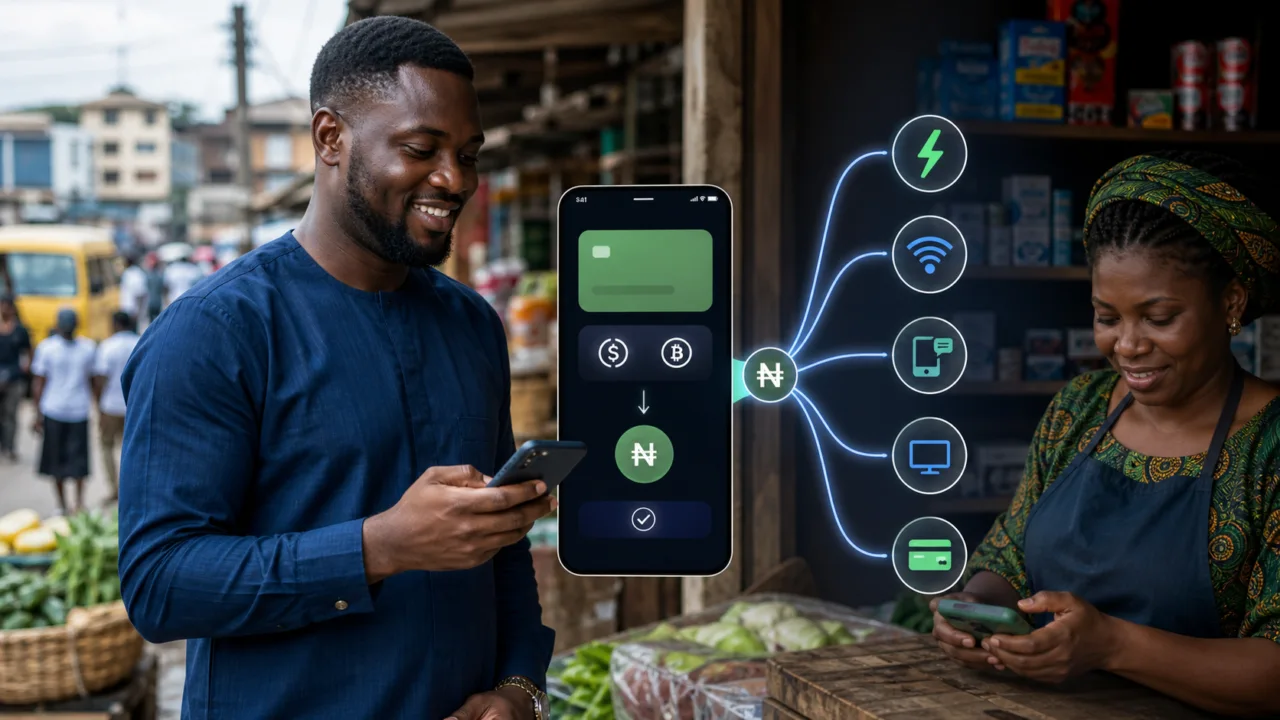
The fintech notably allows users to hold certain digital assets, transfer them, perform swaps and convert crypto into naira.
Above all, it wants to bring this infrastructure closer to everyday spending. Airtime, mobile data, electricity and television are among the services announced.
On its own website, SpaceTrade also highlights bill payments and physical or virtual cards.
The idea is simple: receiving stablecoins for work or a transfer should no longer require several platforms before the money can be used.
Nigeria Already Has the Users
SpaceTrade is entering a market where usage exists even before the infrastructure is perfect.
Nigeria ranked sixth worldwide in Chainalysis’s 2025 Global Crypto Adoption Index. Sub-Saharan Africa, meanwhile, recorded 52% growth in crypto activity year over year.
The focus is therefore beginning to shift. Creating another place to buy tokens offers less value if users already have exchanges and wallets. Making payments easier becomes more attractive.
This dynamic follows the recent arrival of cNGN on new blockchain rails designed for payments.
Stablecoins play a specific role here. Their relatively stable price makes it possible to receive digital dollars and convert only what needs to be spent into local currency.
The Competition Is Shifting Toward Utility
SpaceTrade also plans to offer eSIM services, naira cards and, eventually, international dollar cards. However, some of these features remain roadmap items announced by the company.
That is an important distinction.
The next battleground for crypto in Africa will probably not be won by whoever offers the largest number of tokens. It will depend more on exits into local currency, fees, liquidity, cards and everyday payments.
This trend extends beyond Nigeria. Stablecoins are already playing an increasingly important role in cross-border African payments.
SpaceTrade specifically wants to occupy the space between a wallet filled with USDT and a bill to be paid in naira. If the experience really becomes as simple as the company promises, crypto will gain something more valuable than a new marketing use case: everyday utility.