Crypto Africa: ContiSX puts blockchain in the phone
The ContiSX Phone is based on a fairly unusual idea: making the smartphone itself the gateway to a blockchain financial infrastructure.
The approach comes as Nigeria’s crypto market is gradually emerging from the gray area. ContiSX wants to go further than simply installing another wallet on Android.
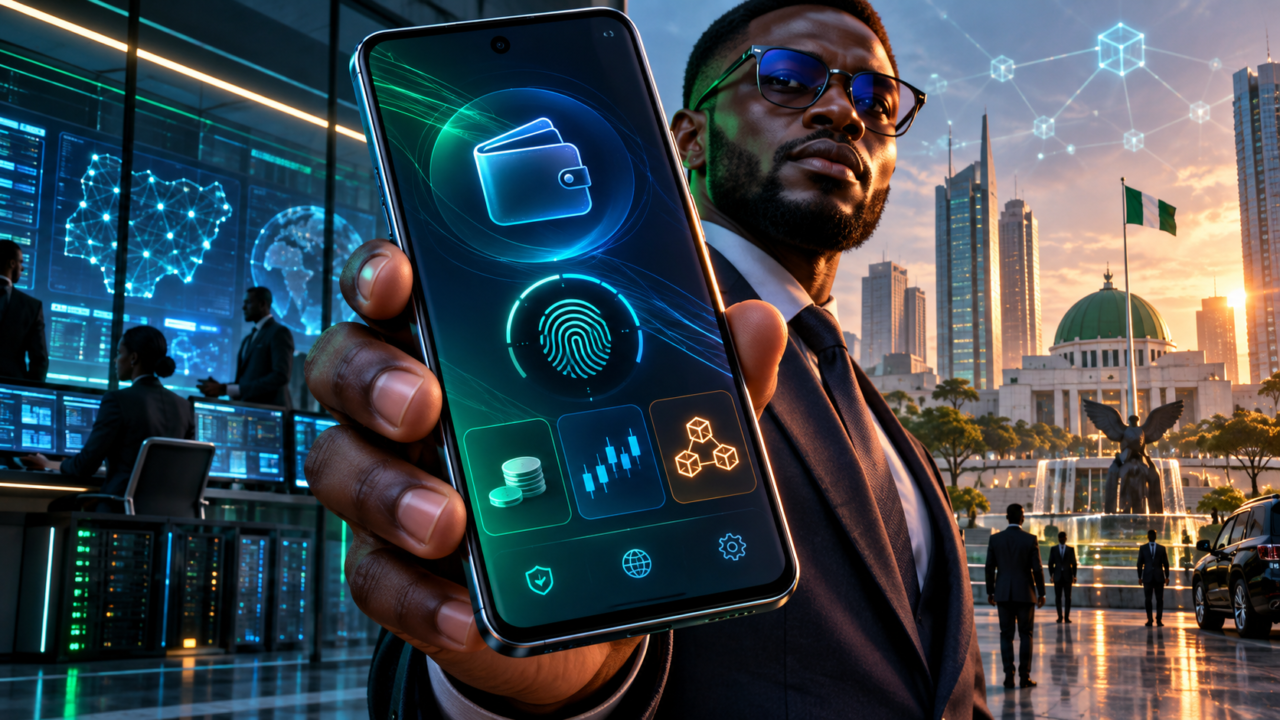
Each phone is linked to a ContiSX Smart Account. According to the company, this identity enables access to the Securities Vault, the central securities depository, the markets and ContiSX Pay. The keys remain in a secure enclave built into the phone. Users can then authorize transactions and payments using their fingerprint or facial recognition.
ContiSX’s official specifications list a 6.7-inch 120 Hz AMOLED display, 8 GB of RAM, 256 GB of storage, a 5,000 mAh battery, 5G, NFC and an EAL6+-certified secure element.
Yet the blockchain component remains the real product. ContiSX says it anchors the user’s identity on-chain and natively integrates its custody, trading and payment tools.
WeeTracker notes, however, that no independent security audit demonstrating the promised protection against interception or the falsification of communications has been published. This is an important point for a device that is marketed precisely on the basis of digital sovereignty.
At 550,000 naira, the mass market will have to wait
The price quickly puts the project into perspective.
One unit costs 550,000 naira. ContiSX offers a price of 500,000 naira per unit for two to five devices, and 450,000 naira from six units onward. Delivery is free within Nigeria.
WeeTracker estimates the starting price at around $400 and points out that the average smartphone sold in Nigeria cost only $134 in the first quarter of 2026. More than 60% of sales still involved models priced below $150. The ContiSX Phone therefore belongs to a different category.
This choice appears deliberate. The company lists banks, security forces, government agencies, critical infrastructure and large businesses among its potential users. Organizations can manage their employees’ identities and permissions and, according to ContiSX, revoke access to a lost or compromised phone in roughly four seconds.
The strategy contrasts with digital Africa, where the focus is on finding more affordable smartphones and connections. Here, price takes a back seat to security and access to the financial ecosystem.
ContiSX does add a local selling point: for one year, access to its Exchange and CSD is expected to be zero-rated, meaning users will not be charged for data consumed by these services.
The real bet lies beyond the phone
The smartphone probably only makes sense if the rest of ContiSX works.
In April, the company announced that it had received an Approval-in-Principle from the Nigerian SEC to establish a new securities exchange. The approval was preliminary and still required the company to meet the necessary conditions before full operations could begin.
The launch, initially expected in September, is now listed for October 19, 2026. ContiSX wants to offer equities, bonds, Treasury bills, private markets, derivatives and tokenized assets. Its platform also plans to offer stablecoins fully backed by reserves and connected to its central securities depository.
That is why describing it simply as a “blockchain smartphone” would be reductive. The phone serves as a physical terminal for an ecosystem seeking to bring together identity, custody, communications and financial markets.
Nigeria’s context gives the project a certain logic. The country already accounts for a considerable share of Africa’s crypto activity, while the SEC is considering much stricter requirements for the custody of digital assets. Key security, identity and asset control are therefore becoming commercial issues, not merely technical ones.
A difficult challenge remains: convincing institutions and businesses to adopt an additional device when their employees already have iPhones or Android phones, and then creating enough activity on the exchange to make this integration genuinely useful.
The ContiSX Phone is unlikely to win its battle on the number of apps or on price. It will have to prove that integrating blockchain, identity and financial markets directly into the phone offers something a simple secure application cannot provide.