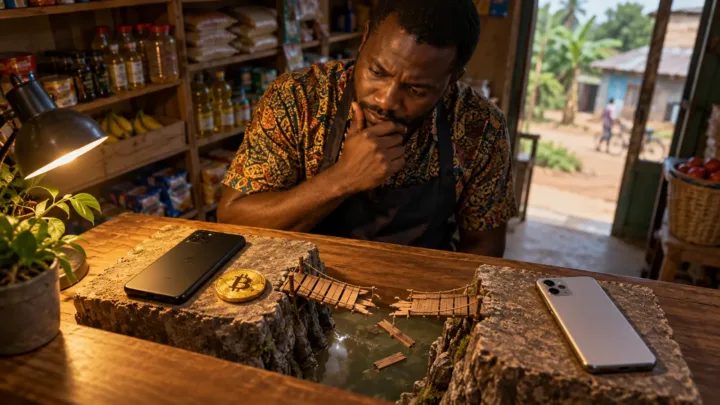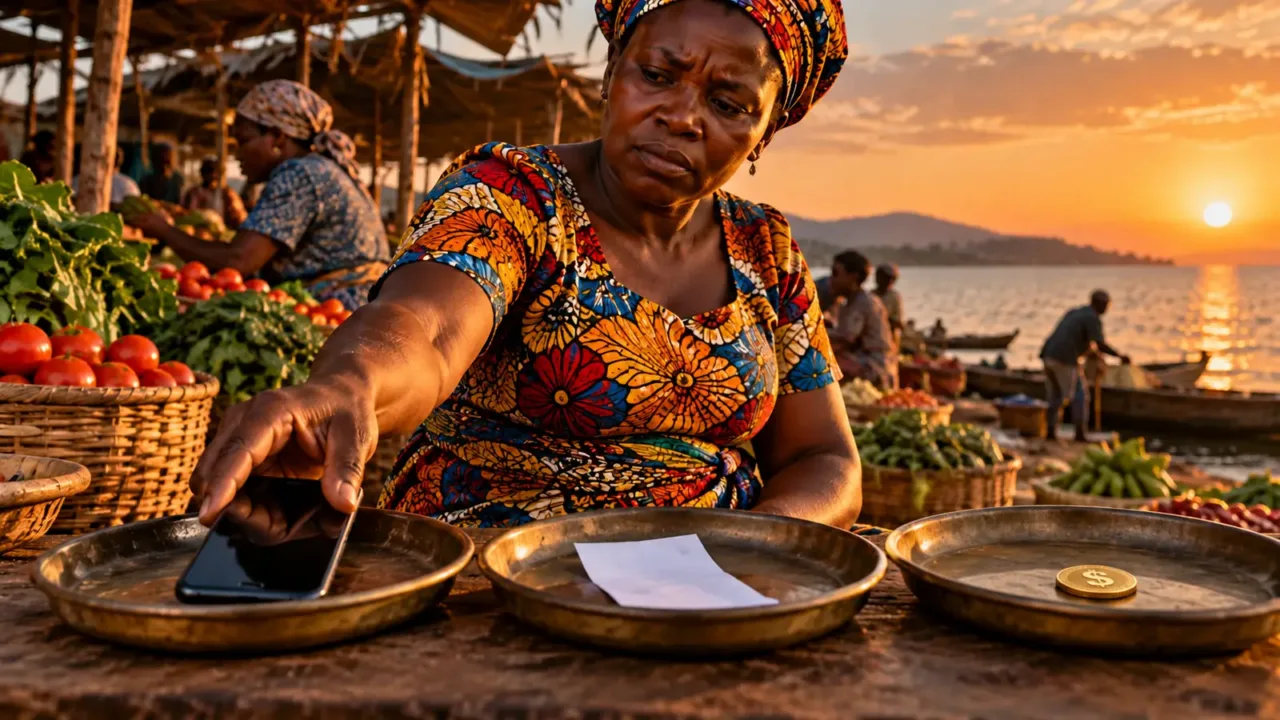
Our documentary research did not confirm a universal official Airtel Money Malawi-to-USDT gateway. This guide does not suggest bypassing the rules and does not recommend any seller. It explains how to check the country, contract, beneficiary and net amount before a potentially permitted transaction, and how to identify requests that should bring the process to a halt.
In brief
- A correctly executed mobile payment does not prove that the promised tokens were delivered.
- Airtel Money terms in another country do not automatically apply in Malawi.
- The seller, payment operator, custodian and USDT issuer must be identified separately.
USDT with Airtel Money in Malawi: describe the actual contract
Our guide to crypto and mobile-money channels begins by separating the currency sent from the asset expected in return. This distinction helps reframe an advertisement: is the customer paying an operator that provides the conversion itself, or an individual using an ordinary transfer service?
An official integration should be traceable to a specific local announcement and terms of service. An option added by an independent merchant does not provide that evidence. You need to know who is selling the asset, who receives the kwacha and which party is responsible if the promise is not fulfilled.
The CFTC identifies Airtel Mobile Commerce as one of Malawi’s mobile-money players in a July 2025 decision. That helps describe the payments landscape. The document does not certify a USDT feature or authorize a crypto seller using the operator’s name.
The distinction between a genuine brand and a substantiated promise is therefore essential. A fake agent can reuse an authentic logo and offer an activity that does not appear among the verified functions. Familiarity with the name is no substitute for checking the product and the recipient’s exact role.
This review may conclude that there is no recommendable offer in the case examined. It does not prove that any future development would be impossible. It means only that the research did not find the evidence needed to present a gateway as officially available to readers.
Check the country, company and applicable terms
An international group may use a similar brand in several countries, with different companies and regulatory frameworks. Currencies, limits and accepted documents may vary. A foreign tutorial or an outdated fee schedule should not automatically become a Malawian procedure simply because Airtel Money appears on the page.
The source should specify the country and contracting entity. You should also check the document’s date and the product involved. Terms for a merchant service, loan or international transfer do not necessarily describe ordinary use of a personal wallet. The relevant document must match the function actually being considered.
The full terms in the consumer PDF identified during this research could not be retrieved directly because of access protection. We therefore draw no conclusion about any current fee or specific refund clause. For a real transaction, the user must obtain the applicable version from the official service before committing funds.
Difficulty accessing documentation does not justify using a document from another country as a substitute. It must remain an explicit limitation. If the seller claims that the terms are identical everywhere, they should provide verifiable local evidence rather than a simple assurance in a conversation.
The contact channel should also be found independently. A link sent by the person requesting payment may lead to a copied website or a data-collection form. Stop the exchange if verification of the other party depends solely on what they say about themselves.
Understand what you would actually receive
USDT is a private token, not cash deposited on a phone. Tether’s terms distinguish the rights and restrictions attached to its services. A holder who acquired tokens on a secondary market does not automatically have a universal right to direct reimbursement from the issuer.
The token’s name is not enough to identify the transfer route either. The protocols documented by Tether show that several networks exist. The destination and sending service must be compatible. An identical symbol on two interfaces does not demonstrate that compatibility.
Our guide to crypto wallets and key control explains another distinction: an internal balance does not necessarily represent assets under your direct control. You need to know where the tokens would appear, who could move them and what conditions might restrict withdrawals.
A screenshot showing digital dollars may therefore conceal several different products. The seller must specify whether they are delivering verifiable USDT, a claim against their company or another asset. The customer should not have to discover the difference after sending the kwacha.
Technical verification does not confer any legal authorization. It answers only the question of what the asset is and how it works. The service’s status, payment compliance and the rules governing the monetary channel must be examined separately before any potential transaction.
Link the beneficiary to the seller without accepting a front
The beneficiary’s name must match the accepted terms and the expected identity. A request to pay a relative, assistant or different company requires independent clarification. The seller’s claim that they control the account does not automatically resolve the responsibility issue.
Our report on KYC checks and remedies helps prepare the relevant supporting documents. The account identity, source of funds and payment path must remain consistent. A transaction that is difficult to explain before execution may become even more complicated when a service requests documents after a block.
A transfer receipt documents one stage of the monetary process. By itself, it does not prove that the beneficiary was supposed to deliver exactly the expected amount of USDT. The sale terms, references and messages must be compared to distinguish a payment error from a commercial non-delivery.
The user should not automatically send another amount to resolve the loss of the first one. Fake support agents often refer to validation or unlocking fees. Any request must be checked through the official channel, with a precise explanation of its basis and recipient.
Login and wallet secrets are not ordinary supporting documents. Handing them over can expose the remaining assets, even if the initial transaction appeared limited. A complaint should present the relevant facts without giving the other party the power to act on the customer’s behalf.
Calculate the full expense rather than focusing on an attractive rate
Our method for calculating the total cost of crypto purchases compares the kwacha actually spent with the amount available. The same destination and steps must be specified when comparing two offers. A quoted price before deductions should not be compared with one already calculated after withdrawal.
Consider a fictional example: an offer requires 160,000 MWK plus an 800 MWK payment for 80 USDT advertised. A deduction of 1 USDT leaves 79 USDT net. The total expense reaches 160,800 MWK, or approximately 2,035.44 MWK per USDT available.
If those 79 USDT were then sold for 1,900 MWK each, the gross proceeds would reach 150,100 MWK. The difference from the initial expense would be 10,700 MWK, before any other possible fees. These figures describe neither an Airtel Money fee nor a price observed in Malawi.
The example shows that a stablecoin trading close to the dollar can still generate a loss measured in the household’s currency. An entry margin, exit margin and transfer costs may be enough. You should not automatically attribute every difference to a token depeg or a change in the dollar.
The recovery time must be considered alongside the amount. A withdrawal that is theoretically possible may not suit an urgent expense. The absence of a confirmed timeline or responsible contact can make the process unsuitable, even when the price calculation appears acceptable.
Set the conditions that should stop the process
The RBM’s 2026–2030 strategy outlines work on the framework for virtual assets. It does not prove that an individual seller already holds the appropriate authorizations. The research confirmed no approved local channel to recommend for the proposal described in this guide.
Monetary transactions must also be properly classified. The RBM’s foreign-exchange notice of 8 August 2025 highlights the importance of authorized channels. A mobile payment followed by delivery of a token should not be presented as a general exemption from checking the applicable law.
A request to provide a false reason, use someone else’s account or split payments to avoid a check should stop the process. Such instructions do not make the service more professional; they weaken the consistency of the evidence. A small test transaction does not validate a practice that remains legally or contractually unconfirmed.
Research conducted as of 20 October 2026, with no purchase, withdrawal or authenticated account tested: the limitation remains explicit. To speak honestly about USDT with Airtel Money in Malawi, you must first identify who sells, who collects the money and what evidence supports the arrangement. Without those answers, the right decision may simply be not to transfer the funds.