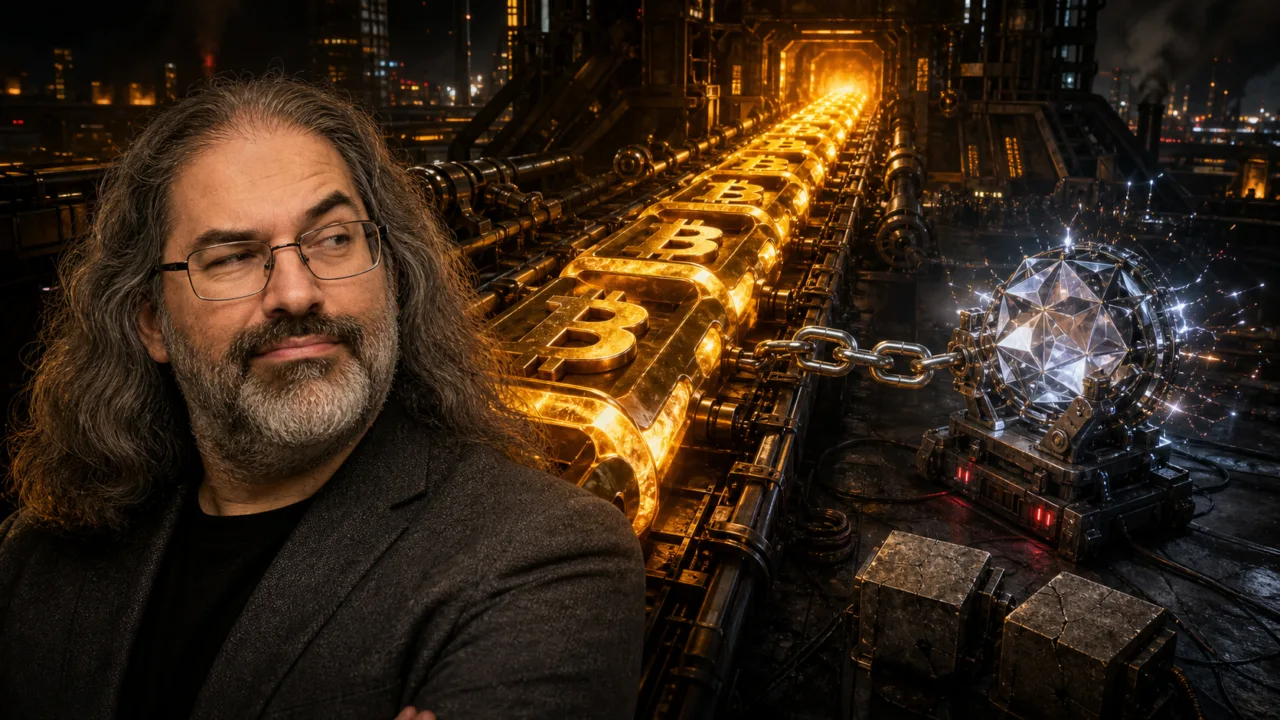
Bitcoin never adopted BIP-110
It all stems from a disagreement over the use of Bitcoin blocks. BIP-110 sought to temporarily limit certain non-financial data, particularly data associated with Ordinals, BRC-20 and Runes.
Bref Crypto had already detailed the BIP-110 controversy and Luke Dashjr’s removal from his role as BIP editor.
The proposal set a miner-support threshold of 55%. At its peak, it secured only around 2.6%. When nodes enforcing BIP-110 began rejecting blocks from the main chain at block 961 632, the result was brutal: their branch produced only two blocks before virtually grinding to a halt.
Bitcoin, meanwhile, carried on.
The official BIP-110 document is now marked “Closed.” That is difficult evidence to get around.
David Schwartz attacks the idea of “repairing” Bitcoin
The debate flared up again when a BIP-110 supporter explained on X that his side had accepted its failure on the main chain before deciding to “continue Bitcoin elsewhere.”
He was referring in particular to the failure of their attempt to “repair the legacy chain.”
David Schwartz singled out that wording: “Listen to yourself.”
The criticism is clear enough. Calling the Bitcoin chain backed by the overwhelming majority of hashrate a “legacy” chain in need of repair already assumes that the minority holds the correct definition of Bitcoin.
That is precisely the governance problem Bref Crypto raised when explaining why a handful of nodes cannot decide Bitcoin’s rules on their own.
Schwartz has also defended a fairly liberal position from the outset: on a public blockchain, if someone pays to use the network’s resources, that use does not become illegitimate simply because another user considers it “spam.”
BLAKE2b takes the split much further
The new branch is set to go considerably further than BIP-110. Its promoters want to replace Bitcoin’s SHA-256d Proof of Work with BLAKE2b-256.
That changes everything.
The specialized ASICs currently securing Bitcoin could no longer simply redirect their computing power to this new chain. The project is therefore attempting to avoid the trap that doomed the first branch: inheriting Bitcoin’s difficulty without having enough hashrate to produce blocks normally.
So far, no major exchange, wallet or leading Lightning player has announced its support.
And the core of the conflict remains unchanged. Opponents of inscriptions want to protect Bitcoin from what they consider parasitic data. Their opponents defend a blockspace open to anyone willing to pay the price. Images had in fact been inscribed on Bitcoin long before the emergence of Ordinals.
September 1 will therefore probably not determine Bitcoin’s future. It will mainly show whether this minority can build an economy, attract miners and convince users to rally around its own chain. Without that, changing the algorithm does not solve the problem that killed BIP-110: consensus cannot be decreed.