Bitcoin with M-Pesa in Ghana: understanding the real question
The guide to crypto in Ghana sets out the local reference points. Behind this search, users often want to buy Bitcoin from their phone rather than with a bank card. The real questions are therefore: which mobile account do they have, in which country, in what currency and with which operator? The term M-Pesa alone does not define these parameters.
A historic Safaricom communication about M-Pesa listed Ghana among the ecosystem’s markets. That reference explains some of the older associations, but it does not justify assuming that a Ghanaian customer has access to a Safaricom menu today. Brands, commercial structures and local services have changed. Check the current offering instead of relying on an outdated screenshot taken out of context.
The official presentation of Telecel Cash in Ghana describes transfers and payments in particular. It does not demonstrate a native Bitcoin integration. If a crypto seller accepts this payment method, that adds a separate commercial transaction. The distinction should be clear in your process and in the records you keep; otherwise, an incident becomes difficult to attribute to the right party.
Identify the account, currency and corridor
A Ghanaian local account operates under different conditions from an account used in Kenya or the DRC. Onboarding requirements, identifiers and limits may vary. Check the account holder, the account’s country, the currency and the available transfer options. The same international brand does not guarantee compatibility across all accounts, and a foreign number does not automatically provide local access.
If the transaction starts outside Ghana, describe the full corridor. The payment may involve a conversion and an additional intermediary before reaching a local seller. Each party may add fees, limits and compliance requirements. Do not describe the route as a “direct transfer” if several contracts and currency conversions are actually involved. The final recipient must also be able to use the funds received.
Before sending money, ask which currency the order requires. An offer quoted in GHS should not be paid as though it were quoted in KES, even when both interfaces display a mobile payment option. Record the amount debited, the amount credited to the beneficiary and the commissions. Currency and conversion differences can cost more than the blockchain fees highlighted in the tutorial.
Separate mobile payment from Bitcoin delivery
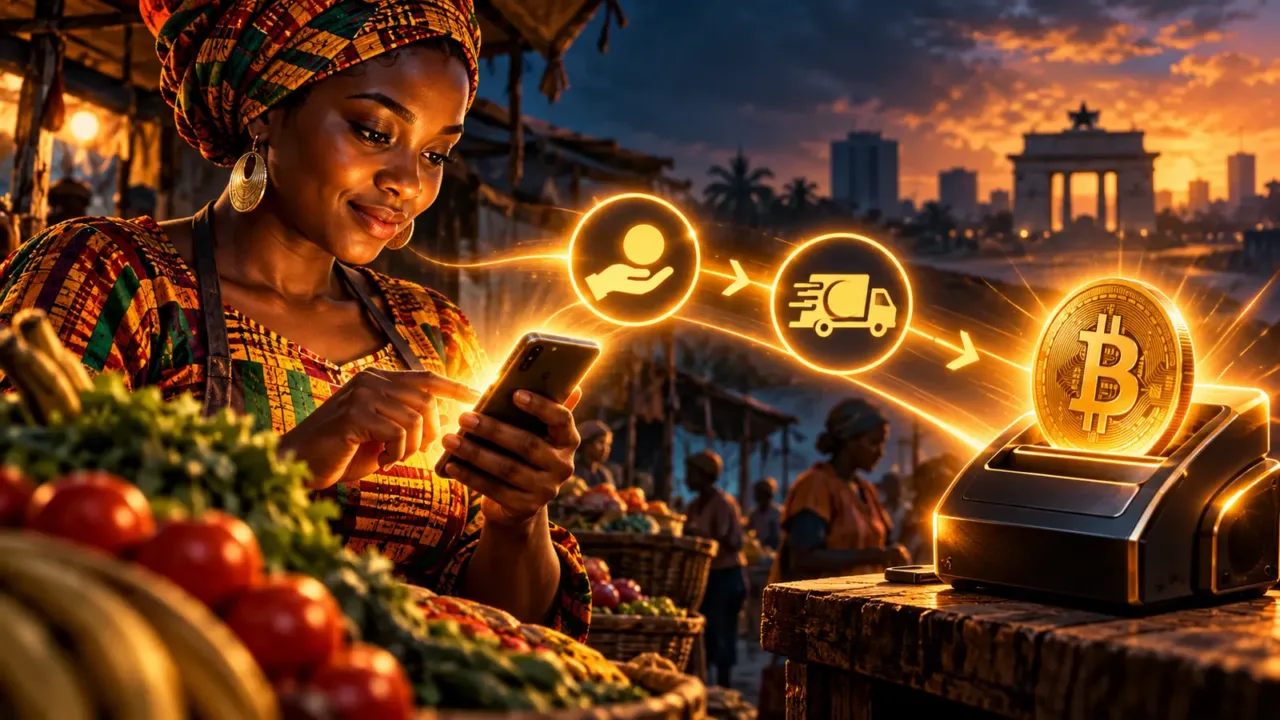
In a typical route, one operator processes the local payment, a seller receives the cedis and a platform handles the crypto delivery. These roles remain separate. The operator does not become responsible for the BTC amount simply because the mobile transfer succeeds. Likewise, the exchange may not control all refund procedures for the local payment.
Check the contract or order terms before paying. Who is selling the Bitcoin? How much must be delivered? To which account or wallet? At what point can delivery be verified? An answer limited to “send it to this number” leaves too many questions unresolved. For a first transaction, clear commitments matter more than promises of speed.
Our guide to buying cryptocurrency with mobile money provides additional reference points. No partnership between an operator and a platform should be inferred from a simple logo in an advertisement. If an integration is being claimed, look for dated official confirmation that corresponds to the exact product. An old collaboration does not validate every current offer from a seller.
Verify the provider and prepare the order
Identify the entity providing the crypto service, whether it serves Ghanaian residents and how its complaints process works. The national framework for providers does not certify every advertisement you may see. The Bank of Ghana outlines its virtual asset framework; your own checks must then cover the company and the activity being offered, without confusing registration, a sandbox and a final licence.
Set up the account using your real identity and the required documents. Also check the terms of the mobile account. An purchase arranged through someone else’s account can create name mismatches and complicate a claim. Do not give a merchant control of your phone to get around an onboarding problem: doing so exposes your payment, messages and crypto access at the same time.
Read the minimum and maximum amounts, processing time and recipient details before opening the order. If the order does not match your local payment channel, do not pay just to test it. Ask for clarification through official support or choose another verifiable service. An attractive offer that does not specify the beneficiary and the amount to be delivered is not a sufficient basis for committing funds.
Calculate the cost of the route through to the BTC received
Add together the cost of funding the mobile account, the seller’s price, the payment fee and any Bitcoin withdrawal fee. The net BTC amount lets you compare the offer with a bank purchase or another channel. Fixed fees can weigh heavily on small transactions. A low mobile payment fee does not prove that the complete route is cheaper than an alternative.
Fictional example: you allocate 900 GHS to the order, pay 10 GHS in local fees and receive 0.001 BTC net in your wallet. The total cost reaches 910 GHS. If another offer costs 920 GHS but delivers 0.00103 BTC net, its price per BTC may be lower. Compare the ratios and the conditions instead of focusing only on the starting amount.
The method for calculating crypto fees in Africa helps bring together costs that are spread across the transaction. The examples in this guide represent neither a current exchange rate nor an operator’s tariff. Request a recent quote and record its validity period. The BTC price and withdrawal cost can change while you prepare, especially when comparing offers displayed at different times.
Make the payment and avoid manipulation
Check the number, displayed name, amount and associated order before confirming. Reject a last-minute change of beneficiary sent privately without an official procedure. A seller who requires a different account from the one originally specified creates an inconsistency in the evidence. A cheaper offer does not compensate for the loss of traceability and applicable protections.
Keep your PIN, login codes and confirmations to yourself. The operator or seller does not need your secret code to receive a normal payment. Do not approve a different request because you believe you are “confirming receipt of Bitcoin.” Read what your phone is actually asking you to authorize. A message label does not replace the payment screen.
After sending the money, check your account history. If an interruption occurs, verify whether the account was debited before trying again. Keep the receipt and reference number, then report the payment through the order’s official channel. Do not close an order that has already been paid in order to continue in a private group. Leaving the official process can complicate a dispute, even if the seller promises an immediate resolution.
Confirm delivery and choose the right network
Check the BTC amount from your own account or wallet. A “payment received” message does not prove delivery. On a platform, distinguish between an internal balance and an external withdrawal. If a personal wallet is the destination, check the accepted formats, the Bitcoin network and the expected confirmations. Some services offer representations of BTC on other chains, which require different compatibility.
For a new route, a test transaction can limit the amount at risk, subject to fees and minimums. Wait for receipt before making the main transfer. Record the external transaction ID and verify the address from a trusted device. Malware that changes a copied address can send funds elsewhere, even after several successful transactions in the past.
Wallet security should be prepared before the withdrawal. A recovery phrase stored on the same phone as all your accounts creates a common point of failure. Never share it with the seller. Receiving BTC into a poorly secured self-custody wallet does not eliminate the risk; it shifts the risk to an arrangement you must control.
Prepare the exit and local recourse
Test the resale process and conversion back to GHS before increasing your exposure. Check the buyer’s price, the payment received and whether you can withdraw or use the mobile balance. A successful blockchain transaction does not guarantee that cedis will be available by a specific deadline. The final recipient’s needs should guide the comparison of the entire route.
If something goes wrong, keep the payment case separate from the crypto case. Provide the local reference to the operator and the order number to the provider, together with the relevant evidence. Never hand over a private key to “speed up” support. Recovery offers that require another payment can make the loss worse. A verified official channel remains preferable to a spontaneous contact who appears after the incident.
Bitcoin with M-Pesa in Ghana therefore requires clarification, not a copy of a Kenyan tutorial. Identify the current local service, currency, responsibilities and net cost. If the advertised route does not match your actual account, do not send the money until it has been verified. A professional purchase starts with precise terms and evidence—not with a familiar brand used out of context.