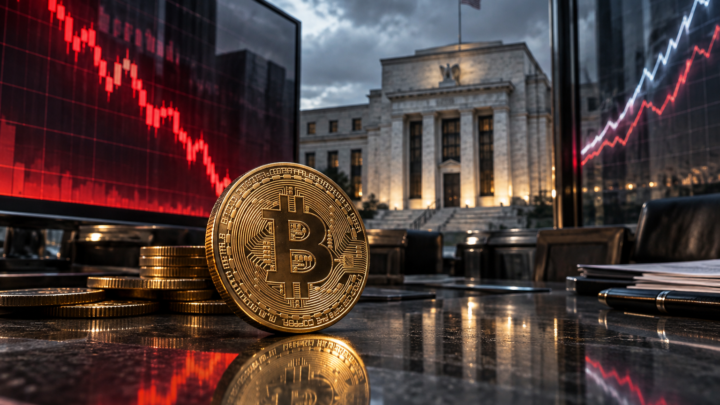
Bitcoin is rising without genuine retail euphoria
There are early signs that retail investors are returning. In early September, South Korea’s kimchi premium had moved back to around 1%, showing that local demand for Bitcoin was beginning to recover. However, this was nothing like the periods when the Korean premium surges and retail investors rush into the market en masse.
Glassnode reached a similar conclusion in late August. Bitcoin had rebounded from $64,000 to $78,300, with strong institutional inflows. Yet its Market Pulse still indicated slowing retail activity, relatively low secondary-market volumes and spot liquidity that did not yet resemble a broad speculative phase.
Search data also tells an interesting story. Interest in Bitcoin rose in September, but searches for “buy bitcoin” have not yet shown sustained growth. After a temporary peak, its daily index had fallen back to 18 on September 22, compared with a 30-day average of 41, according to Google Trends data aggregated by BitcoinMargin.
That is the contradiction: the price woke up much faster than the crowd.
In previous highly speculative markets, there was generally a much more visible increase in small orders, Google searches, account openings, spot volumes and social activity.
We are not there yet.
Wall Street has taken the lead
While retail remains relatively quiet, money is already returning through traditional financial channels.
U.S. spot Bitcoin ETFs absorbed approximately $999 million on September 21, followed by another $364.4 million the next day, according to data from Farside Investors. In just two sessions, that amounts to approximately $1.36 billion in net inflows.
The phenomenon is not new. BlackRock’s IBIT Bitcoin ETF was already managing approximately $60 billion at the beginning of September. Since their launch, ETFs have fundamentally changed how capital flows into Bitcoin.
However, it is important to avoid taking a shortcut: ETF does not mean institutional investors exclusively. An individual with a brokerage account can perfectly well buy IBIT. ETF flows therefore do not allow us to cleanly separate Wall Street from retail.
The difference lies more in the market’s current structure.
Regulated vehicles are attracting billions, while native Bitcoin activity is not yet showing the same acceleration among small participants. Glassnode also distinguishes between the activity of small and large entities by looking in particular at transfer sizes. Historically, a sharp acceleration in small transactions is more commonly associated with periods of intense speculative excitement.
CoinMarketCap has observed another particularity: retail investors returning to crypto are not necessarily choosing Bitcoin. Alice Liu, CoinMarketCap’s head of research, recently explained that institutional money was concentrating more heavily on Bitcoin, while retail attention was spreading toward memecoins, AI-related tokens and other speculative assets.
Bitcoin is gradually becoming the serious asset of the crypto market.
Strangely, this may delay its moment of mass-market FOMO.
“Still early” does not mean Bitcoin is cheap
This is where my position needs some nuance.
Saying that we are “extremely early” obviously does not mean Bitcoin has just been discovered. BTC has existed since 2009, has major ETFs, appears on corporate balance sheets and is already worth tens of thousands of dollars. BlackRock is now even turning Bitcoin into a gateway to Wall Street.
I am referring to something else: we may be early in this new phase of market participation.
The scenario becomes interesting if Bitcoin continues to rise while the general public remains relatively disengaged. A move toward new levels could gradually turn indifference into curiosity, curiosity into buying, and buying into FOMO.
That is precisely how emotional cycles work.
Retail investors generally do not buy Bitcoin en masse when nobody is talking about it. They return when the price gives them a reason to look.
The indicators I would now watch are fairly straightforward: a sustained rise in spot volumes, an acceleration in small transactions, significantly higher Google interest, an increase in crypto app downloads and, above all, the return of Bitcoin conversations well beyond X and communities already committed to the sector.
A few signals are beginning to emerge. South Korea is one of them.
But the crowd?
Not yet.
That is precisely why I consider the current situation more interesting than Bitcoin at $84,000 might suggest. BTC has already started moving. The general public, meanwhile, has not really started chasing it yet.
In brief
- In late August, Glassnode was still reporting relatively weak retail activity despite Bitcoin’s recovery.
- U.S. Bitcoin ETFs attracted approximately $1.36 billion on September 21 and 22.
- Retail investors are beginning to return to certain markets, particularly South Korea.
- However, mainstream interest does not yet resemble a genuine FOMO phase.
- “Being early” here refers to the cycle’s participation phase, not Bitcoin’s age or valuation.