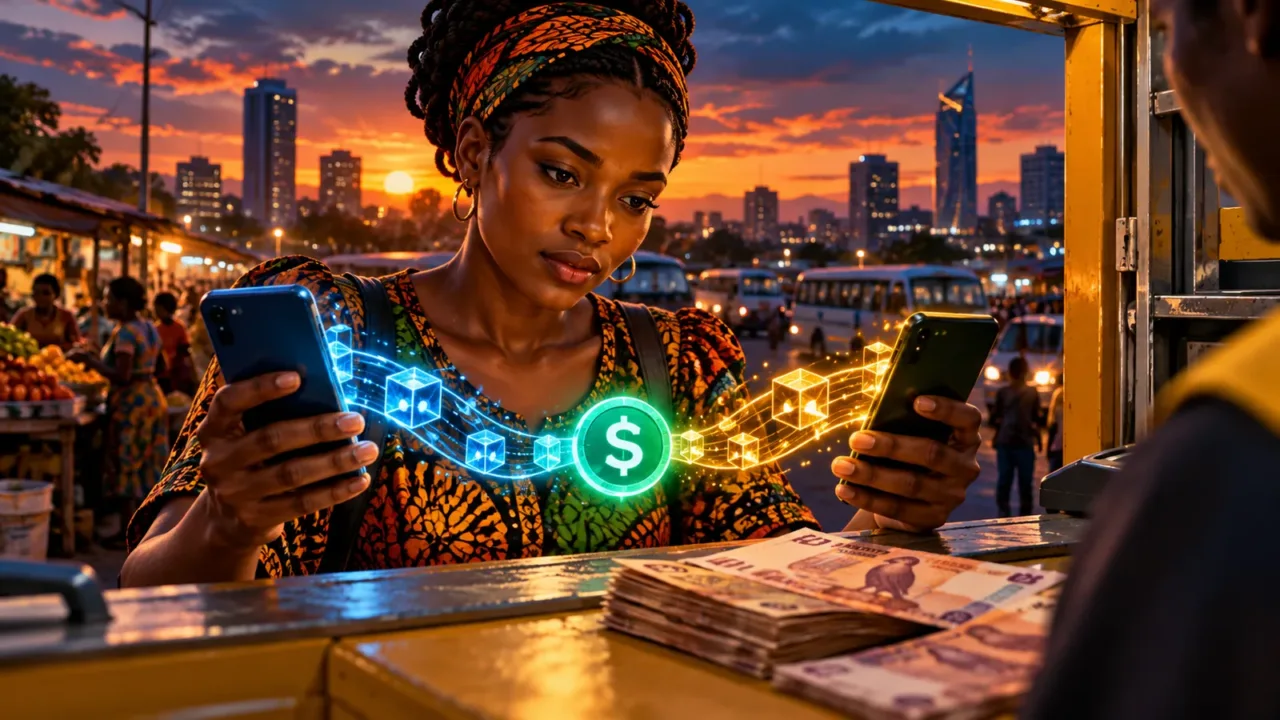
USDT can make it easier to access an asset designed to stay close to the dollar, but buying it in Zambia is not simply a matter of “one token equals one dollar.” Users pay in kwacha, accept a local exchange rate, choose a technical network and then rely on a wallet or platform to hold and resell their balance. A mistake at any one of these stages can cost more than the stated fee.
The regulatory framework has also evolved. Zambian directives issued in September 2026 govern companies that exchange or custody virtual assets for clients. They do not make USDT a national currency, nor do they override directives requiring the kwacha for domestic settlements. This guide therefore focuses on a verifiable process rather than a list of commercial websites.
In brief
- Compare the kwacha amount actually paid with the USDT available after payment, conversion and any withdrawal.
- Identify the token, its issuer and the network accepted by the recipient before providing an address.
- Check whether you can resell the USDT and obtain ZMW; the dollar peg shown on screen does not guarantee a local price or constant liquidity.
Buying USDT in Zambia: define what you want to receive
The BrefCrypto stablecoin guide distinguishes a private token targeting dollar parity from a dollar bank deposit. That distinction is the starting point for any purchase. Buyers should determine whether they intend to keep the USDT on an exchange, send it to their own wallet or transfer it immediately to someone else. These three scenarios do not require the same network or incur the same fees.
A balance of 100 USDT in an app may represent a claim against the platform as long as the user does not hold the private keys needed to move the token. A personal wallet provides more technical control, but requires protecting a recovery phrase and having the asset needed to pay network fees. Before buying, users should know how the balance will be used once received. Without a defined destination, choosing “the cheapest network” makes no sense.
Tether publishes its list of supported protocols, covering several separate blockchains. The same USDT brand can therefore appear on Ethereum, Tron, Solana or other networks. That does not mean a particular platform accepts every version for deposits or withdrawals. The recipient must confirm the exact network and, where necessary, the token contract. A visually compatible address is not enough.
Imitations create an additional risk. On some blockchains, it is technically possible to create a token using the “USDT” symbol. The correct name displayed in a wallet does not prove that the contract corresponds to the asset issued by Tether. The issuer’s official technical references and the recipient service’s deposit list must match. A seller who refuses to disclose the exact asset and network is not offering a sufficiently clear transaction.
The price of a digital dollar is not the price in ZMW
Tether’s targeted parity concerns the relationship between USDT and the US dollar. A Zambian buyer crosses another exchange-rate boundary: ZMW to USD. The amount paid depends on the applied exchange rate, the seller’s spread, transfer fees and local liquidity. A notice stating “1 USDT = 1 USD” therefore does not tell you how many kwacha will leave your mobile-money account.
The useful calculation is the effective cost per USDT received. If 1,100 ZMW are paid for 40 usable USDT, the observed price is 27.50 ZMW per USDT. This is an example of the method, not a quotation for October 30, 2026. To compare two sellers, use the same amount, the same time, the same payment method and the same destination. Without those conditions, the comparison can be misleading.
The Bank of Zambia mid-market rate can help put an offer into perspective, but it does not necessarily correspond to an accessible retail price. A P2P seller takes on payment risk and wants a margin. A platform may build that margin into the exchange rate instead of displaying it separately. Consumers should calculate the net result rather than search for the words “zero fees” on a banner.
The exit can change the price again. Suppose 40 USDT are credited, but the withdrawal costs 3 USDT and the selected network requires another asset to move the balance. The amount actually available falls to 37 USDT, potentially less after additional fees. An attractive purchase offer can become poor value for a small transfer. Obtain the complete quote before paying.
The BrefCrypto guide to trading fees, spreads and withdrawals offers a complementary way to assess the costs. If any stage of the process cannot be quantified before the transaction, record that uncertainty explicitly. A variable fee that is acceptable for a large amount can make a small transaction uneconomical.
Mobile money and P2P: separating the responsibilities
MTN MoMo and Airtel Money may serve as kwacha payment rails in some arrangements, but that does not mean they issue USDT. A P2P transaction involves at least a fiat payment, a seller and delivery of the token. If the payment appears in the mobile-money history, only that first stage has been proven. Delivery must be verified in the crypto account or on the relevant blockchain.
The Bank of Zambia’s 2025 report states that mobile-money value rose by 83.4% and volume by 65.5% that year. That growth explains why sellers want to use the channel. It says nothing about the number of USDT buyers or the quality of a P2P market. A general payment statistic cannot be turned into a crypto statistic.
On a platform with escrow, avoid trading outside the app. Do not pay a number different from the one linked to the order without a clear, traceable procedure. Be wary of messages demanding a second transaction to “unlock” the tokens, as well as balance screenshots supplied by the counterparty. A receipt can be forged; check your own accounts and the order details.
Keep the mobile-money reference, beneficiary’s name, amount, time, order ID and receiving address. If the token does not arrive, these details help reconstruct the transaction without revealing your secrets. Support staff never need a wallet’s recovery phrase to investigate a ZMW payment. A request for a seed phrase should be treated as a sign of compromise.
The Zambian virtual-asset directives apply to providers that exchange, transfer or custody assets for others. The registration requested in March did not amount to a licence. For a local service, ask for its exact status, the contracting company and its complaints procedure. A foreign brand accessible in Zambia does not automatically become authorised by the central bank.
Preparing a real exit into kwacha
USDT buyers often focus on the entry and rarely on the exit. Yet the practical need may be to pay expenses in ZMW three weeks later. They must know who will buy back the USDT, on which network, at what rate and within what timeframe. Liquidity can vary, particularly for a large sale or during a platform incident. A global price displayed at one dollar does not guarantee that a local buyer will offer the equivalent in kwacha.
The Bank of Zambia explains in its currency directives that domestic transaction payments are settled in kwacha, subject to exemptions. Holding an asset close to the dollar and settling a local bill with that asset are not the same thing. A company considering USDT for its operations must examine its accounting, foreign-exchange and payment obligations before treating it as a simple digital currency.
The exit also carries a technical risk. A resale service may accept USDT on Tron but not on Solana. Sending a token to the wrong chain can result in an uncredited deposit that may be impossible to recover. Before selling, obtain the address from the receiving service, reread the selected network, check the minimum amount and, where fees allow, start with a small test transaction.
Issuer risk remains even when the network works. Tether describes the rights and limitations attached to its tokens in its official terms and information. An ordinary user buying on a local market should not assume they can request direct redemption from the issuer under the same conditions as a verified business. They will often depend on the secondary market or a platform. That dependence must be included in the exit plan.
A reasonable plan therefore sets a maximum amount exposed, a conversion deadline and a fallback if the chosen service stops working. Technical diversification is not simply a matter of creating several wallets on the same phone. It means assessing counterparties, networks, selling capacity and the risk of losing access. BrefCrypto’s crypto guides on wallets and security help distinguish control of the keys from the resilience of the token itself.
What to check on the day of the transaction
A purchase sheet can fit on one page: the seller’s legal name, verifiable regulatory status, ZMW paid, USDT expected, network, address, withdrawal fees, estimated resale rate and complaints channel. The seller should confirm these details before payment. An offer that changes its network or price at the last minute should be put on hold.
The user must then distinguish three confirmations. The debit in kwacha is the first check. Next comes the seller’s release of the USDT. Finally, verify that the received token works on the network and in the destination service. No single confirmation replaces the others.
Buying USDT in Zambia may serve a legitimate need to transfer or temporarily hold value close to the dollar. It does not eliminate the ZMW/USD exchange rate, the possibility of a deviation from parity or provider risk. The right decision depends on the amount actually received, where it can move and how many kwacha can subsequently be recovered.
Sources and limitations
- Tether, supported token protocols and contracts and legal information.
- Bank of Zambia, Directives on Virtual Assets, 2026 (a reproduction of the Gazette text by a third-party website), notes on kwacha settlements and the 2025 annual report.
This guide does not confirm a seller’s status or a current ZMW/USDT price. Any real purchase requires checking the conditions and selected network on the day.