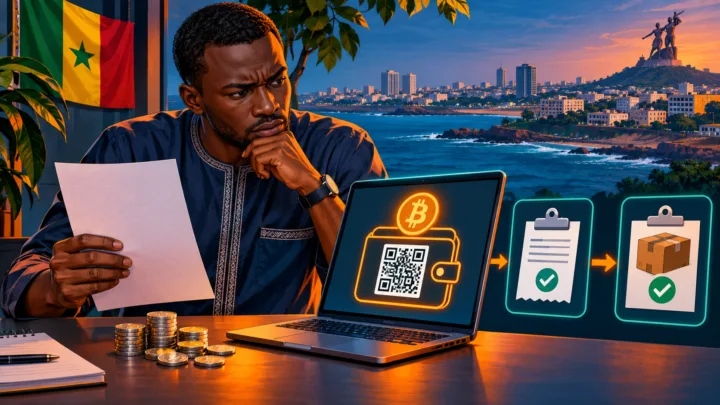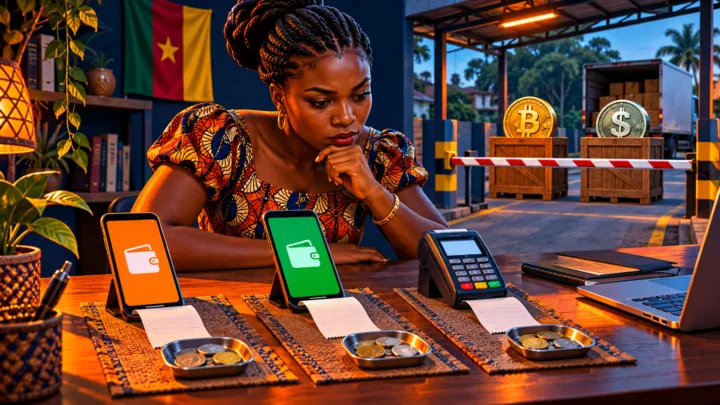
Sending cryptocurrency between Africa and Europe does not automatically make a money transfer cheaper. The total cost depends on the purchase, the network and, above all, the conversion terms at the destination. A route that works from Europe to an African country may involve a different price, timeline or set of restrictions in the opposite direction.
For 2027, a useful comparison must therefore follow each route through to the currency actually available to the recipient. This guide examines both directions, provides hypothetical calculations and explains the documentary checks to prepare. It does not promise universal access to any platform or claim that the same savings apply across all countries on both continents.
In brief
- Compare the same total budget and final outcome, including the recipient’s fees.
- Recalculate the quote in the opposite direction: a token’s purchase price does not guarantee its resale price.
- Check the rules of the countries, providers and network before committing funds.
What does a completed transfer mean for the recipient?
The guide to comparing the total cost of sending money to Africa focuses on the amount that can actually be used at the destination. Receiving a token in an app and receiving euros in a bank account are not the same service. The recipient must define the end point before requesting quotes.
A family may need cash or a mobile balance for everyday expenses. A freelancer may want euros credited to a business account. Another recipient may prefer to hold digital assets. These objectives involve different steps, minimums and documentation, all of which must be included in the quote.
The starting budget must also be explicit. If the sender has 500 euros in total, a fee paid on top reduces the amount that can be transferred within that budget. A comparison between 500 euros plus fees and 500 euros including fees does not measure the two services fairly.
The World Bank’s methodology for measuring remittance costs distinguishes visible fees from the foreign-exchange margin. The same discipline applies here, without establishing a universal crypto fee. A conversion built into the exchange rate can cost as much as a commission shown on a separate line.
For each quote, record the two countries, the currencies, the total amount, the net amount received and the expected timeline. Add the recipient’s account requirements. If the final step remains unclear, the route cannot yet be described as cheaper than another complete service.
Europe to Africa: how should the entry and exit be measured?
In this direction, the sender may start with euros, acquire an asset and transfer it. The recipient must then be able to use or sell that asset. Blockchain transaction speed alone does not determine how long the final bank credit or mobile-money withdrawal will take.
A July 2026 study by the Bank of Italy tests transfers of 200 USDC across ten corridors linking Italy to five countries, including South Africa. It does not find a systematic cost advantage. These results do not support assigning the same price to every African country or to all stablecoins.
Consider a completely hypothetical example involving a euro-referenced token with no real commercial offering. The budget is 500 euros. The entry cost is 10 euros, leaving 490 tokens at a hypothetical price of 1 euro each. The transfer and platform withdrawal then deduct 2 tokens, leaving 488 tokens to convert.
Suppose a final buyer offers 610 local units per token, followed by a 3,000-unit fee to access the local currency. The recipient receives 294,680 units. A conventional service delivering 294,000 units for the same budget would be less favorable by only 680 units in this example, before comparing timing and recourse.
These figures are neither prices nor fees for 2027. They demonstrate the importance of the final step. Our report on USDT and CFA francs also illustrates the difference between a monetary reference and the price actually available from a local counterparty.
Africa to Europe: why recalculate the entire quote?
The same route in reverse involves a local purchase and an exit into Europe. An African seller will not necessarily offer the rate at which they would buy tokens. A platform may also accept an incoming transfer while imposing different conditions for converting it into euros and crediting a bank account.
Consider a separate hypothetical example. With 300,000 local units and a purchase price of 630 units per euro-referenced token, the sender receives approximately 476.1905 tokens. After a 2-token fee, 474.1905 tokens remain. A hypothetical exit at 0.95 euros per token produces approximately 450.48 euros.
If the final credit incurs another 5-euro charge, the recipient has approximately 445.48 euros. A non-crypto quote delivering 460 euros for the same local budget would therefore be more favorable. This does not contradict the example in the other direction: the prices and costs for each direction must be recorded separately.
It is also necessary to check who pays the fees and where the recipient must be identified. A service available to individuals may not cover a company. A business transfer may require an invoice or contract. The terms must match the person actually receiving the funds.
The guide to crypto platforms in Africa helps structure the selection process. An app’s geographic proximity or language does not guarantee a withdrawal corridor. Only precise documentation, checked against the account terms, can confirm that the intended route is available.
What legal and technical checks should be prepared?
European rules do not replace those of the African country concerned. Likewise, “Europe” does not designate a single regime that applies without distinction. The customer’s jurisdiction and the provider’s entity must be identified, rather than inferring the conditions for an entire continent from a single platform.
In the European Union, Regulation 2023/1113 on information accompanying certain transfers provides a documentation framework for the flows covered. Using a crypto asset therefore does not mean that no information about the parties needs to be supplied. The service must explain the requirements applicable to its route.
The guide to crypto KYC in Africa helps prepare these documents without sharing secrets. A public address or transaction receipt is not the same as a private key. A recovery phrase must never be included in compliance documents sent to an intermediary.
On the technical side, check the exact token, the network and the recipient’s deposit instructions. A network available to the sender may not be accepted by the exit platform. An error can immobilize the funds and require an uncertain recovery procedure, even if the initial price appeared excellent.
A test transfer can confirm a configuration, but it does not demonstrate the liquidity of a much larger transaction. Also check limits, additional controls and sale timelines. A successful first attempt does not guarantee that all future transactions will be processed at the same rate.
How can routes be compared consistently without multiplying conversions?
Keeping a record of quotes makes it possible to compare the promise with the outcome. After each transfer, record the total amount paid, the amount received and the complete duration. Differences may result from a forgotten commission, an expired rate or a different receiving method. They should be explained before concluding that there was fraud or a competitive advantage.
For a similar expense, timing and certainty of availability may matter more than a small price difference. A complex route involves several intermediaries and control steps. Choosing a slightly more expensive solution that suits the recipient may address the actual need more directly.
If the recipient holds the tokens, state that the conversion has not yet taken place. Its cost has not necessarily disappeared; it may simply have been deferred. Market movements or local conditions may later change the outcome. Fees already paid must be distinguished from risks that are still being borne.
For recurring payments, keep a second legally usable channel understood by both parties. The closure of an account or maintenance work should not suspend all incoming payments. This preparation must remain based on accurate information, without a false residence or an improvised substitute beneficiary.
Also plan for a transfer being rejected or returned. The refund may arrive in the original asset, after fees have been deducted or after an additional conversion, depending on the contract. The parties must know who bears this difference, especially for a business invoice. A provider should be able to explain its procedure before receiving the money. If the funds remain pending, keep the reference and request a precise explanation of the blocked stage rather than paying a supposed release fee received through a private message. Evidence of an incident never justifies sharing wallet secrets.
The right Africa-Europe comparison for 2027 therefore ends with two separate fact sheets, one for each direction. Each should connect the budget, asset, conversion, checks and final amount. A real saving must appear in the currency received, not merely in the low fee charged at an intermediate stage.