Crypto in Africa: FNB brings Bitcoin to the mass market
FNB is adding crypto to its existing investment products: Share Zero, Share Investor, Share Saver and Share Builder. For customers already using the app, Bitcoin will therefore appear alongside stocks and other traditional investments.
This banking push is no longer an isolated development. BrefCrypto recently reported that Standard Bank is already preparing a dollar stablecoin with several major international banks. South African banks are now moving into several areas of crypto, including payments, stablecoins, institutional custody and, now, retail investment.
FNB is relying on VALR, one of South Africa’s leading crypto exchanges, for its digital-asset infrastructure. The bank is nevertheless keeping the user experience inside its own app.
FNB’s official crypto page describes a standard process: customers open the app, choose their investment product and then access Bitcoin and the other selected assets.
The 10-rand minimum may matter almost as much as the list of available cryptocurrencies. At that level, FNB is clearly not reserving Bitcoin for wealthy customers.
The bank is positioning it as an investment product accessible to a much broader customer base.
Buying is allowed, but withdrawing Bitcoin is not
FNB is drawing a clear line, however: no crypto can enter or leave its ecosystem.
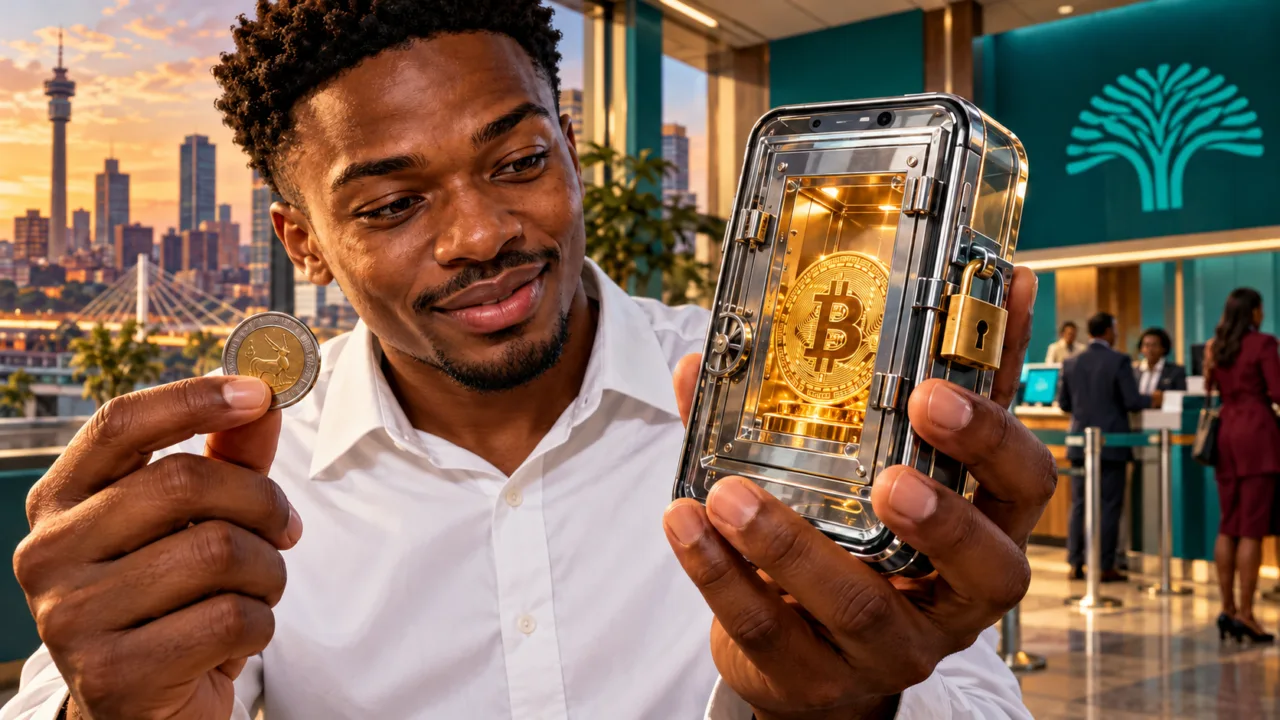
A customer can buy BTC, hold it and later sell it. They cannot enter the address of a hardware wallet and withdraw their Bitcoin to it. Nor can they deposit BTC already held elsewhere into their FNB wallet.
This structure creates a radically different experience from a standard VALR account. VALR directly supports the buying and selling of numerous assets, along with a much broader range of crypto services. At FNB, the offering is deliberately limited to five assets and contained within the banking environment.
The bank is standing by that approach. It points to platform security, as well as a cautious approach to compliance requirements and exchange controls.
That is particularly relevant as South Africa reviews its framework for cross-border crypto movements. BrefCrypto reported that the SARB is still working on rules that could affect transfers to personal wallets and foreign platforms.
FNB largely removes that issue at its source. If the tokens never leave its environment, the bank knows where they are.
For a beginner, that is simple.
For advocates of self-custody, much less so.
South African banks are switching sides
A few years ago, the relationship between banks and crypto in South Africa largely revolved around risk, money laundering and compliance. In 2026, those same institutions are now seeking a place in the value chain.
Discovery Bank had already integrated Luno into its app. Absa has just launched an institutional custody solution. Nedbank is working with Crypto.com on blockchain payments and settlements. Standard Bank is advancing its stablecoin plans. FNB is now opening crypto investment directly to retail customers.
This acceleration is taking place in an already substantial market. BrefCrypto recently reported that nearly 27 billion rand worth of USDT transactions had been recorded across three major South African platforms in one year.
The banks are not arriving ahead of demand. They are following it.
FNB does, however, offer something specialized exchanges have a harder time matching: a daily relationship with several million customers who already use its app to receive their salaries, pay bills and invest.
VALR supplies the crypto. FNB supplies the distribution.
The question of genuine autonomous ownership remains. Buying Bitcoin through a banking app without being able to move it does not fit the philosophy of “not your keys, not your coins.” For much of the general public, however, that trade-off between simplicity and control may be perfectly acceptable.
FNB’s launch therefore represents less of a technical revolution than a commercial shift: in South Africa, Bitcoin is gradually becoming an ordinary banking product.