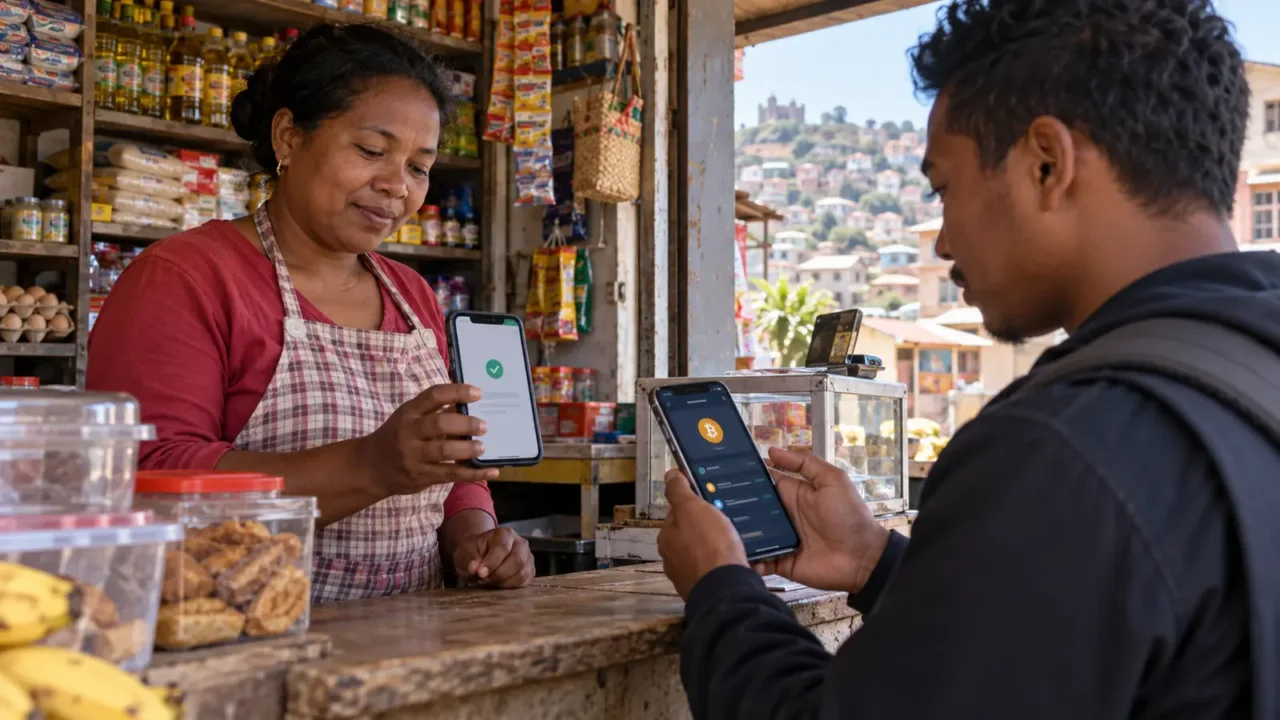
Searching for “buy Bitcoin with MVola” may suggest that mobile payments and digital assets are part of a single integrated feature. In reality, an MVola account holds electronic money in ariary under its own terms, while bitcoin moves across a separate network. A seller may use the former to settle a sale of the latter, but that does not automatically make MVola a crypto exchange.
The distinction may seem technical, but it determines who to contact if something goes wrong and which evidence to keep. Mobile payments, crypto sales and blockchain transfers follow separate processes that must be examined individually.
In brief
- MVola’s terms describe an electronic-money and transfer service, not the direct sale of Bitcoin.
- In a P2P purchase, the ariary and BTC may follow two different channels and two different dispute procedures.
- Check the beneficiary against the official order and confirm delivery in the wallet before considering the purchase complete.
MVola holds an electronic-money balance in ariary
MVola’s official terms and conditions define the service, accounts, transactions and customer responsibilities. The document presents MVola as a service that enables, among other things, the exchange and transfer of electronic-money units, or UME. It sets out fees, account rules, complaint procedures and the personal secret code used to authorize a transaction.
The general guide to buying cryptocurrency with mobile money explains why confirmation of an ariary transfer does not prove that an asset has been delivered on the blockchain.
MVola’s fee page lists transactions such as deposits, withdrawals, payments and transfers to other accounts. The version consulted shows a tariff dated February 17, 2025; it may not reflect a later change. Before any transaction, check the current fees in the app or through an official channel. Do not rely on an old price table shared on social media.
The electronic-money framework falls under Law No. 2016-056 on electronic-money institutions, available through CNLEGIS. This legal category is distinct from virtual assets introduced into the anti-money-laundering framework by Law No. 2023-026. Two instruments may appear on the same phone without being governed by the same contract.
Comparing the arrangement with a platform helps separate what depends on the operator from what depends on the seller. Our framework for evaluating crypto platforms outlines the checks to perform, while the report on KYC, personal data and remedies covers precautions relating to identity documents.
An MVola transaction validated with the secret code is therefore an instruction involving electronic money under the service’s rules. It does not show that the seller delivered BTC. To prove that the crypto purchase was completed, you must also check the order or agreement with the seller and confirm delivery on the platform or blockchain.
A purchase from a third-party seller involves two promises
In a P2P arrangement, the seller promises to transfer a specific amount of BTC once the ariary reaches the seller’s account. MVola processes the electronic-money payment; the seller or platform handles crypto delivery. If the payment goes through but the BTC does not appear, a complaint to MVola will not automatically resolve the dispute with the seller.
Before confirming, check the beneficiary’s name and number directly against the official order. The amount, currency and reference must match exactly. An intermediary who asks you to send the ariary to an account other than the one specified by the platform may be bypassing escrow or taking the transaction outside the intended protection mechanism.
If escrow is available, keep the transaction within the relevant app. Escrow may hold the digital assets while the payment is verified; it does not replace MVola’s terms. Do not mark an order as paid before making the transfer, and do not confirm delivery before checking the balance from your own account.
A screenshot sent by the buyer does not guarantee that the funds were credited. Open the MVola app and check your account history, the amount and the sender. For the buyer, a debit SMS from their own wallet confirms the payment but not the arrival of the BTC. Each party should check their own account or wallet, not an image shared by the other party.
Calculate the cost beyond MVola fees
The mobile transfer may be charged according to the amount and the type of beneficiary. The seller’s spread, a platform commission and a network withdrawal fee may also apply. A “fee-free” BTC offer may include a margin in the selling rate. Compare the total amount in ariary with the net quantity received.
Check the official tariff on the date of the transfer. Fees can change, and account limits vary according to the user category and the terms in force. MVola’s documents state that published tariffs may apply and that transactions are charged the corresponding fee when they are completed. Do not treat an old price table as a promise of a refund or a fixed price.
To assess the true cost, record separately: the amount credited to the seller, MVola fees charged, the quantity of BTC delivered, any escrow fees and the cost of a future withdrawal. Then calculate how many satoshis were actually received for each ariary committed. The guide to the cost of crypto purchases offers a comparison method that includes the spread and exit fees.
The BTC price in ariary may also change between the time an offer is accepted and final delivery. BFM’s exchange-rate reference provides context, but it does not set a P2P price. The seller may apply a rate based on the offer and available liquidity.
Never share your secret code or SMS code
MVola states in its terms that the secret code is used to authorize account transactions. Do not share it with a seller, a self-proclaimed agent, a Telegram group or anyone claiming to verify your purchase. The customer-service number and official channels should be found on the operator’s website, not in a message from a stranger.
A request for a one-time code is a red flag. The person may be trying to reset the account, replace the SIM card or authorize a transfer. A Bitcoin seller has no legitimate reason to demand access to the buyer’s mobile wallet.
Use a unique password for your crypto account, secure your email address and enable stronger authentication when available. If your phone or SIM card is lost or stolen, contact MVola immediately through an official channel to secure the account, in line with the published procedures.
To receive BTC, the seller should never ask for the wallet recovery phrase. If the funds are held in a custodial exchange account, do not share your password, access code or authentication code. Our wallet security guide explains how to keep keys secure without revealing them.
What to do when the payment and crypto do not match
Start by identifying the step that failed. If the MVola account shows no debit, contact MVola through its official channel and keep the order reference. If the account was debited but the transaction is shown as pending, check the transfer status in the app. Do not pay a second time before understanding the status of the first transaction.
If the ariary was credited to the seller but the BTC was not delivered, open a dispute with the platform that hosted the order and provide the MVola reference together with the order ID. The mobile operator may review the ariary transaction under its terms, but it cannot order a blockchain to reverse a confirmed transfer.
The MVola terms consulted set out complaint deadlines and procedures for disputed transactions. Customers should check the current version of the agreement before taking action, as the deadline may matter. Keep the receipt, account history, time, order number, relevant messages and, if the BTC was sent, the transaction hash.
Do not post full identities, phone numbers or identity-document screenshots in a public group. Send evidence only to the relevant official service. Beware of recovery services that demand an upfront payment or your recovery phrase; they may exploit the incident to obtain a second payment.
Check whether a service is genuinely integrated
A company may advertise “buying crypto with MVola.” Look for an official reference on both providers’ websites, in their terms, on their partner pages and within the purchase interfaces. An advertisement, video or payment link does not prove a contractual integration between MVola and a digital-asset platform.
Ask who sells the BTC, which entity receives the ariary, who handles the conversion and which procedure applies to a dispute. Check whether the service operates in the country of residence and in the expected currency. If the process requires a transfer to a personal account without escrow or a contract, you may be dealing directly with a third party rather than with MVola or a recognized platform.
SAMIFIN’s definitions include certain exchange, transfer and custody activities within the scope of virtual-asset service providers. That does not establish that a specific seller is licensed or that the mobile operator has approved it. For a business or regular service, seeking local legal advice is safer than relying on marketing claims.
A properly documented transaction keeps the evidence separate
Keep the MVola receipt separately, as it proves the ariary payment order, and retain the crypto confirmation separately, as it describes the BTC delivery. Also record the rate, fees and terms applicable on the transaction date. This file helps reconstruct what happened without confusing each provider’s responsibility.
Good documentation reduces the risk of misunderstandings, but it does not eliminate volatility or possible disputes. If the seller insists on moving off-platform, asks for a secret code, changes the beneficiary or promises a return, refuse. A mobile transfer may be convenient for settling a purchase, but it does not turn an informal offer into an approved financial service.
The practical rule is simple: confirm the MVola movement in your account, then separately confirm delivery of the Bitcoin in your wallet. Until both checks are complete, the transaction remains unfinished.