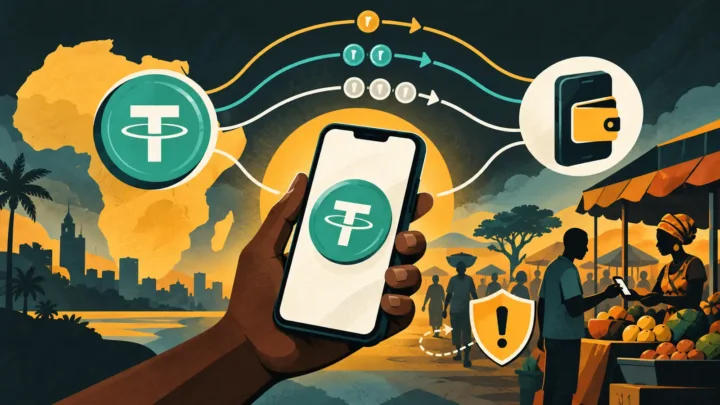
Crypto Africa: More than 30 markets connected
The partnership brings together two infrastructures that have so far operated at different layers. Velocity contributes its institutional network and stablecoin settlement rails. CrissCross provides local connectivity, including foreign exchange, accounts, collections and payments across more than 30 African markets.
The approach echoes the partnership between DCS Pay and Kotani Pay to connect USDT and USDC with local currencies across six African markets. The scale and customer base are different here: Velocity and CrissCross are primarily targeting financial institutions, large companies, liquidity providers and treasury teams.
In practice, an international company could use stablecoins to move liquidity quickly, then rely on CrissCross to access the currencies and payment rails required in the destination country.
CrissCross already supports conversions between USDC, USDT and several currencies, including the South African rand, Nigerian naira, Kenyan shilling and Ghanaian cedi. Its stablecoin platform also enables settlements to bank accounts and mobile money wallets.
Blockchain handles part of the journey. The last mile remains local.
Stablecoins move into corporate treasury
This is probably the most significant aspect of the agreement. Velocity and CrissCross are not presenting stablecoins as a system designed to replace African banks. Their model instead assumes that they will work with existing accounts, currencies and payment methods.
A company operating across several countries currently needs to hold funds in multiple accounts to support its payments. This prefunding ties up capital and requires finance teams to anticipate the liquidity needed in each market.
Velocity wants to ease that constraint by using stablecoins as an international settlement layer. CrissCross then handles the local component: FX conversion, collections and payments.
The two companies also plan to develop new capabilities combining stablecoins, real-time payment rails and virtual accounts. This remains a development program, rather than a list of products already available everywhere.
Velocity brings significant resources to the partnership. In September, its Series A had reached $48 million after an additional investment from Visa Ventures, Circle Ventures, Ripple, Haun Ventures, Translink Capital and Mirana Ventures.
The interest from major payments players is significant. Standard Bank is already working with major international institutions on a dollar stablecoin. African stablecoins are gradually moving from individual wallets into corporate treasury departments.
Africa needs more than blockchain
The partnership primarily highlights the limits of the idea that a stablecoin alone can solve cross-border payments.
Sending USDC from one address to another is relatively straightforward. A company in Ghana still has to pay employees, suppliers or taxes in a currency that can be used locally. A Kenyan company may want to receive digital dollars while settling some expenses in shillings. Banks, mobile money, FX liquidity and licenses therefore remain essential.
CrissCross says it already has local banking relationships and payment infrastructure covering more than 30 markets. The company is registered as a Money Services Business in Canada and holds, among others, FSP, CASP and TOC licenses in South Africa.
This coexistence is already becoming visible elsewhere. In South Africa, nearly 27 billion rand worth of USDT moved across three major platforms in one year, while banks and regulators seek to integrate these new flows into the existing financial infrastructure.
Velocity and CrissCross are betting on the same evolution.
The stablecoin becomes the international rail. Local currencies, banks and payment methods remain the entry and exit points.
That is less spectacular than promising to replace traditional finance. It is also far more realistic. To win African payments, stablecoins will probably have to learn to disappear behind the infrastructure businesses already use.