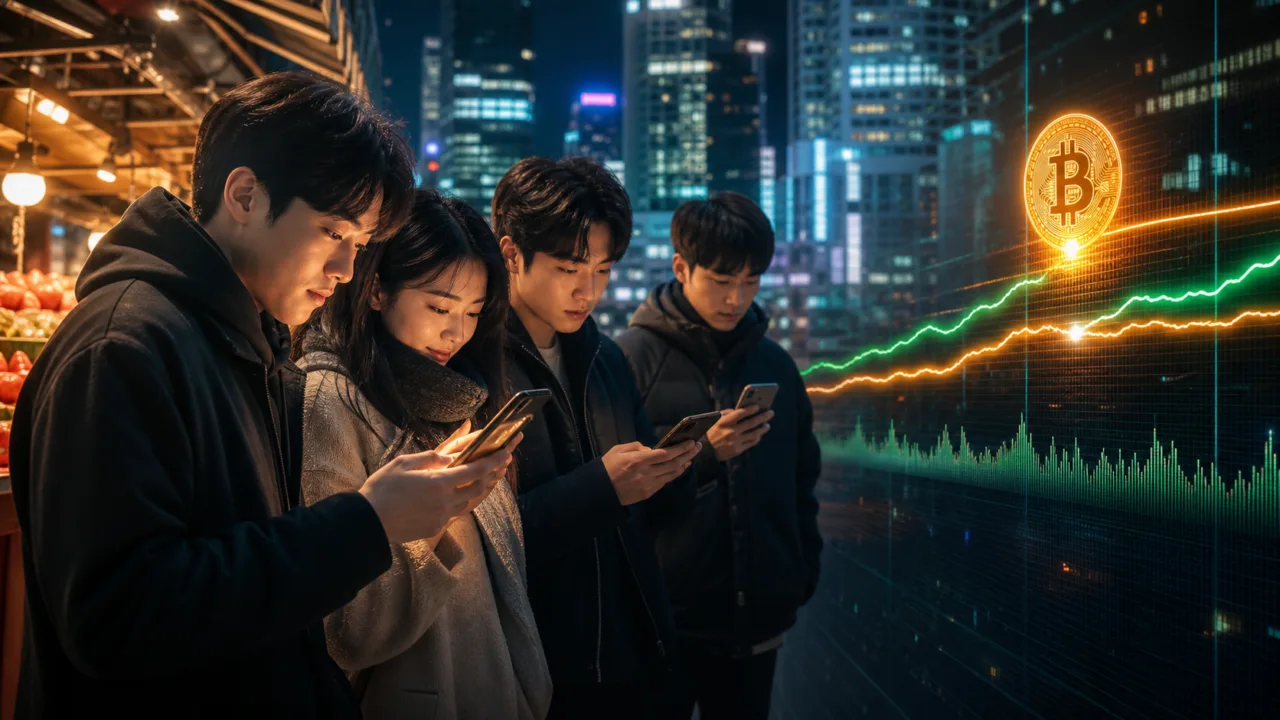
Bitcoin’s kimchi premium returns
South Korea remains one of the most closely watched retail crypto markets. A few months after Bitcoin Seoul 2026 and the country’s growing on-chain finance sector, appetite for Bitcoin is waking up again.
On Upbit, South Korea’s leading crypto platform, BTC was trading on September 1 at a price approximately 1% higher than on Binance. For much of the summer, however, the situation was the opposite: Bitcoin regularly traded at a discount in South Korea.
The kimchi premium appears when local demand becomes strong enough to push the Korean price above the international market. Restrictions on capital movements and exchange-access rules make arbitrage more difficult. A trader therefore cannot always immediately buy cheaper BTC abroad and resell it in Seoul.
The current premium remains small. And that is precisely what makes it interesting.
Retail investors return without euphoria
A 1% premium is nothing like the episodes of extreme speculation seen during previous cycles. For now, South Korea mainly signals a reduction in selling pressure.
The local environment is also changing quickly. Dunamu, Upbit’s owner, is now working with Samsung SDS on payments and stablecoin infrastructure. South Korea’s ecosystem is gradually moving beyond simple cryptocurrency trading.
Authorities are tightening oversight at the same time. On August 11, the South Korean Financial Services Commission announced stricter registration rules for crypto service providers, along with enhanced anti-money-laundering and customer-identification requirements.
This regulatory structure also contributes to the kimchi premium: the Korean market remains relatively isolated from major international platforms.
One detail, however, makes it too early to call this FOMO. Spot volumes have not increased as sharply as the premium.
South Korea is not leading the rally yet
Bitcoin briefly climbed above $80,000 in August before returning to around $78,000 to $79,000 at the beginning of September. Its monthly gain reached approximately 24%.
The return of South Korean buyers is therefore accompanying the rebound; it probably did not trigger it. Flows into US Bitcoin ETFs and liquidity conditions in the United States remain far more important to global price formation.
Seoul nevertheless adds another piece to the puzzle. When retail investors start paying more for Bitcoin than the rest of the world again after several weeks of discounts, their risk appetite is changing.
South Korea’s market could also continue to evolve with future digital-asset and stablecoin regulation.
For now, the kimchi premium looks more like the beginning of a revival than a speculative fever. 1% is not euphoria. If the spread and volumes begin rising together, the outlook will become significantly more bullish.