Digital Africa: Mombasa Processes Cargo Before It Arrives
The main change is called Advance Cargo Declaration (ACD). The platform allows exporters to submit customs documents before the cargo leaves its port of origin.
This development is part of the accelerated transformation of African digital services already analyzed by Bref Crypto. Here, digitization directly affects critical economic infrastructure.
Commercial invoices, freight invoices, export declarations and draft bills of lading are submitted online. Once validated, an ACD code is generated and added to the Bill of Lading.
The Kenya Revenue Authority had already received more than 1,000 applications a few weeks after the platform opened on August 3.
The principle is fairly simple: complete part of the customs work while the container is still at sea rather than waiting for it to arrive in Mombasa.
A few hours saved on one container may seem insignificant. Multiplied by more than two million a year, they begin to add up.
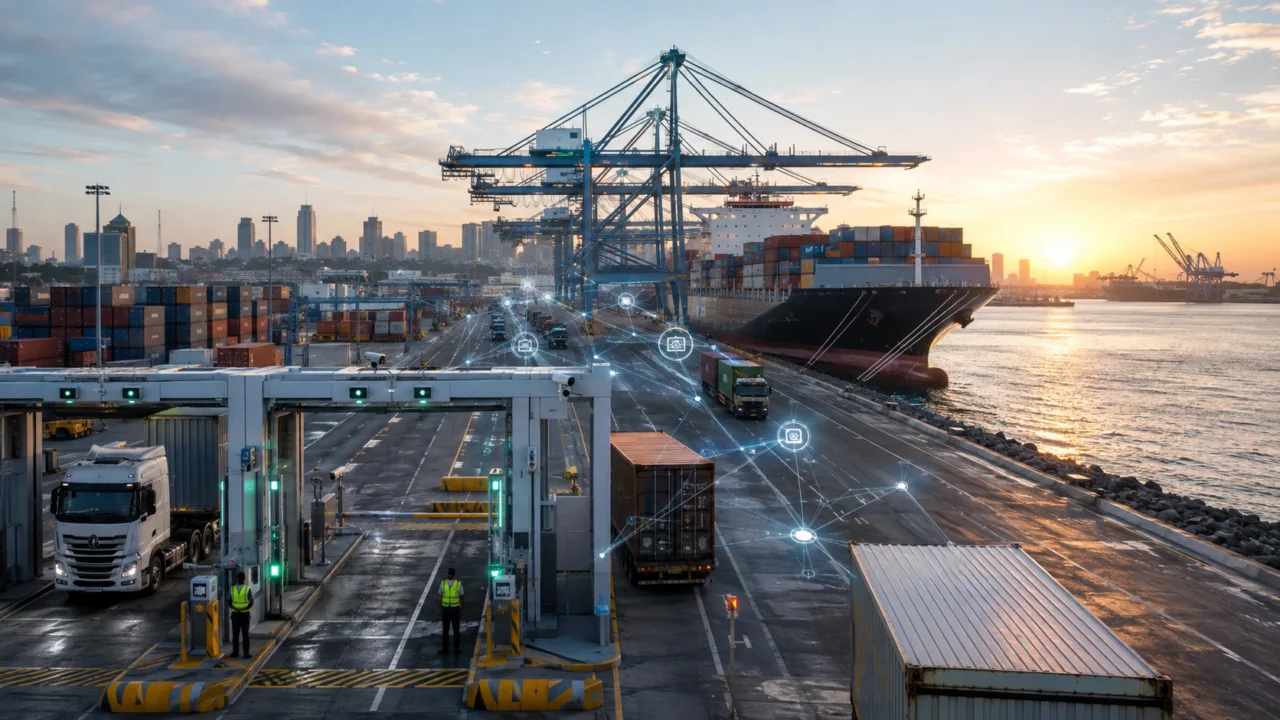
A Smart Gate to Get Out of the Port Faster
The digitization does not stop at documents.
Authorities are also preparing a pilot project for a Smart Gate at Gate 24. The aim is to further automate the exit of trucks and containers, reduce manual inspections and improve tracking.
The KRA and the Kenya Ports Authority also want to connect more of their IT systems. The Advance Cargo Declaration is described by the Kenya Revenue Authority as a system for the prior submission of documents for containerized cargo.
This project is a reminder that COMESA is also seeking to bring digital transformation, infrastructure and regional trade closer together.
Technology will not solve everything, however. Around 40% of the containers handled in Mombasa are reportedly empty, while the port must also absorb continued traffic growth.
Kenya is therefore also building Berth 19B and a new container yard at Berth 23.
Digital systems and concrete are advancing together.
The DRC Also Depends on Mombasa
Mombasa is not merely Kenya’s main port. It serves as a gateway to the Northern Corridor and provides access to several countries without a direct connection to the ocean.
Uganda, Rwanda, Burundi, South Sudan and the Democratic Republic of the Congo are directly affected.
A container held up for several days in Mombasa can therefore increase costs far beyond Kenya’s coast: storage fees, immobilized trucks, delivery delays and additional working-capital requirements.
This is where Digital Africa becomes very concrete. A customs platform that works properly can sometimes have a greater economic impact than a spectacular application used by a few thousand people.
Kenya will nevertheless have to avoid a pitfall already visible elsewhere on the continent: digitizing a service without guaranteeing its availability. African digital infrastructure is gradually becoming essential services.
In Mombasa, success will therefore not be measured by the number of forms that have become digital. It will be measured in hours saved and containers leaving the port more quickly.