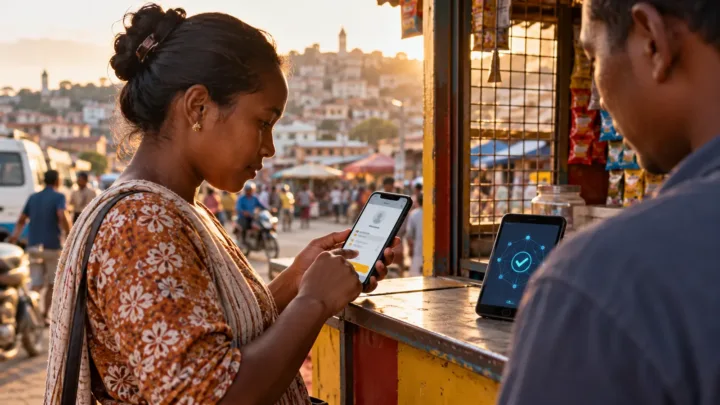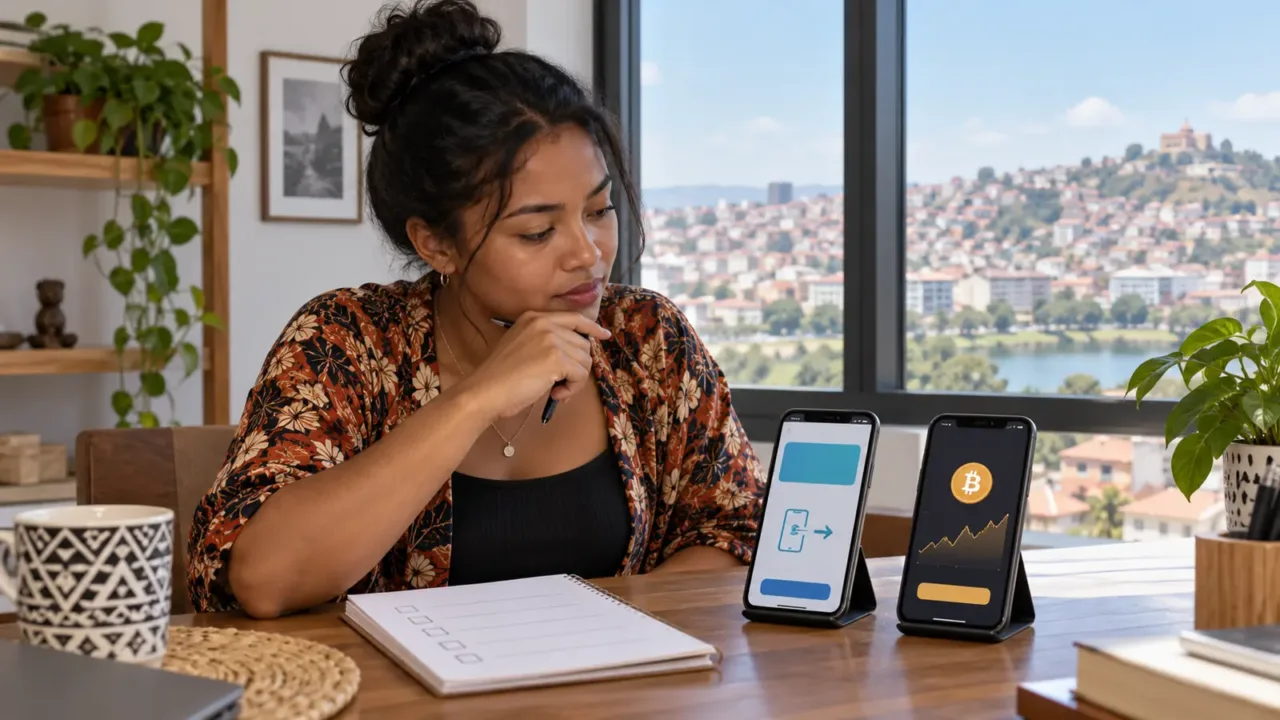
In Madagascar, the search term “Bitcoin with mobile money” can refer to several different transactions. A user may send ariary from a mobile wallet to a seller, pay a platform that accepts this payment method or transfer electronic money to another account. None of these actions, on its own, proves that the telecom operator sells Bitcoin.
This distinction helps users compare the real cost and identify whom to contact in the event of a dispute. The process often involves at least two providers, and sometimes three: the electronic-money operator, the crypto intermediary and the blockchain network that delivers the assets.
In brief
- MVola and Airtel Money describe electronic-money services; a BTC transaction advertised by a third party is a separate operation.
- The total cost includes the mobile transfer, exchange-rate spread, any commission and the on-chain withdrawal fee.
- Before paying, check the recipient, transaction order, delivery network and remedies provided by each service.
Mobile money and Bitcoin are not the same service
Mobile money represents a claim in electronic money managed within the operator’s service framework. Bitcoin, by contrast, moves on a blockchain, and its custody depends on a platform or wallet. The guide to buying cryptocurrency with mobile money already distinguishes these roles, but the Malagasy case calls for particular attention to the accounts used and the relevant local documents.
Madagascar’s Law No. 2016-056 regulates electronic-money activities. The central bank also describes the country’s payment methods. These sources explain the payments environment; they do not turn a P2P transaction into an official crypto sale by a mobile operator. Users should therefore identify the provider responsible for each service rather than relying on a logo displayed by a seller.
An offer described as “Bitcoin via MVola” may simply mean that the merchant accepts an MVola transfer. It proves neither a partnership with the operator, nor a guarantee regarding the BTC, nor an automatic refund if the seller fails to deliver. The same caution applies to Airtel Money and any other local transfer solution.
MVola’s terms and conditions describe the obligations linked to the account and electronic-money transactions. Meanwhile, the official page for Airtel Money Madagascar presents the mobile transfers and services available. In the documents consulted, these pages do not describe a native Bitcoin sales or custody function.
Identify the transaction path and calculate its total cost
Identify the actual process before sending money
A direct process should specify the name of the provider selling the Bitcoin, the entity receiving the ariary, the delivery method and the party responsible for support. Fees, exchange rates and limits should be shown before confirmation. If the only information provided is a phone number and a promise on WhatsApp, the buyer still does not have a sufficiently documented process.
In a P2P transaction, a buyer posts or accepts an order and then pays the seller outside the blockchain. The platform may temporarily lock the crypto in escrow if the order was opened through its official interface. Once payment has been received and confirmed under the applicable rules, the asset is released to the designated account. A transfer sent outside the order may not benefit from this protection.
Before making any payment, check the following:
- the seller and their history are visible in the designated interface;
- the ariary amount, BTC price and net quantity appear in the order;
- the mobile-money recipient’s name matches the displayed instructions;
- the platform explicitly supports this method for Madagascar;
- the deadlines, fees, limits and dispute steps remain accessible before confirmation.
An offer may be legitimate without having an official integration with the operator. In that case, the documentation should clearly separate the mobile payment from the crypto delivery. To avoid confusing a payment service with a platform, also consult our feature on crypto platforms in Africa and their legal status.
Calculate the total cost, not just the transfer amount
The final price depends on the Bitcoin exchange rate, the ariary-to-dollar rate used by the counterparty, mobile-account fees, the commercial margin and, in some cases, the cost of withdrawing to an external wallet. A “zero-fee” advertisement may include a margin in the exchange rate. To compare two offers, divide the amount actually debited by the BTC actually received.
A simple formula helps avoid misleading comparisons:
Total cost = ariary debited + mobile fees + visible commissions + any withdrawal costs.
Then compare this cost with the net amount of BTC received, not with the value advertised before payment. If a platform keeps the BTC in an internal account, ask whether the on-chain transfer is included or charged separately. A low amount shown in an offer is not the full price when withdrawal remains payable.
The central bank’s exchange rate can serve as a reference for understanding the conversion between the ariary and the dollar, but it does not set the Bitcoin price or the retail rate offered by a seller. Mobile tariffs also change. MVola publishes a tariff page, but the version consulted carries a publication date; always check the confirmation screen and the currently applicable fee schedule before calculating a transaction.
To establish a reliable benchmark, date the exchange rate and crypto quote, then compare the quantity actually delivered. Our analysis of crypto fees in Africa helps compare spreads, deposits, conversions and withdrawals.
Protect the transaction and prepare for disputes
Protect the mobile payment and crypto access
Do not send a PIN, SMS code or validation code to a seller. An operator or platform should not request these details in a conversation to “confirm” a transfer. Enter your information only in the official app or website that you opened yourself.
Do not rely on a screenshot as proof of payment. The recipient must confirm that the funds have arrived in the account history. Likewise, the buyer should check the amount of BTC credited to the wallet or platform balance. If the BTC is to be sent to an address, check every character and make sure the service supports the requested format.
A Bitcoin address will not automatically receive an asset sent on another chain. Checking the network and withdrawal fees is therefore just as important as checking the amount. For a first transfer, a low-value test can reduce the risk of error, although fixed fees may sometimes make small amounts inefficient.
The guide to how crypto wallets work and their security explains the difference between a custodial platform and a wallet controlled by the user. If a counterparty asks for your recovery phrase, stop the exchange immediately: the phrase grants access to the assets and is not a way to verify the transaction.
If something goes wrong, separate the responsibilities
A payment debited without BTC being delivered raises two separate questions: the status of the mobile transfer and the execution of the crypto order. Contact the operator through its official channels regarding the first; use the platform’s help center and dispute mechanism for the second. A mobile operator cannot cancel a blockchain transaction that has already been confirmed, and a platform does not necessarily handle refunds for a mobile transfer made outside its system.
Keep the transfer reference, date and time, amount, order number, seller ID and delivery network. Do not send identity documents to someone who contacts you unsolicited and promises to recover your funds. The feature on crypto KYC, data and remedies provides guidance on sharing only the information strictly necessary with the appropriate party.
If the seller suggests leaving escrow or continuing the transaction through another channel, refuse. A lower price does not compensate for losing evidence and access to remedies. If you have already sent the funds, notify the relevant services quickly and do not pay anyone who promises a guaranteed refund in exchange for an upfront fee.
Malagasy regulation does not turn every seller into an authorized provider
Law No. 2023-026 on combating money laundering and terrorist financing introduces definitions related to virtual assets and virtual-asset service providers within a compliance framework. SAMIFIN specifies the activities covered by the VASP concept. This is not enough to claim that a mobile-money operator has launched a Bitcoin service or that an informal seller holds authorization.
Exchange, transfer, custody and intermediation activities may trigger obligations that vary according to the service actually offered. A buyer cannot infer a provider’s legal status from a simple “MVola accepted” notice. Ask for the counterparty’s legal name, contractual terms, complaints procedure and available compliance information.
The regulatory framework is evolving, and an information guide is not a substitute for legal advice tailored to a professional activity. Anyone who regularly offers exchanges to third parties should review the relevant texts and seek qualified local advice, without treating every personal transaction as a provider activity.
Which process should you choose?
To buy a small amount, first check whether a recognized platform actually accepts a payment method available to your Malagasy account. Read its country rules, minimum amount, purchase price and withdrawal fees. If the platform does not list Madagascar for the proposed process, do not bypass that restriction with a VPN or a false address.
A P2P exchange may offer greater flexibility, but it requires more extensive checks. Assess the seller’s reputation, number of completed orders, payment rules and escrow availability. Do not choose solely on the basis of the lowest price; the ease of proving what happened and the quality of available remedies are part of the cost.
Before making regular purchases, create a simple personal checklist: net cost, timing, account limit, delivery method, phone security, network fees and complaints procedure. Test the process with an amount you can afford to lose, and increase the amounts only after several transactions have been properly verified. This approach does not make Bitcoin risk-free, but it limits operational mistakes.
The right question is therefore not simply, “Can you buy Bitcoin with mobile money in Madagascar?” You should ask who sells the BTC, who receives the ariary, how much delivery costs and which service can review a problem. Until these four answers are clear, postponing the payment remains the most prudent decision.
Official sources and references