Crypto: Circle Wants to Finish the Job
For Circle, Washington has already built the first part of the framework. The GENIUS Act established a federal regime for stablecoins. The CLARITY Act must now define the responsibilities of the SEC and CFTC more clearly across the rest of the market.
This pressure comes as the CLARITY Act is already fighting for its future in the Senate. A procedural motion is scheduled for September 15 at 2:15 p.m. and will require 60 votes.
In his testimony presented to Congress, Tarbert explicitly calls for the bill to be adopted on a bipartisan basis.
His argument extends beyond crypto. According to Circle, global financial infrastructure is gradually moving toward software- and blockchain-based rails. The United States must therefore decide whether these new markets will operate under its own rules or those of other jurisdictions.
The GENIUS Act Does Not Solve Everything
Stablecoins now have a clearer framework in the United States. USDC, issued by Circle, is naturally at the center of this transformation.
The rest of the market remains more complicated.
Which agency should oversee certain tokens? When does a digital asset fall under the SEC’s jurisdiction? At what point does it become a commodity under the CFTC? Crypto companies have been calling for years for answers that are more stable than case-by-case decisions.
The SEC has already begun to move. Hester Peirce herself acknowledges that the old rules were ill-suited to crypto, while the agency is now developing new exemptions and a possible safe harbor.
This could improve the situation. A law passed by Congress is nevertheless much harder to overturn than a regulatory interpretation.
That is precisely what Circle wants to secure.
September 15 Becomes Decisive
The CLARITY Act has one advantage: the House of Representatives passed it by 294 votes to 134, with 78 Democrats in favor. In May, the Senate Banking Committee then advanced it by 15 votes to 9.
The final stretch is much more complicated.
Disagreements persist over stablecoins, political conflicts of interest, money laundering and the allocation of regulatory powers. The Senate must first secure 60 votes simply to move toward the bill’s final consideration.
Circle is not alone in pushing for action. The White House has also tried to ease tensions surrounding the CLARITY Act’s ethics provisions.
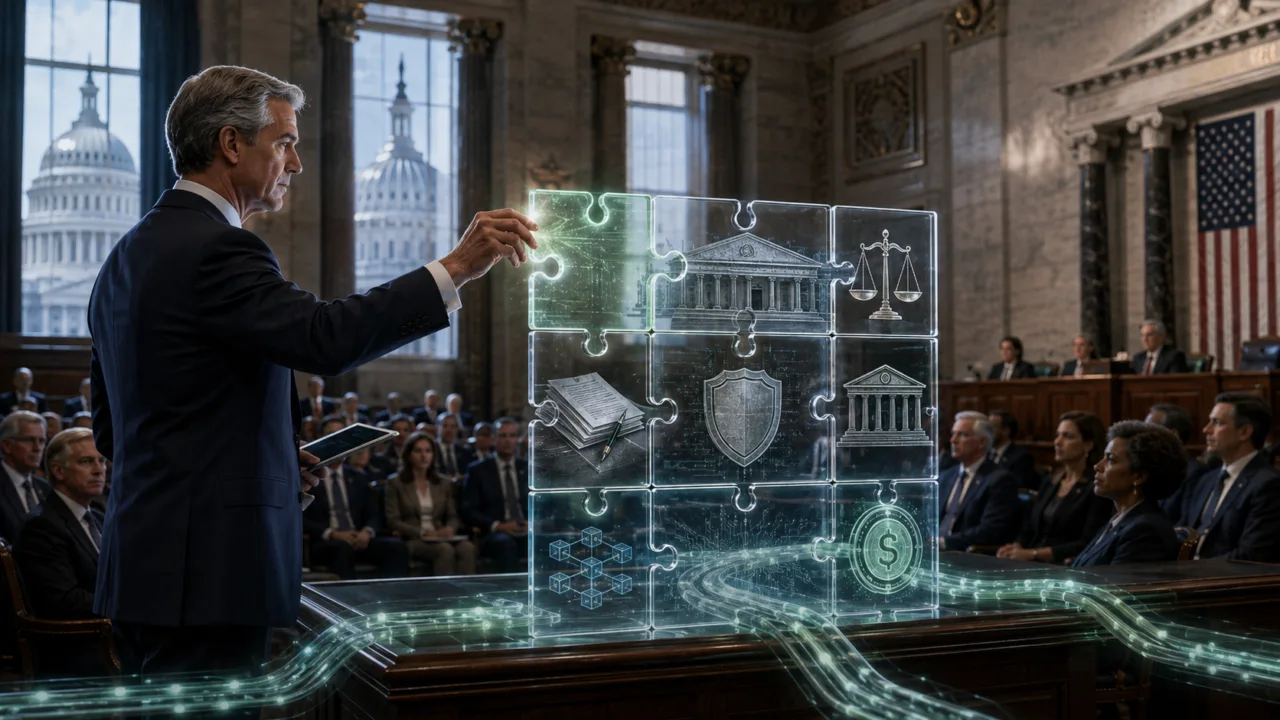
For the U.S. crypto industry, the issue therefore goes beyond another technical rule. The GENIUS Act solved one part of the puzzle. The SEC and CFTC are moving forward on their respective fronts. What remains to be seen is whether Congress can turn this accumulation of rules into a genuine legislative architecture.
September 15 will provide an initial answer.