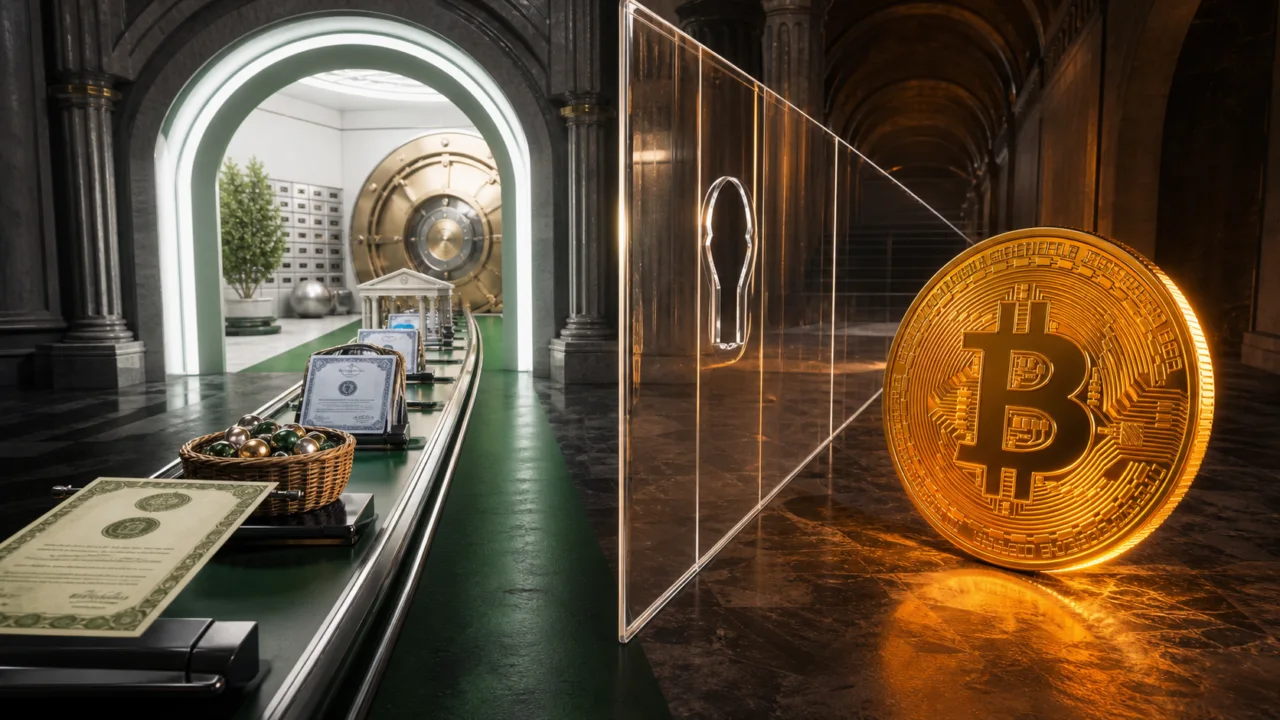
The contrast is fairly clear. Brussels wants to encourage Europeans to invest more, but not directly in Bitcoin.
Crypto: the EU draws a line around Bitcoin
The European recommendation on Savings and Investment Accounts asks member states to offer, at a minimum, stocks, bonds and UCITS funds. Cryptoassets, however, should be excluded unless they themselves constitute a financial instrument permitted in the account.
This distinction comes as Bitcoin is already attracting traditional investors through ETFs and the boundary between traditional finance and crypto is becoming increasingly blurred.
The European Commission’s official recommendation justifies this choice by citing the desire to protect savers from products that are difficult to understand or excessively risky.
This is not a ban on buying Bitcoin. It is more subtle: investors can still own it, but Brussels recommends that it not receive the same tax advantages as the investments selected for these accounts.
Ireland is already applying the European approach
Dublin unveiled its future Investment Account on August 31, with its launch expected in 2027. It will include a threshold below which no tax will be due, followed by a reduced flat rate. The exact amounts will be presented with the 2027 budget.
Listed stocks, bonds, instruments traded on regulated markets and several funds will be eligible. Crypto and certain derivatives will remain excluded.
This reform comes as states are already strengthening their tax oversight of crypto. Since January, DAC8 has notably required crypto service providers to collect more information on their European clients’ transactions.
One point nevertheless needs clarification: Ireland says that ETFs may be included in the account, but it has not explicitly confirmed that a Bitcoin-exposed ETF will itself be eligible. Saying today that a “Bitcoin ETF will be tax-exempt while Bitcoin will not” therefore goes somewhat further than the published texts.
Europe prefers regulated crypto exposure to direct ownership
The political direction, however, is hard to miss. MiCA regulates platforms and issuers. DAC8 organizes the reporting of tax information. The new investment accounts encourage traditional investments while keeping direct cryptoassets at arm’s length.
This extends a trend already visible with the gradual centralization of Bitcoin exposure through major financial intermediaries.
For Bitcoin advocates, the paradox is obvious. Holding BTC yourself means retaining your own keys and your asset. Buying a financial product means owning exposure managed by an intermediary.
Europe is not banning the first option. It is simply choosing not to subsidize it through tax benefits in these new accounts.
And that is probably where the debate will begin: if a Bitcoin-backed financial product eventually becomes accepted in certain national regimes while Bitcoin itself remains excluded, Brussels will have created a strange situation in which the regulated wrapper becomes more tax-efficient than the asset it represents.