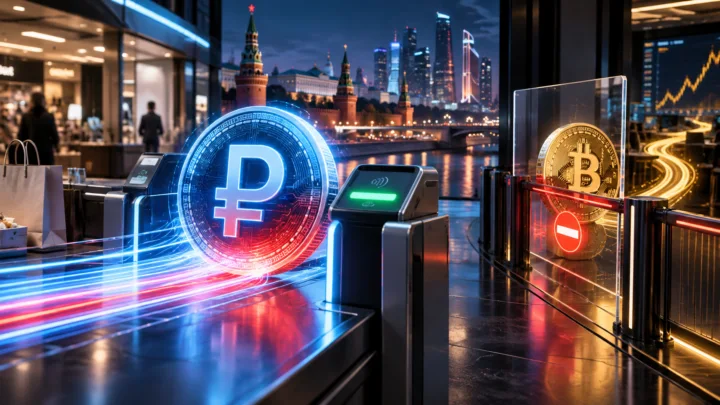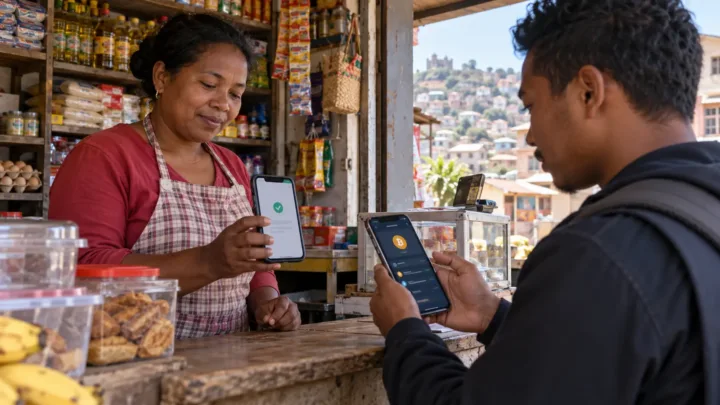
Bitcoin would represent stored time
“Money is our time and energy in an abstract form.”
Jack Mallers developed this idea during the launch of Bitcoin Magazine’s new television show. His reasoning starts less with the price of BTC than with the very function of money.
When someone works eight hours, they do not physically retain those eight hours. In exchange, they receive a sum of money that they can spend later. Money thus becomes a way to carry the value of past effort through time.
This interpretation directly aligns with the mechanics outlined in our comprehensive guide to Bitcoin. One of the network’s defining features is its predetermined monetary policy: no one can decide tomorrow to arbitrarily issue ten million additional BTC.
For Mallers, this is where the connection with work emerges.
When the currency used to store the fruits of one’s work loses value, a person must devote more hours to reaching the same goal: buying a home, paying for a holiday or simply freeing up time for a personal activity.
Conversely, a currency that better preserves its purchasing power would preserve more of the time already spent earning it.
His point is not that Bitcoin pays a salary.
It is that the quality of money determines how much future work is needed to maintain the purchasing power obtained through past work.
Inflation gives Mallers’ argument added weight
The US context makes this interpretation particularly timely.
The Bureau of Labor Statistics announced on September 11 that consumer prices had risen 3.4% year on year in August. For the month alone, the CPI increased by 0.4%, after rising just 0.1% in July. Core inflation slowed to 2.4% year on year, but still increased by 0.3% over the month.
View the official US inflation figures
This does not mean that a salary automatically loses 3.4% of its real value each year. If wages rise faster than prices, purchasing power can increase. If they rise more slowly, it declines.
This is precisely the second situation Mallers is addressing.
Bref Crypto regularly tracks BTC’s sensitivity to this issue. Bitcoin can even react more strongly to the CPI than to Fed decisions during the first few minutes after certain macroeconomic releases.
The irony is striking: Bitcoin is presented by its supporters as a response to monetary debasement, while its short-term price depends heavily on how the Federal Reserve fights that same inflation.
A high CPI can strengthen the Bitcoin narrative intellectually.
At the same time, it can push BTC lower by increasing the risk of higher interest rates.
This has happened several times.
It is therefore necessary to distinguish between two horizons: Bitcoin’s long-term monetary thesis and its short-term financial behavior.
Mallers is essentially talking about the former.
Traders deal with the latter every day.
The 21 million cap changes the comparison
Bitcoin does bring something radical to this debate: its maximum supply is known.
21 million BTC.
When the network launched in 2009, miners received 50 BTC per block. After four halvings, the subsidy is now 3.125 BTC per block. It will continue to decline approximately every four years until issuance becomes negligible.
This policy is not decided at every meeting by a central bank.
It is embedded in the protocol.
This is precisely the difference Mallers draws between Bitcoin and traditional currencies.
That does not mean the dollar is printed without any constraints. The Fed conducts monetary policy with a mandate for price stability and maximum employment, and maintains a long-term inflation target of 2%. It also raises rates or reduces its balance sheet when inflationary pressures become too strong.
Bitcoin nevertheless removes human discretion over its final supply.
This feature has a simple consequence: a BTC holder knows the maximum share of the total supply that their bitcoin can represent.
A dollar holder does not know today how many dollars will be in circulation twenty or thirty years from now.
This does not guarantee that Bitcoin will preserve its purchasing power.
A scarce supply is not enough. Demand is also required.
An object that nobody wants can be extremely scarce and still be worthless.
Bitcoin’s history since 2009 is precisely based on the combination of these two phenomena: programmed supply and demand that has expanded considerably.
Individuals, companies, ETFs, funds, banks and even some states now participate in a market that barely existed sixteen years ago.
The iPhone shows what Mallers means
A recent comparison makes the idea much more concrete.
Bref Crypto calculated that the $1,199 iPhone 18 Pro currently represents around 0.015 BTC.
In 2010, a few weeks after the launch of the iPhone 4, the same smartphone would have required several thousand bitcoins, based on the very rudimentary prices available at the time.
The difference is enormous.
The dollar tells a much less dramatic story. The iPhone 4 cost $599 without a contract through AT&T in 2010. An iPhone 18 Pro starts at $1,199 in 2026.
Of course, the two devices are not equivalent. The modern phone has far more storage, computing power and features.
But the exercise measures something the BTC/USD exchange rate does not show as intuitively: the number of monetary units required to purchase a tangible good.
This is exactly the ground on which Mallers wants to place the discussion.
If someone had worked to earn a certain amount in dollars in 2010 and held on to those dollars, their purchasing power would have changed with inflation.
If they had converted part of that income into Bitcoin and managed to hold it until 2026, their purchasing power would have increased enormously.
Nevertheless, it is important to resist an overly simple conclusion.
This development is observed in hindsight.
An employee paid in BTC in November 2021 could also have watched the dollar value of their savings collapse during the 2022 bear market. Bitcoin can preserve enormous value during some periods and destroy a great deal during others.
Mallers’ time can therefore be rewarded.
It can also experience 50% volatility over a few months.
“Bitcoin rewards work” is not literal
The phrase should be clarified.
The Bitcoin protocol does not reward the work of a doctor, teacher, farmer or developer.
It does not even know that these professions exist.
Technically, Bitcoin mainly rewards one very specific type of work: that of miners who commit machines, energy and capital to securing the network.
They perform Proof of Work.
When a miner finds a valid block, they receive the block subsidy and the fees paid by users. This is a direct and measurable reward for an activity necessary to Bitcoin’s operation.
For everyone else, Mallers’ idea is economic and philosophical.
The employee works.
They receive a currency.
They can decide to convert that currency into BTC.
If Bitcoin preserves or increases its purchasing power, the product of their past work has been better preserved.
The distinction matters because it avoids presenting Bitcoin as a machine that automatically produces returns.
Holding BTC generates no native dividend.
There is no quarterly profit to distribute, no coupon and no interest rate built into the protocol.
The holder essentially depends on changes in BTC’s purchasing power.
This makes Mallers’ proposition more demanding than the slogan might suggest.
Bitcoin does not promise: “work and you will be rewarded.”
It instead proposes: “if you choose to store the fruits of your work in this asset, no one will be able to arbitrarily increase its maximum supply”.
The market decides the rest.
US debt reinforces his thesis
Mallers also places his reasoning within the US fiscal situation.
He considers the current level of debt unsustainable and believes the United States faces difficult choices: high interest rates, inflation, spending cuts or money creation.
This concern extends well beyond the circle of Bitcoin maximalists.
Bref Crypto had already noted that BlackRock sees US debt as one of the potential drivers of Bitcoin’s next major narrative.
The mechanism nevertheless needs to be stated precisely.
An increase in public debt does not automatically create new dollars and does not automatically push Bitcoin higher.
The Treasury finances much of its needs by issuing bonds purchased by investors.
The problem shifts when the cost of servicing that debt becomes very high, bond yields rise and markets begin to question the fiscal trajectory.
Bitcoin then benefits from a simple comparison.
Washington can issue more debt.
Bitcoin cannot issue more than 21 million BTC.
This is where the asset takes on a monetary dimension different from that of a technology stock.
A BTC does not represent a claim on a company. It does not depend on a government to determine its final supply.
Mallers sees this scarcity as a better unit for storing the economic energy produced by individuals.
This is also why his comments go beyond the usual question: “How high can Bitcoin go?”
His question is different.
What should several years of work be stored in?
The dollar offers short-term stability and liquidity.
Bitcoin offers radical monetary scarcity, with much higher volatility.
The choice between the two is not as simple as an opposition between “good” and “bad” money.
AI completes Jack Mallers’ equation
The most original part of his intervention is not solely about Bitcoin.
Mallers links BTC to artificial intelligence.
His idea unfolds in two parts.
Bitcoin would better protect the time already devoted to work.
AI would reduce the time required to perform certain tasks in the future.
On one side, a scarce currency.
On the other, a technology capable of automating part of repetitive work.
The ultimate goal would be to give people back time to create, learn, invent or simply live.
Mallers uses a historical example: the Wright brothers developed the airplane at the beginning of the 20th century, while the United States operated under a gold-standard system.
The historical fact is correct. The United States had officially been on the gold standard since 1900.
The causal link is much less certain.
Nothing establishes that the gold standard caused the invention of the airplane. The United States of that period also experienced banking crises and significant monetary problems.
The example therefore works better as an illustration of Mallers’ philosophy than as an economic demonstration.
The same caution applies to AI.
Automating work does not automatically lead to more free time. It can also eliminate certain jobs, alter income distribution or increase productivity expectations.
Technology produces efficiency gains.
Society then decides how to distribute them.
This is probably the most important limitation of the Bitcoin + AI vision defended by Mallers: neither a currency nor an artificial intelligence model alone determines how wealth and time will be distributed.
Does Bitcoin really protect our time?
The answer depends on the period selected.
Over sixteen years, it is difficult to dispute the increase in Bitcoin’s purchasing power.
Thousands of BTC were once needed to buy certain goods that today cost a fraction of one bitcoin.
Over three or five years, the result depends heavily on the entry point.
Over three months, Bitcoin can behave in exactly the opposite way to the image of a stable store of value.
This volatility does not invalidate Mallers’ thesis.
It defines its limit.
A person who receives their salary on Friday and has to pay rent on Monday does not have the same horizon as an investor able to hold bitcoin for ten years.
This is particularly important when discussing “work.”
A salary is not merely savings to be protected against monetary debasement. It pays for food, housing, transport, healthcare and immediate needs.
Bitcoin can serve as a savings layer.
It is much harder to claim that it already functions as a stable unit of account for everyday life as a whole.
Yet Mallers raises a question that extends far beyond the price of BTC.
We work in exchange for money because that money must allow us to move our effort through time.
If eight hours of work can buy something today that will require twelve hours tomorrow, the quality of money is indeed worth questioning.
Bitcoin offers an extreme answer: fix the supply and remove institutions’ ability to change it.
Is that enough to preserve the fruits of work?
The market continues to answer that question every day.
At around $77,000 in September 2026, Bitcoin remains far from being a stable currency. But since 2009, its purchasing power has changed on a scale that is difficult to find elsewhere.
The strength of Jack Mallers’ argument is therefore not a promise that Bitcoin will make everyone rich.
It is that he shifts the debate.
Instead of asking only how much Bitcoin is worth in dollars, he proposes asking how much of our lifetime a monetary unit can preserve.
And that question does not disappear when the price of BTC falls.