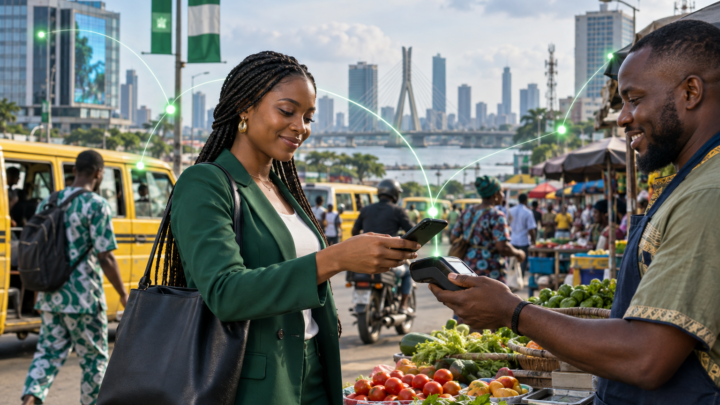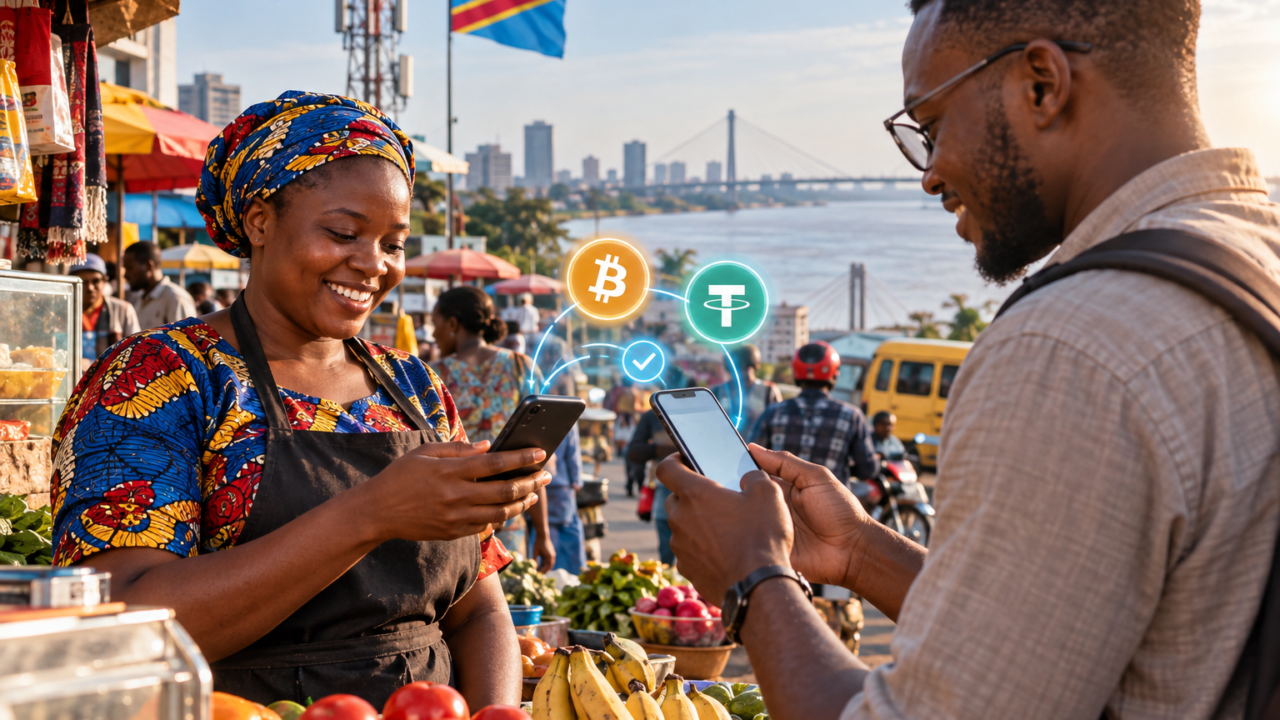
What makes the Congolese market distinctive
As early as 2020, the Central Bank of the Congo warned that cryptocurrencies and the platforms offering them were neither regulated nor authorised to operate in the country, with particular attention paid to structures illegally collecting savings by promising extraordinary returns. Since then, the regulatory landscape has evolved. The Digital Code has entered the picture, a new authorisation regime for digital activities has covered fintechs in particular since 2026, and the BCC itself has listed the creation of crypto-asset regulations among its planned reforms.
At the same time, the market is moving faster than the law. Binance officially documents buying and selling crypto in CDF via Airtel, Vodacom and Orange. M-Pesa, Airtel Money and Orange Money already play a central role in Congolese digital payments. Bitcoin is the subject of university training, while USDT addresses a fairly specific economic reality: the DRC remains deeply dollarised. At the end of 2025, more than 87% of bank deposits measured by the BCC were still denominated in foreign currencies.
One essential piece of data is still missing: no one currently has a recent, sufficiently robust public census that can establish how many Congolese actually hold Bitcoin, USDT or other cryptocurrencies. Estimates circulating online should therefore be treated with caution.
This page is specifically intended to separate facts from impressions.
It explains the state of crypto in the DRC, regulation, Bitcoin, USDT, accessible platforms, mobile money, wallets, risks, local projects and the use cases already visible on the ground.
Last updated: September 24, 2026.
Information about regulation and platform availability may change. This guide is for informational purposes and does not replace legal, tax or financial advice tailored to a particular situation.
Crypto in the DRC: where does the market really stand?
Bitcoin is no longer a completely unfamiliar concept within the Congolese digital ecosystem. The market remains small, fragmented and difficult to measure, but several forms of use already exist: investment, savings, transfers, trading, receiving international payments, stablecoins and payment experiments. To understand the technology before examining the local context, BrefCrypto also offers a complete guide to Bitcoin, how it works and how it is used.
The first mistake, however, would be to confuse visibility with mass adoption.
There is still no reliable figure for the number of holders
How many Congolese people own crypto?
The serious answer is: we do not know yet.
The BCC currently publishes no national statistics detailing the number of Bitcoin holders, crypto transaction volumes, USDT balances held by individuals or flows through foreign exchanges. The ARPTC has highly detailed data on telecommunications and mobile money, but no equivalent public observatory for crypto-assets.
Exchange statistics are not enough either. One person may open several accounts. A Congolese user may rely on a self-custody wallet without using a centralised exchange. A Bitcoin transaction does not carry the label “Democratic Republic of the Congo”. A blockchain address has neither a passport nor a province.
This lack of data is already important information for future regulation.
Before deciding how to regulate the sector, it would be useful to know who is using it, for what amounts and, above all, for which purposes.
Kinshasa probably does not have the same profile as Goma. A trader using futures contracts does not behave like a freelancer paid in USDT. A small business receiving an international payment raises different questions from a student who has bought the equivalent of 10 dollars in Bitcoin.
A future Congolese digital-asset observatory would therefore be more valuable than a sensational estimate such as “X million Congolese use crypto” that cannot be audited.
Why crypto may find a particular market in the DRC
To understand why Bitcoin, and especially stablecoins, are finding an audience, it is necessary to look at the Congolese economy.
The first defining feature is dollarisation.
The DRC officially uses the Congolese franc, but the US dollar is deeply embedded in the economy. Rents, trade, savings, contracts, the salaries of certain companies, real estate and major transactions are frequently denominated or negotiated in dollars.
BCC statistics provide an indication of this situation. In December 2025, the bank deposits it tracked were still denominated 87.18% in foreign currencies. The proportion had exceeded 90% several months earlier. Governor André Wameso has made reducing dependence on foreign currencies in domestic transactions one of his objectives. Central Bank of the Congo
This is why USDT has an obvious Congolese angle.
A dollar-pegged stablecoin does not create the need for dollars. It digitises an existing need.
A merchant who thinks in USD immediately understands the appeal of a digital unit also targeting 1 dollar. A freelancer paid from abroad may prefer to receive USDT rather than wait for a more cumbersome banking channel. A trader can remain exposed to the dollar without leaving the crypto ecosystem every time.
This does not mean that USDT is a bank dollar.
That is precisely the essential distinction we will examine later.
The phone matters more than the bank account
The second distinctive feature is mobile connectivity.
Across much of the DRC, the most familiar financial infrastructure is not necessarily the bank branch. It is the phone.
The BCC itself regards electronic money and mobile money as major drivers of financial inclusion. Its National Financial Inclusion Strategy targets an inclusion rate of 65% in 2028 and explicitly includes greater use of mobile money and fintech services among its objectives.
This infrastructure completely changes how crypto can develop.
In a highly banked country, the usual route into Bitcoin looks like this:
bank account, bank transfer, exchange, Bitcoin.
In the DRC, it may take another form:
CDF, mobile money, crypto platform, Bitcoin or USDT.
That is precisely what Binance currently documents for users in the DRC.
The connection between mobile money and crypto is therefore not merely theoretical. It is beginning to appear directly in platform products.
To understand the infrastructure that makes this possible, BrefCrypto has also analysed the DRC mobile internet market and the growing importance of data for operators.
This infrastructure remains uneven, however. An expensive, unstable or unavailable connection limits access to a wallet just as much as it limits access to a digital banking service. Crypto cannot escape the country’s physical realities.
Bitcoin in the DRC: investment, payment or savings?
Bitcoin can be used in several ways.
The most common idea remains investment: buy BTC, hold it and hope that it increases in value.
That is only part of the story.
Bitcoin is also a global settlement network. Two users can transfer value without asking a bank to maintain the network’s ledger. Transactions can be verified publicly, and the protocol’s monetary issuance follows rules known in advance.
In the DRC, these properties may appeal to several groups.
Someone seeking exposure to an international asset. A digital worker receiving payments. A developer. A merchant dealing with cross-border payments. A user who wants to keep part of their wealth outside a single intermediary. Or simply someone curious to understand a monetary technology that is now global.
Bitcoin comes with significant volatility.
A salary received today in BTC may lose 10% or 20% of its dollar value during a difficult market period. It may also rise sharply. This uncertainty makes Bitcoin less practical for some short-term expenses.
That is precisely where USDT and other stablecoins meet a different need.
USDT is not Bitcoin
The two assets are regularly placed in the same “crypto” category.
Technically and economically, they are very different.
Bitcoin has no central company responsible for guaranteeing that one BTC is worth a particular amount of dollars. Its price is determined by the market.
USDT is issued by Tether. The company seeks to maintain its value around 1 dollar through the reserves backing the tokens in circulation.
Bitcoin prioritises scarcity and the absence of a central issuer.
USDT prioritises price stability in dollars and the convenience of transfers.
One can move by 10%.
The other is specifically designed not to.
This difference explains why, in many emerging markets, stablecoins are not used only by speculators. They serve as digital dollars that can be transferred on a blockchain.
BrefCrypto has published a full analysis of Tether in 2026, its usefulness and the centralisation questions surrounding USDT.
Can USDT replace cash dollars in the DRC?
Not legally.
Nor completely in economic terms.
USDT is not a Federal Reserve banknote. It is not a dollar deposit at a Congolese bank. It does not automatically benefit from the same legal protections as a bank account.
It is a token issued by a private company.
This brings certain advantages: fast transferability, compatibility with different networks, 24-hour operation and easy integration with many exchanges.
It also creates dependencies.
Users must trust Tether to manage its reserves and operate the asset. Tether can freeze certain addresses. Users depend on the chosen network. An incorrect address or blockchain can make recovery extremely difficult.
USDT can therefore be highly useful without being equivalent to banknotes kept in a safe.
For a Congolese user, the mistake would be to think:
“100 USDT = a 100-dollar banknote, with no difference whatsoever.”
The target value is similar.
The infrastructure and risks are not.
M-Pesa, Airtel Money and Orange Money are becoming essential
Mobile money is probably the most important bridge between crypto and the local economy.
ARPTC data show that in the fourth quarter of 2025, M-Pesa accounted for 43.77% of revenue in the Congolese mobile-money market, ahead of Airtel Money at 41.30%, Orange Money at 14.44% and Afrimoney at 0.49%. M-Pesa and Airtel Money therefore accounted for more than four-fifths of measured revenue between them.
These figures explain why integrating crypto platforms with mobile money could change much more than simple compatibility with an international bank card.
Binance currently lists three payment methods for the DRC: Airtel, Vodacom and Orange, with the Congolese franc as the supported currency. Vodacom is the operator behind M-Pesa in the DRC, although Binance uses the name “Vodacom” rather than “M-Pesa” on the page consulted.
Users should nevertheless verify the details directly in the application at the time of the transaction. Payment methods, limits, partners and availability may change.
Mobile money and crypto are not the same thing either.
An Airtel Money or M-Pesa balance represents electronic money in a system supervised by the BCC.
USDT is a crypto-asset issued on a blockchain.
Bitcoin is a native asset of a decentralised network.
The three can now interact through platforms that build bridges between them.
They do not fall under the same legal framework.
Mobile money reduces friction without eliminating intermediaries
A direct Bitcoin transaction between two wallets can take place without an exchange.
Buying Bitcoin with CDF nevertheless requires a conversion point.
Someone must accept francs and provide the bitcoins.
When a platform directly connects Airtel Money to a crypto purchase, it simplifies the operation. It also becomes an additional counterparty.
Two stages must therefore be distinguished.
The first is the purchase.
The second is custody.
A user can buy BTC on a platform and then withdraw it to their own wallet.
They can also leave the funds on the exchange.
In the first case, they assume responsibility for the keys.
In the second, they retain counterparty risk to the exchange.
No solution is risk-free. The risks simply change hands.
The local ecosystem is beginning to take shape
In Goma, several initiatives are beginning to connect Bitcoin, digital education, free software and entrepreneurship. Kiveclair, a Congolese community active since 2021, develops activities around Bitcoin, artificial intelligence and open source in particular. The organisation claims more than 500 members and more than 50 events organised, with an approach focused on training and building solutions adapted to African realities.
BrefCrypto is another building block in this ecosystem. Published from Goma by CENSWEB, the outlet covers Bitcoin, stablecoins, regulation and the evolution of crypto in Africa on a daily basis, with dedicated coverage of the Democratic Republic of the Congo. This local presence has notably included an initiative to train young people in Goma in digital technology and Bitcoin.
CENSWEB works more broadly on digital security, digital inclusion, scam prevention and citizens’ ability to use technology more safely. The organisation has also documented a project to improve mineral traceability in the DRC using blockchain. This role is particularly relevant to crypto: adoption depends not only on the ability to buy Bitcoin, but also on the ability to protect accounts, recognise a Ponzi scheme, secure a wallet and understand what one is signing.
The academic ecosystem is also beginning to take an interest. In July 2026, ISIG-Goma held a workshop on Bitcoin, blockchain and open source, emphasising in particular the need for local developers to build solutions adapted to the Congolese context and reduce dependence on foreign platforms.
These are the initiatives to watch in the coming years. The DRC does not only need more users of foreign exchanges. It needs developers, specialised media, financial education, cybersecurity expertise and infrastructure designed locally.
Regulation and buying crypto: what is possible in the DRC?
Crypto regulation in the DRC is probably the area generating the most contradictory answers online. Some websites claim that Bitcoin is completely banned. Others write that crypto is perfectly legal. In September 2026, neither statement adequately describes the situation.
The texts and institutional positions must be considered in order.
What the BCC said in 2020
The Central Bank of the Congo’s historical position is clear.
In its July 2020 statement, the BCC warned that cryptocurrencies, bitcoins and other virtual currencies offered on electronic platforms were “neither regulated nor authorised” to operate in the DRC. The institution also warned against unlicensed structures collecting public savings and offering excessive returns or pyramid schemes using crypto terminology.
The context matters.
A significant part of the statement concerned actors receiving money from the public while promising interest or bonuses without holding the approvals required to collect savings.
It would therefore be too quick to turn this text into a statement such as:
“any Congolese person who owns Bitcoin is committing a criminal offence.”
The sources consulted do not support such a general conclusion.
At the same time, the BCC’s historical position makes it equally imprudent to claim that crypto operators have long enjoyed a free and clearly authorised market.
They do not.
The DRC is itself preparing crypto-asset regulations
The most interesting sign appears in the Central Bank’s own documents.
In a presentation of its reforms, the BCC explicitly listed the “establishment of crypto-asset regulations in the DRC”. The stated objective is to regulate digital assets and virtual currencies, notably to block malicious structures using crypto to conceal Ponzi schemes and scams.
This wording is crucial.
The question is no longer simply:
should people be warned about Bitcoin?
It becomes:
how should digital assets be regulated?
This does not justify announcing that a complete “Congolese crypto law” has already entered into force.
On the contrary.
As of September 24, 2026, BrefCrypto did not identify in the official publications consulted a complete VASP regime establishing the Congolese equivalent of a European MiCA licence or a detailed framework comprehensively defining exchanges, custody, stablecoins, token issuers and crypto service providers.
The country is therefore in a construction phase.
The BCC is now examining stablecoins and digital assets
Institutional terminology has also evolved.
From August 31 to September 2, 2026, the Central Bank of the Congo took part in the Central Bank Payments Conference in Turkey. The topics examined included digital currencies, stablecoins, deposit tokens and the settlement of digital assets. The BCC says this work is informing its thinking on modernising the Congolese financial ecosystem.
This is not an approval of USDT.
It is nevertheless very different from a complete absence of institutional consideration.
The DRC is now viewing digital assets as a possible component of global changes in payments.
At the same time, in September 2026 the BCC joined PAPSS, the Pan-African Payment and Settlement System, notably to facilitate cross-border payments, reduce costs and improve the traceability of flows.
Crypto, stablecoins, mobile money and pan-African infrastructure will therefore probably meet within the same debate: how can value be moved faster without losing regulatory control?
The Digital Code adds a second layer
Regulation no longer depends solely on the Central Bank.
The Digital Code, adopted in 2023, regulates digital activities and services in the DRC much more broadly.
On March 11, 2026, the Minister of Digital Economy signed an order setting out the authorisation procedures for several categories of digital services. The text applies to Congolese and foreign actors offering their services in the national territory.
The categories covered include data centres, trust services, hosting for financial applications, certain major platforms and, explicitly, fintechs.
The ARPTC was provisionally tasked with processing applications. The authorisation is intended to last for five renewable years, and a transition period ran until June 30, 2026.
Interpretation nevertheless requires caution.
This digital regime is not automatically a “crypto licence”.
A platform may fall under digital law, financial law, payments regulation, foreign-exchange rules, anti-money-laundering requirements and, in the future, a framework specific to crypto-assets.
A digital authorisation should therefore not be presented as automatically equivalent to a banking approval or a future VASP licence.
The existing financial framework continues to apply
The DRC is not starting from a blank page.
The BCC already supervises banks, electronic-money institutions, payment systems, foreign-exchange bureaux and various categories of financial intermediaries.
Law No. 18/019 of July 9, 2018 regulates payment and securities-settlement systems. Law No. 22/038 of December 27, 2022 concerns anti-money-laundering and counter-terrorist-financing measures. The BCC framework also refers to the Digital Code and the 2022 banking legislation.
Foreign exchange has its own body of rules.
The Foreign Exchange Regulations of March 25, 2014 were notably amended by a regulation in 2023 and then by Regulation No. 001/2025. The BCC retains oversight of foreign-exchange transactions, transfers between residents and non-residents, and authorised intermediaries.
A crypto company operating on a large scale therefore cannot act as though the only issue were the absence of a law called the “Bitcoin law”.
The existing rules continue to apply around it.
Does Bitcoin have legal tender status in the DRC?
No.
Bitcoin does not have legal-tender status in the Democratic Republic of the Congo, and it is not issued by the BCC.
This should not be confused with the separate question of holding an asset.
The euro does not have national legal-tender status in the DRC either. That does not prevent a distinction between holding, payment, foreign exchange and professional activity.
In Bitcoin’s case, the additional difficulty comes from the BCC’s historical position against unregulated crypto operations and the absence of a completely finalised new dedicated framework.
A company wishing to invoice clients in Bitcoin or professionally offer crypto services must therefore examine much more than the technology.
Can you buy Bitcoin in the DRC?
Technically, yes.
The more useful question is no longer “is it possible?”
It is:
through which channel, with which counterparty and with what protection?
The most clearly documented option publicly at the time of this update is Binance.
The platform officially states that users in the Democratic Republic of the Congo can buy cryptocurrencies in CDF via Airtel, Vodacom and Orange. It currently displays indicative fees of 2.2% for purchases in CDF and 1.5% for sales. Most purchases are described as being processed within 24 hours, and sales may be credited directly to mobile money.
Binance requires identity verification and two-factor authentication for these operations.
This is information about technical accessibility.
It is not a claim that Binance holds a crypto licence issued by the BCC. BrefCrypto did not identify a Congolese VASP licence published in Binance’s name in the Congolese regulatory register consulted.
The distinction matters.
Being available in the DRC does not necessarily mean being authorised in the DRC under a specific crypto regime.
Buying with Airtel Money or Orange Money
The process depends on the platform, but the principle is simple.
The user chooses the amount in CDF.
They select the mobile payment method.
The platform requests authorisation for the transaction.
Once the payment is confirmed, the crypto is credited according to the service’s terms.
Binance states that CDF purchases currently support Airtel, Vodacom and Orange. It also requires a phone number and an authentication app as part of its security process.
Before sending a large amount, it is preferable to test the process with a small sum.
Fees must also be calculated.
If entering the market costs 2.2%, and the user then has to pay trading fees, a spread and blockchain withdrawal fees, the actual cost may exceed the rate displayed at the first stage.
Simplicity comes at a price.
What about M-Pesa?
M-Pesa operates in the DRC within the Vodacom ecosystem.
Binance lists “Vodacom” as a payment method for the DRC rather than using the name M-Pesa. Users should therefore check in the application whether the proposed process corresponds to their mobile-money account at the time of purchase.
Do not assume that a service compatible with M-Pesa in Kenya will automatically work the same way in the DRC.
The platform explicitly distinguishes Kenya, where it mentions “mPesa”, from the DRC, where it mentions “Vodacom”.
The detail may seem minor.
It can prevent readers from receiving incorrect instructions.
Selling crypto for CDF
The reverse route also exists through the documented Binance service.
The platform states that users in the DRC can sell crypto and receive the funds in their mobile-money account. It currently advertises instant credit after the sale is validated and fees of 1.5% for CDF.
The amount actually received may nevertheless depend on the rate used, the partner’s terms, mobile-money account limits and other possible costs.
Always check the final amount.
Not just the BTC/USD rate displayed at the top of the screen.
P2P remains in use, with greater human risk
Peer-to-peer means buying or selling directly with another user.
A platform can act as an intermediary by temporarily holding the crypto in escrow until the payment is confirmed.
In a country where mobile money is widespread, the model seems natural.
It nevertheless introduces a different weakness: the other person.
A fake M-Pesa receipt.
An altered screenshot.
A forged SMS.
Someone asking to leave the exchange and continue on WhatsApp.
False proof of payment.
The seller must never release the crypto because a screenshot shows “transfer completed”. They must verify that the funds have actually arrived in their account.
The same principle applies to the buyer: the escrow system must remain active until the end.
Voluntarily leaving the platform to “save on fees” generally means losing the protections the platform could provide.
How to verify a transaction
The blockchain has an interesting advantage: much of its information can be checked directly.
When someone sends you a Bitcoin transaction hash, you can consult a block explorer and check whether the transaction exists, how many confirmations it has received and which address received the funds.
BrefCrypto explains the process in its guide to using a block explorer to verify a Bitcoin transaction.
This prevents a fairly common mistake:
confusing a screenshot with a transaction.
An image can be altered.
A confirmed blockchain transaction is much harder to alter.
Not all major platforms are accessible in the same way
It would be dangerous to publish a list of the “best exchanges in the DRC” and leave it online for three years.
Geographic restrictions change.
Available products change.
The residence used for KYC matters.
The payment method matters.
As of September 24, 2026, the public documents consulted provide a highly mixed picture.
Binance has the clearest local route among the major platforms verified: CDF with Airtel, Vodacom and Orange.
Bybit currently includes the DRC among the restricted countries for its general fiat service covering deposits, withdrawals and One-Click Buy. The DRC also appears among the restrictions for several of the platform’s SEPA or SWIFT rails.
Bitget goes further: its current terms classify the Democratic Republic of the Congo among its prohibited countries. It would therefore be incorrect to recommend it today as a platform for Congolese residents.
Coinbase presents a more nuanced case. Its current identity-verification documentation accepts a driving licence or passport from the DRC, as well as several proofs of address. This shows that Congolese documents are integrated into its KYC system, not that all Coinbase services are available in the country.
For Kraken, availability also varies by product. Its 2026 documentation, for example, excludes the DRC from Kraken Derivatives. An application may be available in an app store without every trading or funding service being available to a resident.
The correct rule is therefore:
check the exact product, not just the exchange logo.
Do not bypass a restriction with a VPN
A VPN changes an IP address.
It changes neither legal residence nor contractual obligations.
When a platform states that it does not accept residents of the DRC, bypassing that rule can create a much more serious problem later.
The account may be blocked during a review.
A withdrawal may require new proof of address.
The user may end up with immobilised funds after believing they had solved the problem simply by changing their digital location.
Bitget, for example, explicitly warns users not to bypass its geographic restrictions using a VPN.
If a service refuses access to the DRC, it is better to use a compatible solution than to begin a financial relationship based on a false declaration.
What is the tax treatment of crypto in the DRC?
This is one of the areas where the temptation to invent a simple answer must be resisted.
As of September 24, 2026, BrefCrypto had not found in the official publications of the General Directorate of Taxes consulted a detailed guide specifically addressing the taxation of individuals’ Bitcoin or crypto capital gains, comparable to regimes explicitly documented in certain countries.
This absolutely does not mean:
“crypto gains are tax-exempt.”
The absence of a dedicated crypto guide does not erase general taxation.
Applicable rules may depend on the person’s status, whether the activity is professional or occasional, its accounting treatment, the legal structure and the source of the income.
A professional trader, a company accepting crypto payments, a fintech and an individual who occasionally buys BTC are not necessarily in the same situation.
For significant amounts, the appropriate response is therefore tax and legal: document the transactions and seek the advice of a professional familiar with Congolese law.
Can a Congolese company accept Bitcoin?
Technically, a merchant can generate an address and receive BTC.
The legal question is much less straightforward.
Bitcoin does not have national legal-tender status. The BCC’s historical position remains restrictive towards unregulated crypto operations. Companies are also subject to their accounting, tax and commercial obligations and, depending on the activity, payments or digital regulations.
The technical ability to receive a bitcoin payment is not a regulatory text authorising every Congolese merchant to turn Bitcoin into an official accounting system.
A company wishing to make this type of payment widespread should therefore clearly define how it invoices, converts the value into CDF, records the transaction and complies with applicable rules.
Can Bitcoin be mined in the DRC?
Technically, yes.
Economically, the question depends mainly on electricity.
Bitcoin mining turns electricity and computing hardware into computing power used to help secure the network and attempt to earn block rewards.
The DRC has considerable hydropower potential.
This does not mean that a miner automatically has access to abundant, cheap electricity. The grid, local availability, energy contracts, taxation, hardware imports, cooling, internet connectivity and physical security all weigh on the economics of a project.
At the time of this update, available public data nevertheless do not make it possible to quantify a large-scale Congolese mining industry.
It may be a future opportunity.
It is not yet a sector that can be measured seriously.
USDT, wallets, security and the future of the Congolese market
Buying crypto has become relatively easy. Storing it correctly remains much more difficult. In the DRC, as elsewhere, some losses do not result from a Bitcoin hack. They come from fake investments, phishing, incorrect addresses, exposed seed phrases, dubious platforms or trust placed in the wrong person.
The development of Congolese crypto will probably depend less on the next fashionable token than on users’ ability to understand these risks.
USDT could become more important than many altcoins in the DRC
To understand future use cases, it is better to look at needs than prices.
A Congolese person who simply wants to hold a unit close to the dollar does not necessarily need a volatile token.
A freelancer paid 500 dollars may simply want to receive approximately 500 dollars.
A merchant wants to be able to pay 2,000 dollars to a supplier and know approximately how much is being sent.
A family receiving money from abroad may prefer stability.
That is precisely the role of stablecoins.
Across Africa, infrastructure connecting stablecoins with local payment rails is multiplying. BrefCrypto recently examined the partnership between DCS Pay and Kotani Pay to connect USDT and USDC to local currencies and mobile money in six African markets.
The DRC was not among the six announced markets.
That absence is itself interesting.
The country has mobile money, high dollarisation and a need for cross-border payments. Yet it is not systematically included in every new pan-African stablecoin infrastructure.
That is a market still to be built.
Which USDT should you choose: TRC20, ERC20 or another option?
The question is poorly phrased.
You do not choose only “USDT”.
You also choose a network.
USDT exists on several blockchains.
When withdrawing from an exchange, the interface may offer several networks. They are not necessarily interchangeable.
If the destination gives you a USDT address on Tron, verify that it accepts the Tron network.
If it expects ERC20 on Ethereum, follow that instruction.
Choosing the cheapest network without checking compatibility can cause a loss or require a complex recovery procedure.
The name USDT is therefore never enough.
Before sending, check three things: the asset, the network and the address.
Then test the process when the amount is significant.
Tron is popular, but that does not make USDT decentralised
A large amount of USDT circulates on Tron because of its fees and widespread use on exchanges.
This does not turn Tether into Bitcoin.
BrefCrypto recently examined the administrative powers associated with the contract representing approximately 91 billion dollars of USDT on Tron. The analysis noted that a 2-of-3 multisig system could exercise certain important administrative functions.
There was no hack in that case.
The issue was the trust model.
USDT can be extremely convenient and remain centralised.
The two statements are not contradictory.
Does USDT protect against depreciation of the Congolese franc?
It can reduce exposure to the CDF when its peg to the dollar holds.
It introduces other risks.
Tether risk, blockchain risk, wallet risk, platform risk, regulatory risk, depeg risk and conversion risk when the user wants to return to CDF or cash dollars.
Risks must therefore be compared as a basket.
USDT may be more stable in dollar terms than Bitcoin.
That does not make it risk-free.
In a highly dollarised economy, it could even reinforce a form of digital dollarisation rather than encourage use of the Congolese franc. This tension deserves study by the BCC, whose current strategy specifically aims to restore confidence in the national currency.
Which wallet should you use in the DRC?
The country is not the main criterion.
The asset and the use case are.
For Bitcoin, there are Bitcoin-only wallets and applications capable of managing several networks. For USDT, you need a wallet compatible with the blockchain on which the tokens are held.
For DeFi, the requirements change again.
A wallet intended to hold savings for five years has no reason to be configured exactly like one used every day to connect to unknown applications.
The distinction can be simplified into three functions.
A daily wallet holds a small amount.
An interaction wallet is used for decentralised exchanges, smart contracts or testing.
A cold wallet is used for long-term savings.
This reduces the consequences of a mistake.
Self-custody: control comes at a price
Holding your crypto yourself means controlling the keys.
This is one of Bitcoin’s fundamental principles.
It also means that no one can generally reset your seed phrase if you lose it.
A bank can replace a card.
An exchange can sometimes reset a password after verification.
A blockchain has no universal “forgot password” standard.
This difference should be explained before pushing users towards self-custody.
Poor self-custody is not superior to sound custody with a serious provider.
It simply replaces company risk with personal risk.
The seed phrase matters more than the phone
A recovery phrase generally makes it possible to restore a wallet.
It should not be photographed.
Nor sent by email, saved in WhatsApp, stored in Google Drive, given to a supposed technical-support representative or entered on a website asking you to “verify the wallet”.
If someone obtains this phrase, they can often restore the wallet on their own device.
They do not need to steal the phone.
This rule is especially important in an environment where the smartphone simultaneously becomes a payment device, mobile-money account, messaging tool, email client and crypto wallet.
Centralising all access on one phone makes the device extremely valuable.
A hardware wallet is useful once the level of risk reaches a certain point
When a wallet becomes significant relative to a person’s wealth, a hardware wallet can provide an additional layer.
The key remains protected in a specialised device instead of residing on the everyday phone.
It is still not magic.
A poorly backed-up seed phrase can cancel out the benefit.
A malicious transaction can still be signed.
A device can have a defect.
The owner can fall victim to phishing.
The right objective is therefore not “buy a Ledger or Trezor and stop thinking”.
It is to create an architecture in which one mistake does not destroy everything.
The phone also deserves proper security
In the DRC, a phone number can open a great many doors.
Mobile money.
SMS.
Email.
WhatsApp.
Exchange account.
Password recovery.
An attack on the line can therefore become a financial attack.
It is preferable to use a unique password for the exchange, protect the associated email account and enable strong authentication. When an authenticator app or security key is available, it reduces dependence on SMS.
The mobile-money PIN must also remain secret.
A fake agent should never obtain it.
Fake customer support is a serious threat
A simple scenario repeatedly appears in crypto scams.
“Hello, we are Binance support.”
“Your account has been compromised.”
“We need to secure your funds.”
“Send them to this address.”
The scammer does not hack an exchange.
The victim makes the transaction themselves.
The same approach can use Coinbase, Binance, Tether, Trust Wallet or any other well-known brand.
A legitimate financial service should never ask for your seed phrase.
When a call or message announces an emergency, do not continue through the link you received.
Close it.
Open the official application yourself.
Return promises remain the simplest warning sign
The history of crypto regulation in the DRC is partly linked to this problem.
As early as 2020, the BCC warned about structures using cryptocurrency terminology to collect savings by promising excessive interest rates and benefits dependent on the amounts invested.
Six years later, the mechanism has not disappeared.
The terminology changes.
“AI trading”.
“Quantum bot”.
“Guaranteed staking”.
“Automatic arbitrage”.
“Web3 investment”.
“Cloud mining”.
The principle is often the same: deposit money today, receive a spectacular return and invite other people.
Bitcoin does not promise 3% a day.
USDT does not either.
If a company promises such a return, the actual product is no longer simply Bitcoin or USDT.
It is the company taking your money.
Do not confuse trading with crypto
The confusion is particularly strong among beginners.
Bitcoin can be bought without using leverage.
USDT can be received without speculating.
A wallet can be used to receive a payment without ever opening a chart.
Trading is a specific activity.
Futures contracts, 20x leverage and liquidations are not necessary to “use crypto”.
This distinction should remain at the centre of any crypto education intended for beginners.
Serious crypto education should begin precisely there.
Adoption will depend more on utility than speculation
The DRC has several problems that financial technologies are already trying to address.
Expensive cross-border payments.
Access to dollars.
Regional trade.
Remote work.
Limited banking access for some populations.
Mobile money widespread in cities.
A digitally connected youth.
The diaspora.
International payments for developers and freelancers.
Bitcoin and stablecoins may have a role in some of these use cases.
They will not solve all of the country’s financial problems.
A person without a reliable connection does not become financially included simply because a protocol is decentralised.
A company without proper accounting does not become stronger because it accepts USDT.
And a country does not automatically gain monetary sovereignty because its citizens replace US banknotes with private tokens indexed to those same dollars.
The analysis must go that far.
The DRC’s challenge will also be to build locally
Total dependence on foreign platforms does not produce a Congolese crypto ecosystem.
It produces Congolese users of foreign products.
The distinction matters.
The training initiatives observed in Goma are moving in an interesting direction because they also emphasise developers, open source and the creation of infrastructure adapted to the local context. The July 2026 ISIG workshop notably stressed the need to reduce dependence on foreign platforms.
The next step is obvious.
Wallets adapted to difficult connections.
Interfaces in local languages.
Mobile-money tools.
Crypto-compatible accounting software.
Lightning solutions.
Education in self-custody.
RegTech.
Blockchain applied to public or commercial data when its use is genuinely justified.
And, above all, companies capable of existing without launching a token for every idea.
Mobile money and Bitcoin may eventually complement each other
Africa is already providing some indications.
Projects supported by the Human Rights Foundation are working on interoperability between Bitcoin, Lightning and mobile money. BrefCrypto has presented several African Bitcoin projects funded to develop payments, self-custody and connections to mobile money.
This is probably a more relevant path for the DRC than trying to replace M-Pesa outright.
M-Pesa already works.
Airtel Money already works.
Orange Money already works.
Bitcoin could become an additional rail for certain transactions, particularly when value must move from one country to another.
Mobile money can remain the local interface.
The two technologies are not destined to fight.
Cross-border payments will be a real testing ground
The DRC trades with many markets.
East Africa.
Southern Africa.
China.
United Arab Emirates.
Europe.
The diaspora.
The cost and slowness of cross-border payments naturally create interest in new rails.
Stablecoins can settle a blockchain transaction quickly.
PAPSS, for its part, seeks to improve African payments through regulated currencies and infrastructure.
Banks are modernising their systems.
Fintechs are building bridges.
The competition will therefore not simply be:
crypto versus banking.
It will involve several technologies capable of solving the same problem.
For the end user, the winner will often be whichever option combines cost, security, simplicity and regulatory acceptance.
The latest BrefCrypto news to follow from the DRC
This page is intended to become the hub of the “Crypto DRC” cluster. Specialised articles should explore a precise topic and link back here, while this guide links to analyses that deserve more detail.
For local digital infrastructure, our analysis of mobile internet in the DRC and operators’ data revenue helps explain the technological base on which wallets, exchanges and mobile money must operate.
For stablecoins, the analysis of Tether in 2026 and the investigation into USDT’s administrative keys on Tron complement this guide’s section on counterparty risk.
At the continental level, the partnership between DCS Pay and Kotani Pay and the arrival of stablecoins on several African payment rails provides insight into developments that could one day directly concern the DRC.
Finally, broader changes in African digital technology, including mobile money, are covered in our dossier Digital Africa: Starlink, AI and Mobile Money accelerate — and so do the risks.
This section should evolve as new articles specifically devoted to the DRC are published.
FAQ: crypto in the DRC in 2026
#### Is crypto legal in the DRC?
The answer requires nuance. In 2020, the BCC stated that the cryptocurrencies and related platforms concerned were neither regulated nor authorised to operate in the DRC, while focusing particularly on unlicensed structures collecting savings and offering dubious investments. At the same time, the BCC has since included the creation of crypto-asset regulations in its reforms, while the 2026 digital framework subjects fintechs in particular to authorisation.
It would therefore be inaccurate to present the DRC as already having a complete, liberalised crypto regime. It would also be too simplistic to infer from the sources consulted that merely holding a few bitcoins privately automatically constitutes a criminal offence.
#### Is Bitcoin an official currency in the DRC?
No. Bitcoin does not have legal-tender status in the Democratic Republic of the Congo. The national currency remains the Congolese franc, and the BCC retains monetary and foreign-exchange authority. Bitcoin is a digital asset outside the official Congolese monetary system.
#### Can I buy Bitcoin with Airtel Money?
Yes, Binance currently offers an officially documented route. The platform states that users in the DRC can buy cryptocurrencies in CDF through Airtel. Always check availability directly in the application before carrying out the transaction.
#### Can I buy Bitcoin with Orange Money?
Binance also documents Orange as a supported payment method in the Democratic Republic of the Congo for CDF transactions. Conditions and limits may change.
#### Can Bitcoin be bought with M-Pesa in the DRC?
Binance displays “Vodacom” for the DRC, while explicitly using the term “mPesa” for Kenya. As M-Pesa belongs to the Vodacom ecosystem in the DRC, users should check the available process in their application rather than assume that the Kenyan integration is identical.
#### Can crypto be sold and paid out through mobile money?
Yes, on certain compatible services. Binance currently documents sales in CDF with payment to mobile money in the DRC. At the time of this update, the platform displays a 1.5% fee for CDF sales.
#### Is Binance officially authorised by the BCC?
The platform clearly documents access to its CDF/mobile-money service in the DRC. BrefCrypto did not, however, identify a specific Congolese VASP licence published in Binance’s name in the regulatory sources checked. Commercial accessibility and regulatory authorisation are two different concepts.
#### Does Bitget work in the DRC?
Its current terms indicate otherwise. Bitget currently classifies the Democratic Republic of the Congo among its prohibited countries. Using a VPN to bypass this restriction may violate the platform’s terms.
#### Is Bybit accessible in the DRC?
Some products may be accessible while others are not. Bybit currently states that the DRC is among the restricted jurisdictions for its general fiat service, including fiat deposits, withdrawals and One-Click Buy. The specific feature sought must therefore be checked.
#### Does Coinbase accept Congolese users?
Coinbase’s current KYC documentation recognises the DRC and accepts, among other documents, a passport or driving licence for identity verification, as well as certain proofs of address. This does not guarantee that all Coinbase products are available locally.
Is USDT legal in the DRC?
In the official sources consulted as of September 24, 2026, there is no specific framework granting USDT the status of legal tender or Congolese electronic money. It is a private crypto-asset. The BCC is now explicitly following issues related to stablecoins in its work on payment systems.
#### Is USDT safer than Bitcoin?
The answer depends on the risk being considered.
USDT is much less volatile against the dollar when it maintains its peg. Bitcoin does not depend on a central private issuer, but its price can fluctuate sharply.
USDT therefore adds Tether and centralisation risk while reducing dollar-volatility risk.
Neither is simply “safer” in every situation.
#### Should I use TRC20 or ERC20 for USDT?
Use the network supported by the destination.
If an exchange gives you a USDT-TRC20 deposit address, use Tron.
If it requests ERC20, use Ethereum.
Do not choose a network solely because it is cheaper. An incompatibility can be far more expensive than a few dollars in fees.
#### What is the best crypto wallet in the DRC?
There is no single best wallet for everyone.
The choice depends on the asset, network, amount and use case. A long-term Bitcoin wallet serves a different purpose from a wallet used for USDT on Tron or a DeFi wallet.
For significant amounts, self-custody should be accompanied by a genuine backup strategy.
#### Should crypto be kept on Binance?
It depends on the purpose.
Keeping funds on an exchange makes trading and conversion easier.
Withdrawing to a personal wallet reduces exposure to exchange risk, but transfers responsibility to the owner of the keys.
For significant long-term savings, understanding self-custody is generally preferable to blindly trusting a platform.
#### What should I do if someone asks for my seed phrase?
Refuse.
A seed phrase is the wallet’s master key.
No support representative from Binance, Tether, Bitcoin, Ledger or any other service needs your recovery words to “unlock” your funds.
Anyone asking for them should be treated as a threat.
#### How can I recognise a crypto scam in the DRC?
The first warning sign remains an abnormally high and regular return promise.
A company guaranteeing 5% a day has not discovered a secret that eliminates market risk.
Other signs include paid recruitment of new members, pressure to invest quickly, the inability to withdraw freely, the absence of a clear legal identity and the use of technical terms to avoid simple questions.
#### Is crypto anonymous?
Not in the way many people imagine.
Bitcoin is pseudonymous.
Transactions are public.
An address does not directly carry its owner’s name, but if it is linked to an identity through an exchange, a payment, an investigation or a data leak, its history can be examined.
The blockchain has a very long memory.
#### Can a Bitcoin transaction sent by mistake be recovered?
There is generally no mechanism to cancel a confirmed Bitcoin payment in the way a bank transaction can sometimes be cancelled.
If the owner of the destination address is known, they may voluntarily return the funds.
Otherwise, recovery may be impossible.
This is why large transactions should be preceded by careful verification and, where appropriate, a small test.
#### Will the DRC launch a central bank digital currency?
The BCC is interested in digital currencies and actively follows international developments in payments. Its documents have also referred to discussions around monetary innovations. This is not enough to state that a “digital Congolese franc” for the general public already has an official launch date.
Study, project and product actually launched must be distinguished.
#### Can Bitcoin solve the weakness of the Congolese franc?
Bitcoin is not a national monetary policy.
It can give an individual exposure to an asset outside the CDF.
This does not automatically stabilise the franc, finance public spending or solve the country’s productivity.
The BCC is currently seeking to reduce dependence on foreign currencies and restore confidence in the CDF. Widespread adoption of tokenised dollars or foreign assets could instead raise new questions about monetary sovereignty.
Where is crypto heading in the DRC?
The Congolese market is in a fairly unusual phase.
Too active to ignore.
Not yet documented enough to be measured properly.
Too connected to global platforms to be treated as an isolated local phenomenon.
Not yet equipped with a sufficiently detailed crypto framework to eliminate every ambiguity.
The BCC knows that the issue exists. It plans crypto-asset regulations and now takes part in international discussions where stablecoins and digital-asset settlement are explicitly studied. At the same time, in 2026 the government strengthened authorisation requirements for fintechs and digital activities.
On the ground, the ecosystem is already advancing. Kiveclair runs an educational community around Bitcoin and open source. BrefCrypto and CENSWEB are strengthening information and digital security. Institutions such as ISIG-Goma are gradually opening the subject to students and developers.
Exchanges are beginning to connect CDF to mobile money.
Mobile money already has infrastructure that crypto can use instead of rebuilding it.
It would nevertheless be a mistake to judge the sector’s success solely by the number of tokens purchased.
The real leap will occur when a Congolese developer builds infrastructure used beyond their Telegram community.
When a company can receive an international payment more easily without entering a regulatory grey area.
When a student can recognise a Ponzi scheme before putting money into it.
When a user can move cleanly from CDF to Bitcoin, then from Bitcoin back to CDF, while understanding the fees, tax treatment, rights and counterparty.
And when the BCC can publish sufficiently precise data to end the guesswork about how many Congolese actually use crypto-assets.
The DRC has no shortage of reasons to take an interest in Bitcoin and stablecoins.
It still lacks local rails, data and legal clarity.
That is precisely where the next stage will be decided.
Main sources
This page primarily relies on publications from the Central Bank of the Congo, including its payments regulatory framework, foreign-exchange regulations, National Financial Inclusion Strategy, reform documents mentioning future crypto-asset regulations and its September 2026 publications on stablecoins and digital-asset settlement. Central Bank of the Congo
For the digital framework, the main references are the Congolese Ministry of Digital Economy and the March 11, 2026 order implementing the authorisation regime provided for by the Digital Code, notably for fintechs and certain digital platforms. Digital Economy
Mobile-money data comes from the ARPTC, notably its observatory for the fourth quarter of 2025. Information on buying and selling in CDF comes from Binance’s official documentation consulted on September 24, 2026. ARPTC
For the local ecosystem, sources include Kiveclair, CENSWEB, BrefCrypto publications and ISIG-Goma. Organisations’ quantitative claims are presented as such and do not constitute independent regulatory validation.
Last checked: September 24, 2026.